For years, it was my dream to visit the Alhambra in Granada. I had seen photographs of its courtyards, fountains, decorated walls and views over Granada many times, so when I finally had the opportunity to visit it, I was really excited.
If you are interested in visiting the Alhambra yourself, I completely understand why. It is one of those places that looks impressive in photographs, but seeing it in person is something completely different. The Alhambra is a symbol of Granada, Andalusia and Spain. It is also one of the world’s best-known examples of Moorish and Islamic architecture in Europe. For me, it is much more than an old fortress or palace. It is a huge historical complex where architecture, water, gardens, history and landscape come together.
It is also one of the most beautiful places I have ever visited. I spent a large part of the day exploring the complex, walking through gardens, courtyards and historic buildings and stopping many times to look at the details. I took around 69 photographs during my visit, because almost everywhere I looked there was something worth photographing.
Where Is the Alhambra?
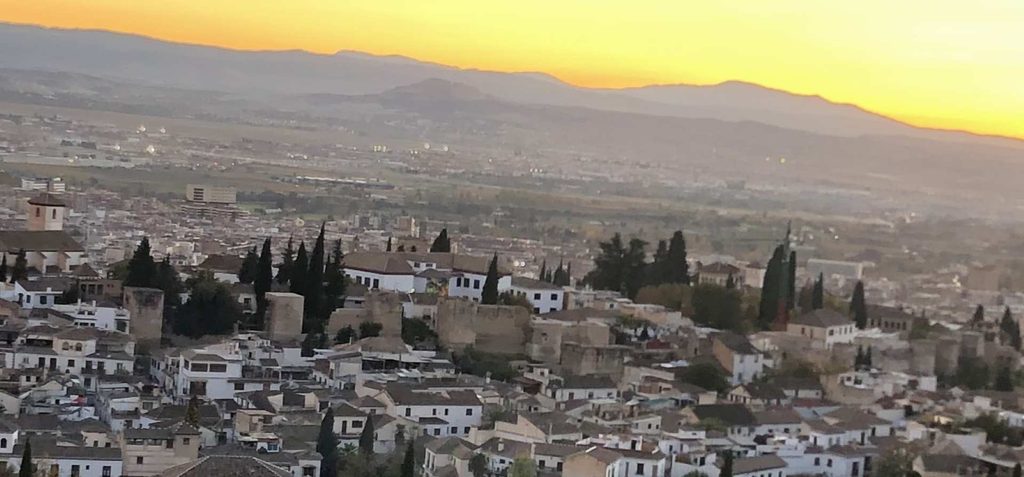
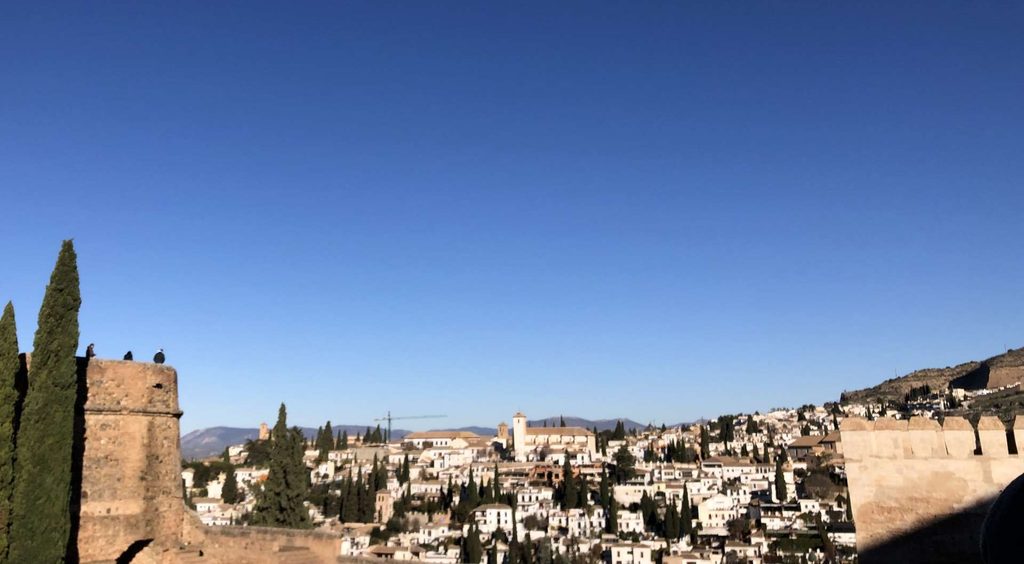
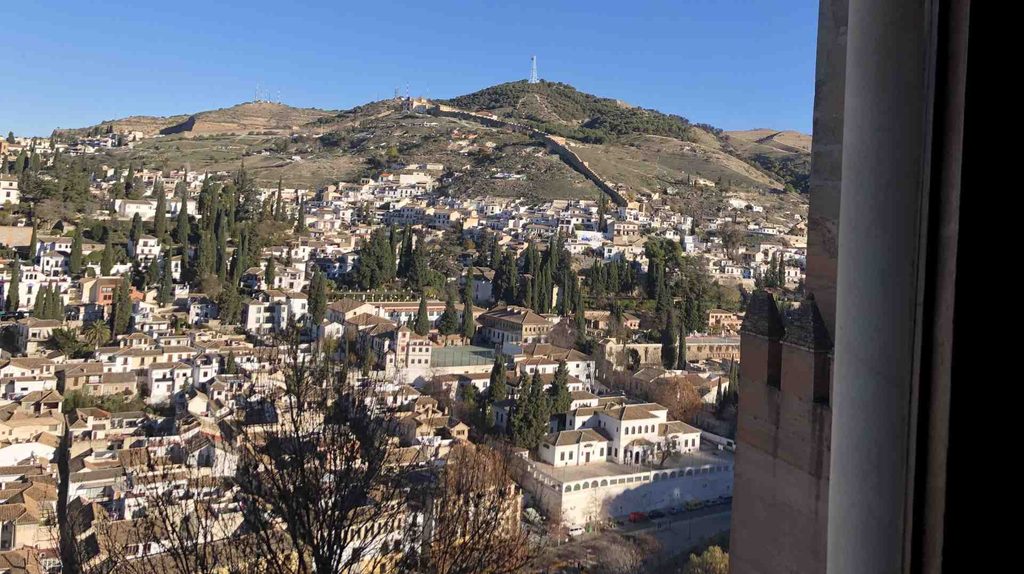
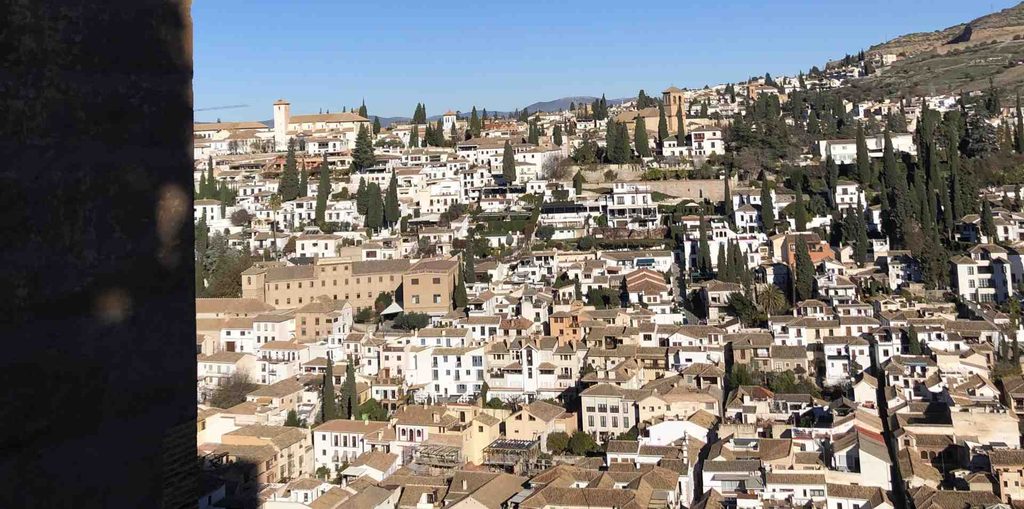
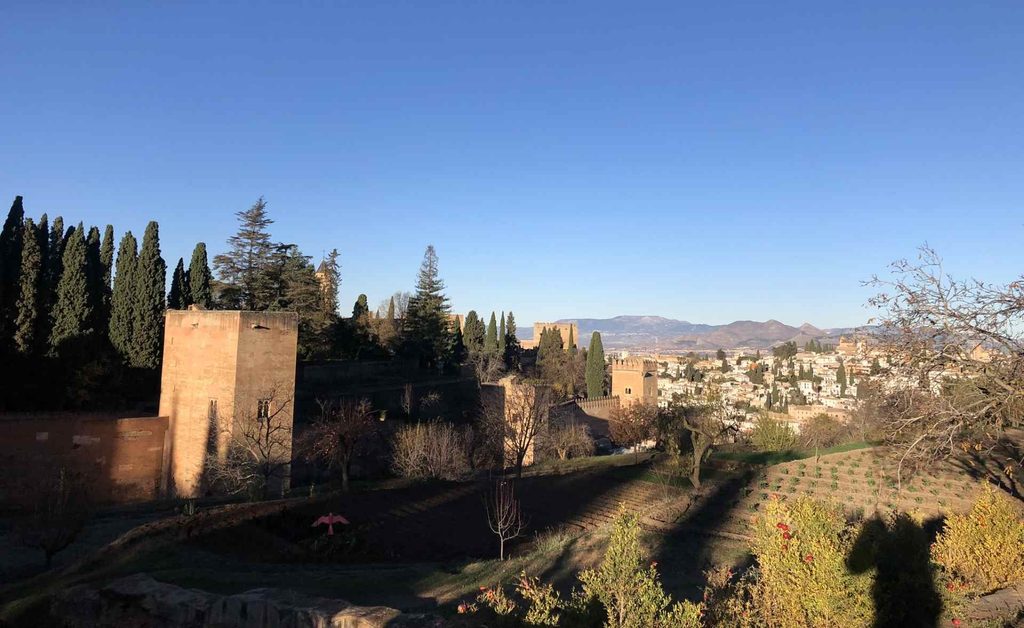
The Alhambra is located on a hill above Granada, in Andalusia in southern Spain. Because of its elevated position, it is visible from many parts of the city. One of the things I really liked about Granada was that the Alhambra seemed to follow me while I was exploring the city. From different streets and viewpoints, I could look up and see the walls and towers on the hillside. I also took a photograph of the Alhambra from one of the hills around Granada just before sunset. From a distance, the complex looks almost like a city of its own, sitting above Granada with the mountains behind it.
The location is especially impressive because the Sierra Nevada mountains are visible from Granada. On clear days, the contrast between the historic palace, the city below and the mountains in the distance creates one of the most recognizable landscapes in Andalusia. The Alhambra is therefore not only interesting because of what is inside its walls. Its position above Granada is an important part of the experience.
Why Is It Called Alhambra?
The name Alhambra comes from the Arabic al-Hamra, generally understood as referring to “the Red One” or “the Red Fortress.” The name is connected with the reddish appearance of the walls and construction materials. There is also another Alhambra that you may notice while travelling around Andalusia. There is a beer brand called Alhambra, which is particularly common in Granada and other parts of Andalusia. You can often see Alhambra beer signs or bottles next to bars and cafés.
When I was travelling through Andalusia, I noticed the name quite often, and it was interesting to realize that both the famous monument and the beer are connected to the same Granada name.

Buying Tickets for the Alhambra
One of the most important things I learned is that you should plan your visit to the Alhambra well in advance. Tickets can sell out far ahead of the actual visiting date, particularly during busy periods. Because visiting the Alhambra was something I had wanted to do for a long time, I did not want to arrive in Granada and discover that I could not get inside.
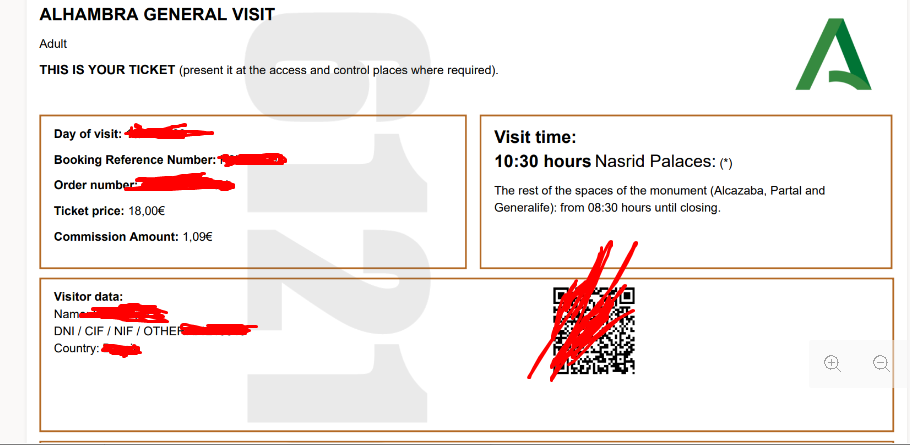
My recommendation is to buy your ticket through the official Alhambra ticketing system whenever possible. There are also different websites and resellers offering Alhambra tickets, but these can be considerably more expensive. I would therefore check the official option first rather than immediately buying from a reseller. My ticket was sent to me by email and had my name on it. Interestingly, nobody asked me for identification when I entered, although I would still recommend carrying the identification document you used when purchasing the ticket in case it is requested. If visiting the Alhambra is one of the main reasons for your trip to Granada, I would make the ticket one of the first things you arrange.
How to Get to the Alhambra from Granada
The Alhambra is uphill from central Granada, but getting there is not particularly complicated. There is a direct bus connection from Granada to the Alhambra. The vehicle is more like a small city bus or minibus than a large tourist coach.
Because I had wanted to visit the Alhambra for a long time, I decided to go very early in the morning. I believe I caught one of the first buses going up. I remember that there were also Alhambra staff members on the bus wearing recognizable jackets, which made me think that I was travelling at a particularly early hour.
I deliberately went early because I wanted to spend as much of the day as possible inside the complex. The Alhambra is large, and I did not want to rush through it. You can also walk up to the Alhambra from Granada. I went back down on foot after my visit, and I actually really enjoyed the walk.
The route is uphill when going towards the Alhambra, so walking up requires more effort, but walking downhill afterwards was much easier. Since I visited during a sunny winter day, the walk back to Granada was especially pleasant.

My First Impression of the Alhambra
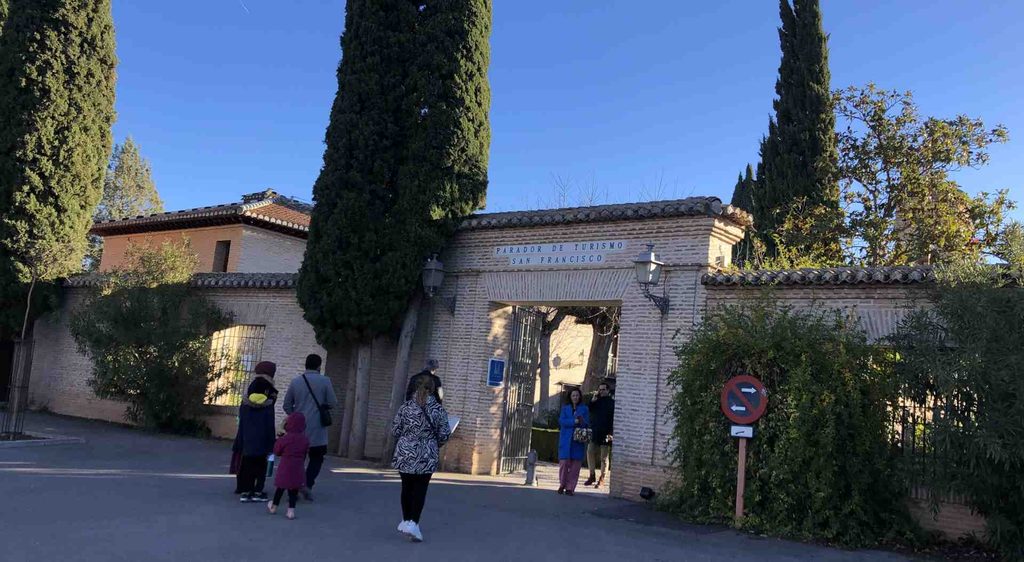
After waiting for a little while near the entrance, I started noticing more and more tourists arriving. Many visitors were arriving as part of organized groups. As time passed, the entrance area became considerably busier. Eventually, I entered the complex and started walking through the grounds. My first impression was simply: the Alhambra is much bigger than I expected.
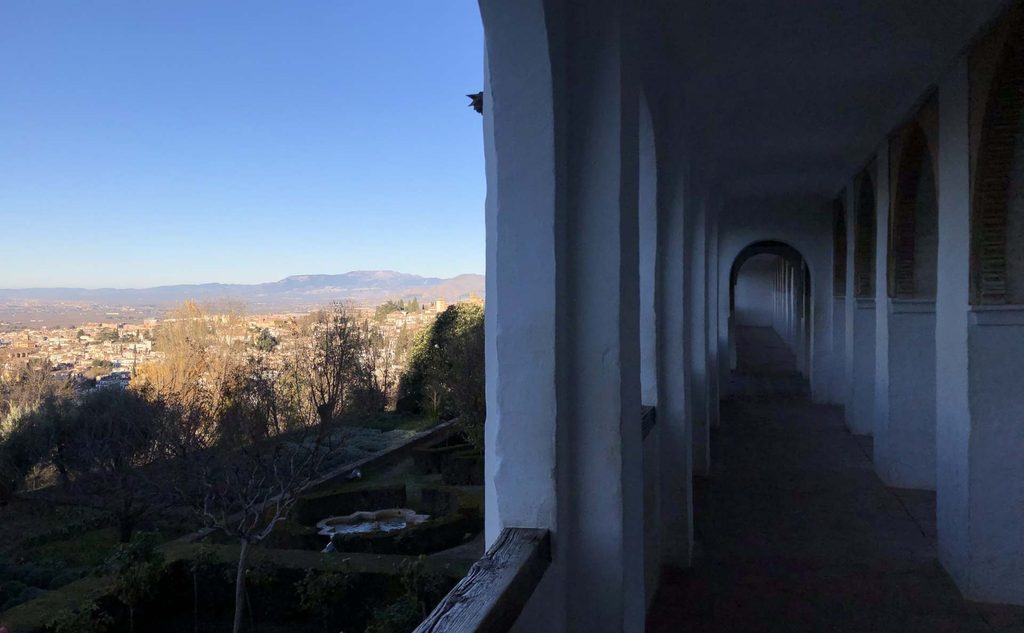
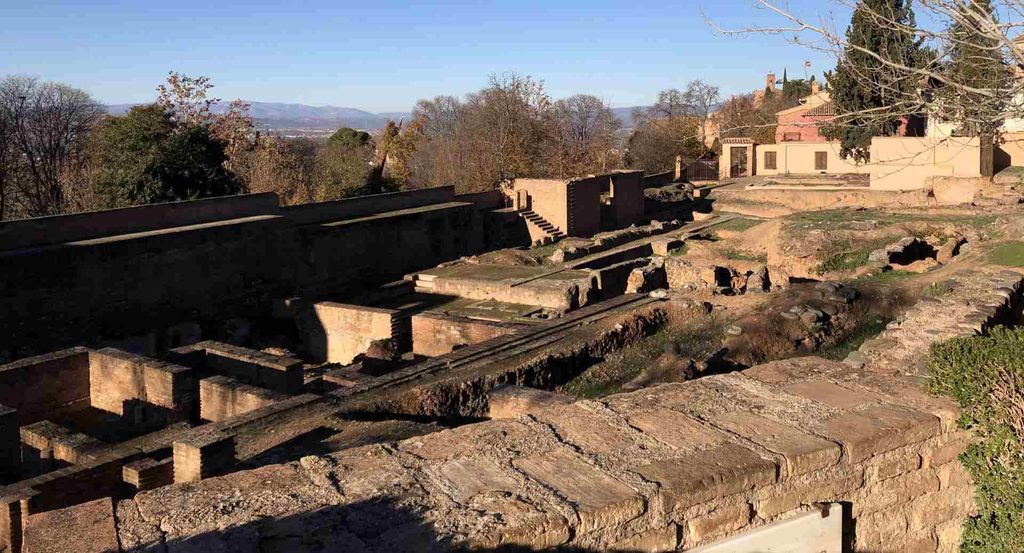
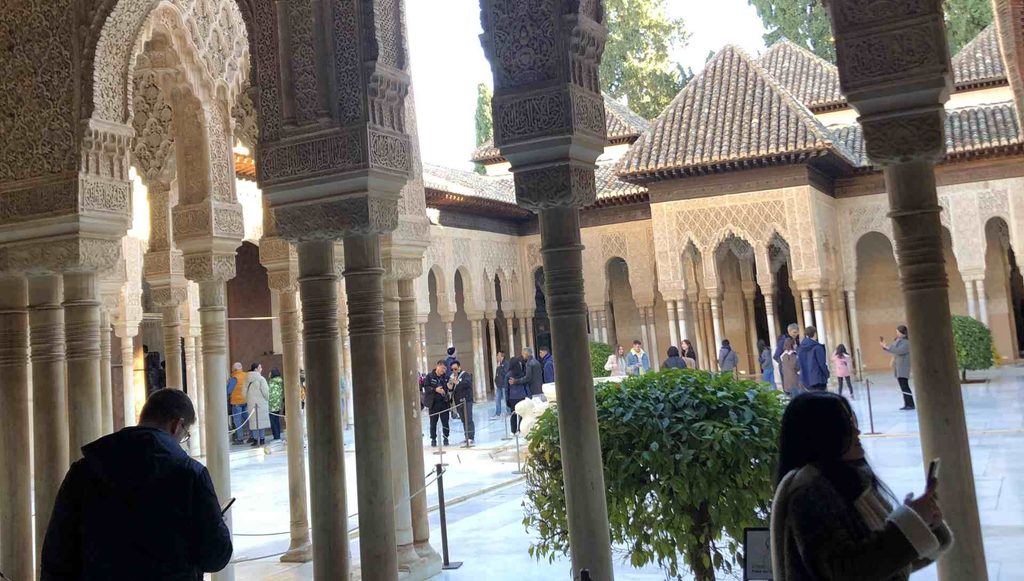
Before visiting, I had mostly seen photographs of the famous palace interiors, so I imagined that the experience would mainly be about entering a beautiful historic building. Instead, the Alhambra feels like a large historical world. There are gardens, walls, towers, courtyards, palaces, pathways and different architectural areas spread across the hill.
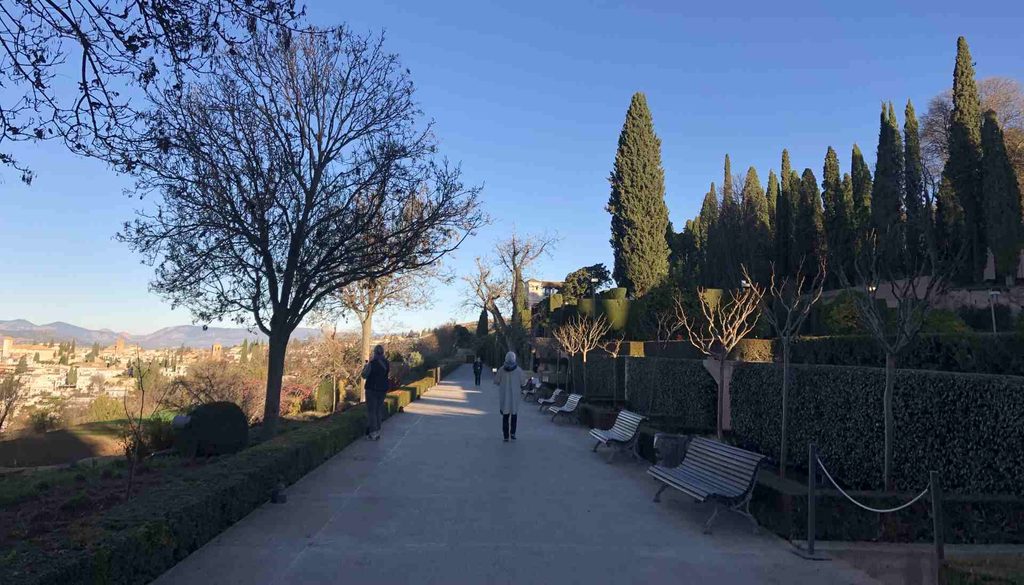
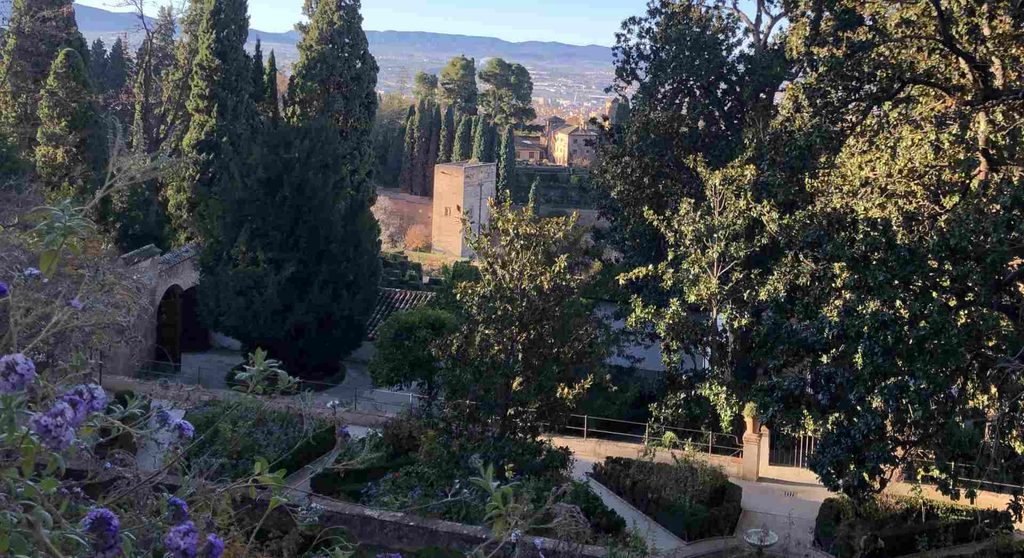
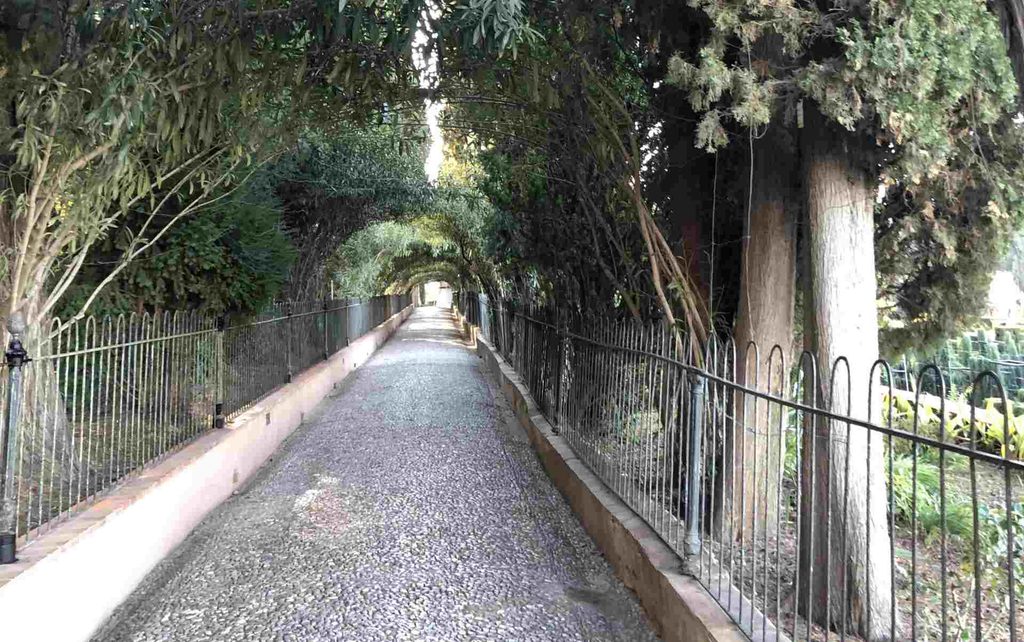
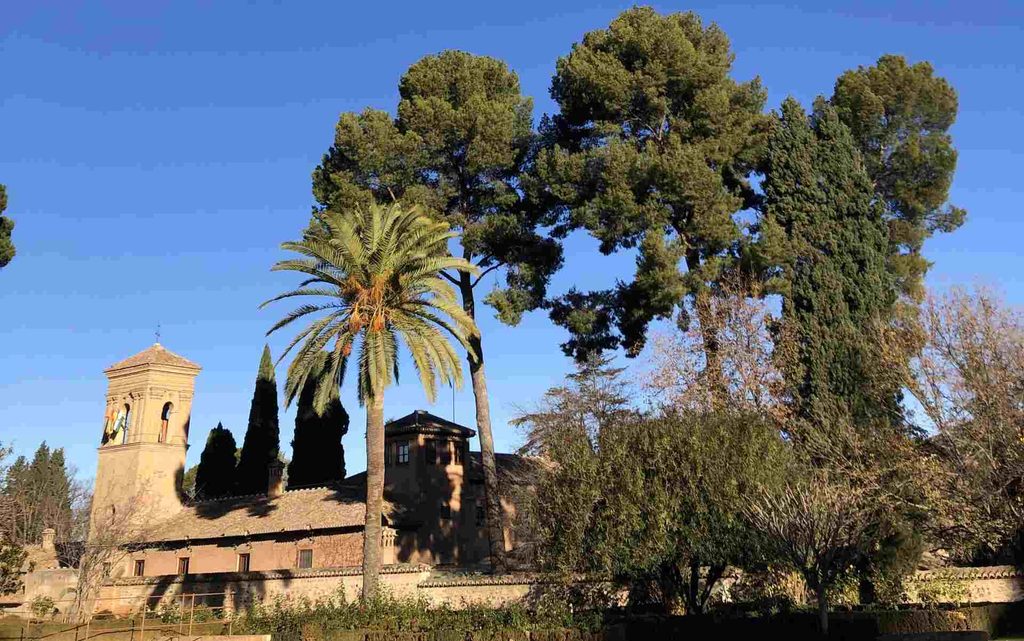
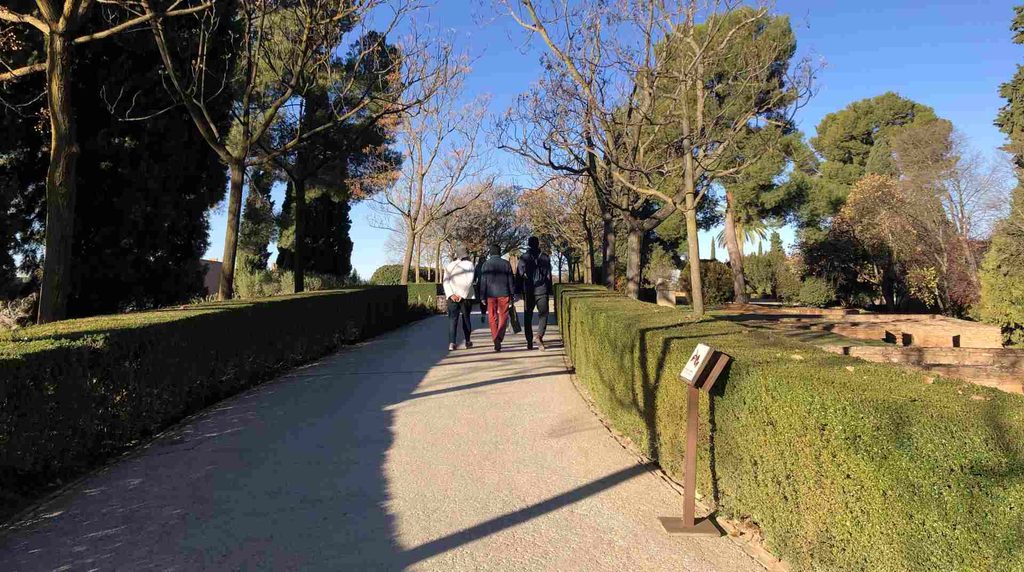
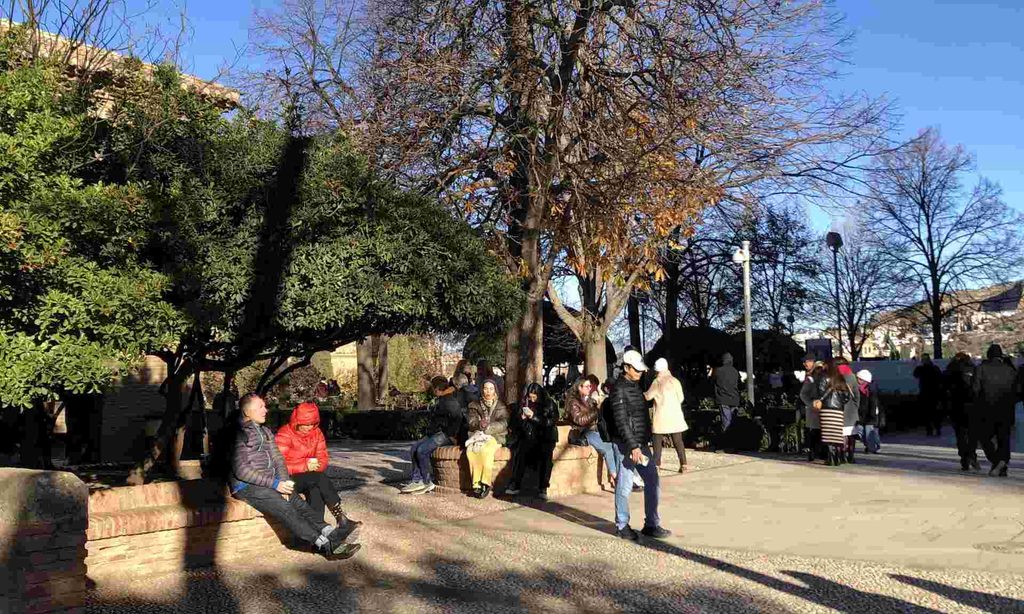
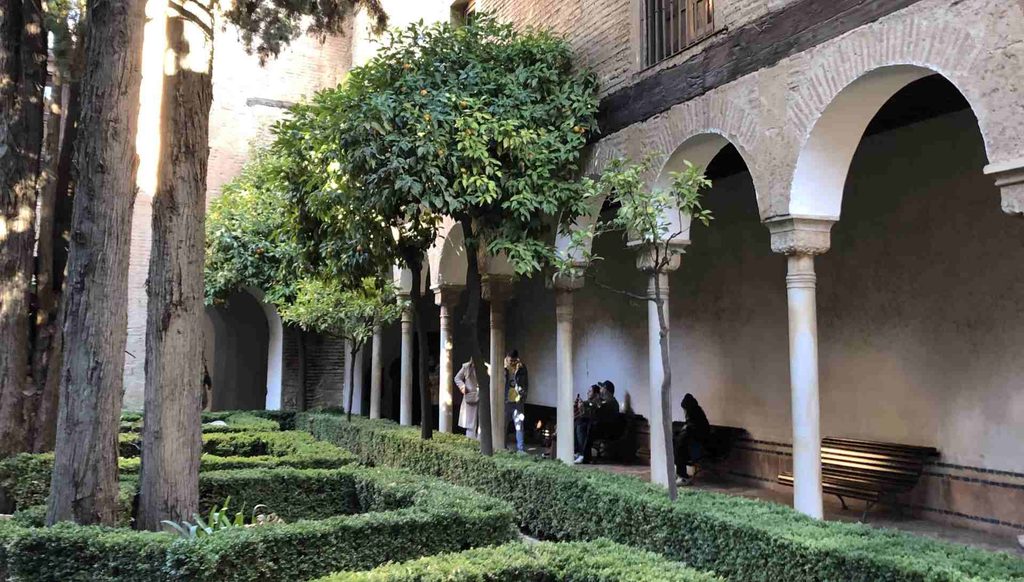
Almost immediately after entering, I walked through areas with many tall trees. The greenery provided a completely different atmosphere from the stone walls and defensive structures. This combination of architecture and nature is one of the things that makes the Alhambra so special.
A Short History of the Alhambra
The history of the Alhambra is closely connected with the history of Muslim-ruled Granada. Muslim forces entered the Iberian Peninsula in 711, and much of the peninsula subsequently came under Muslim rule. Granada eventually became one of the most important centers of Muslim culture in the region.
The Alhambra complex developed particularly under the Nasrid dynasty, which ruled the Emirate of Granada from the 13th century until 1492. The Nasrids were the last Muslim dynasty to rule a major state in the Iberian Peninsula.
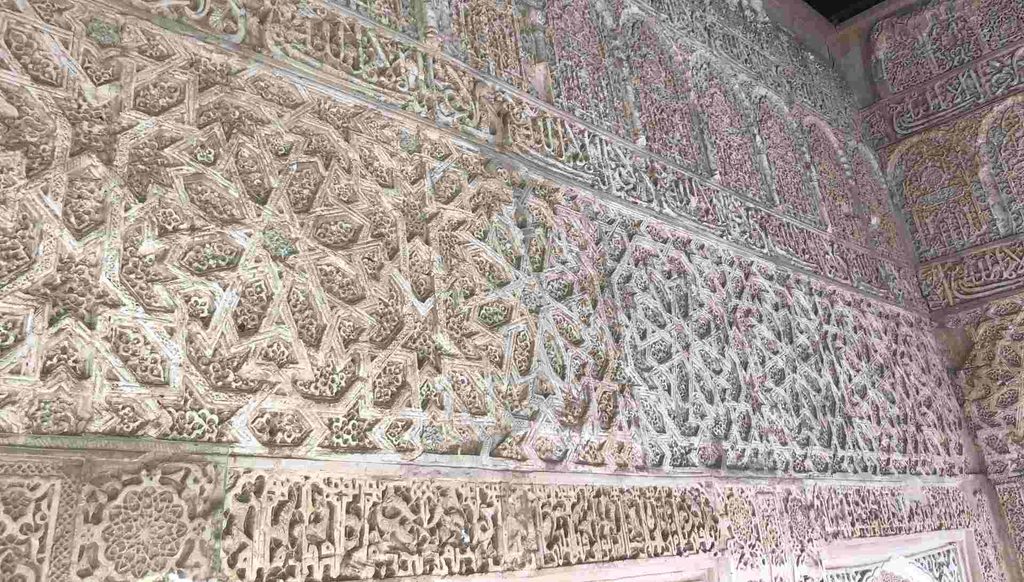
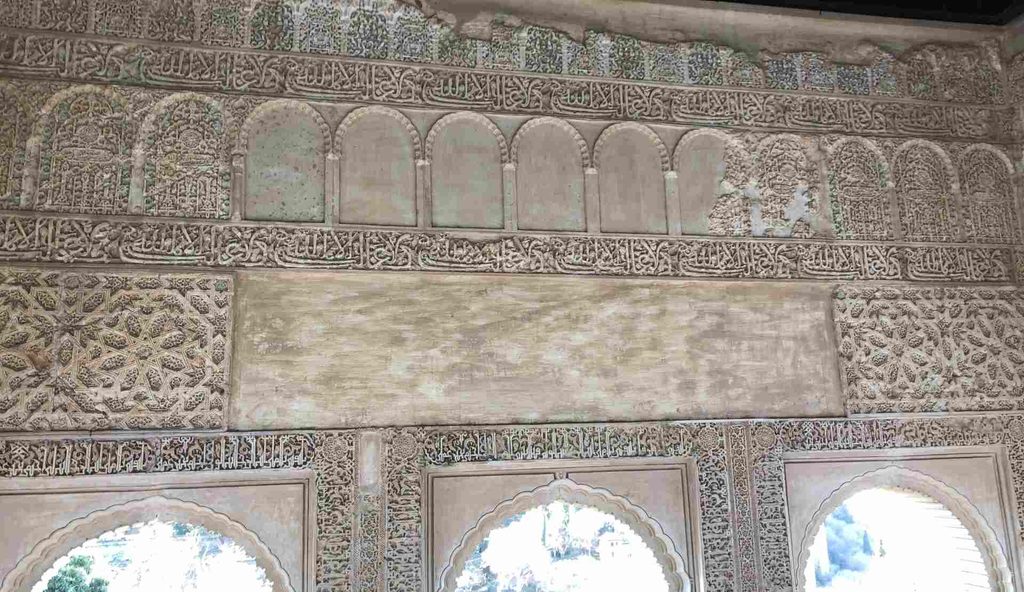
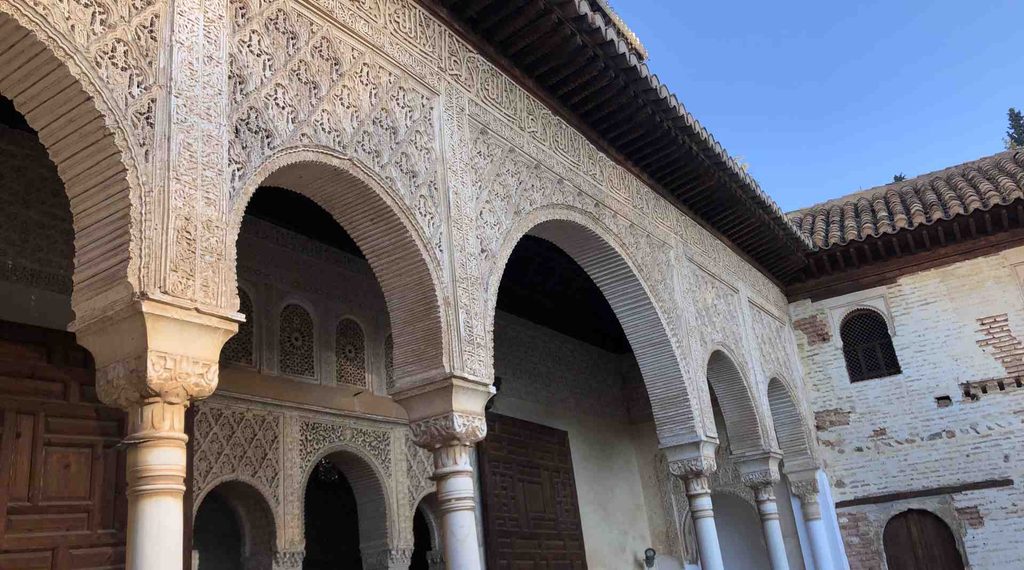
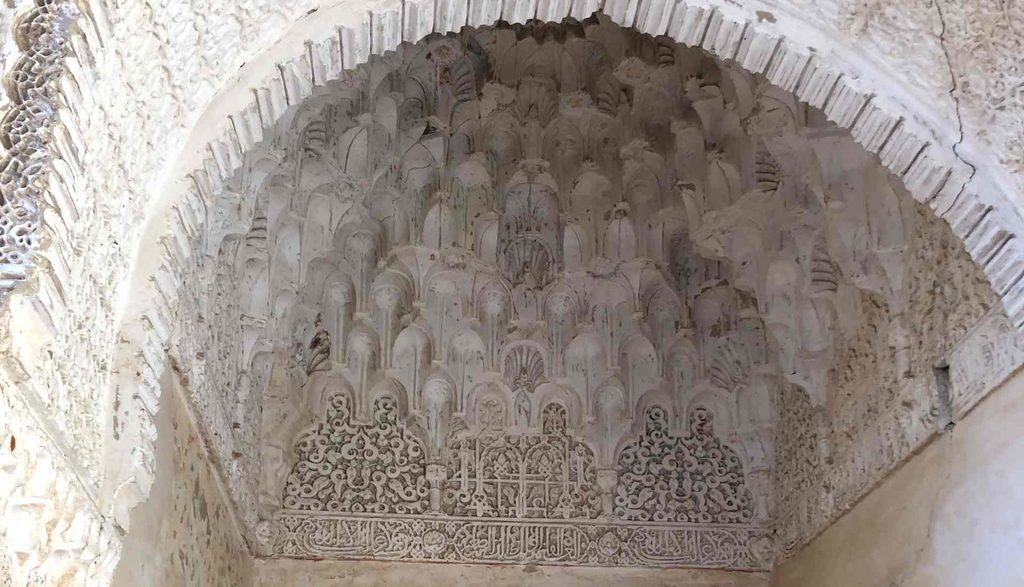
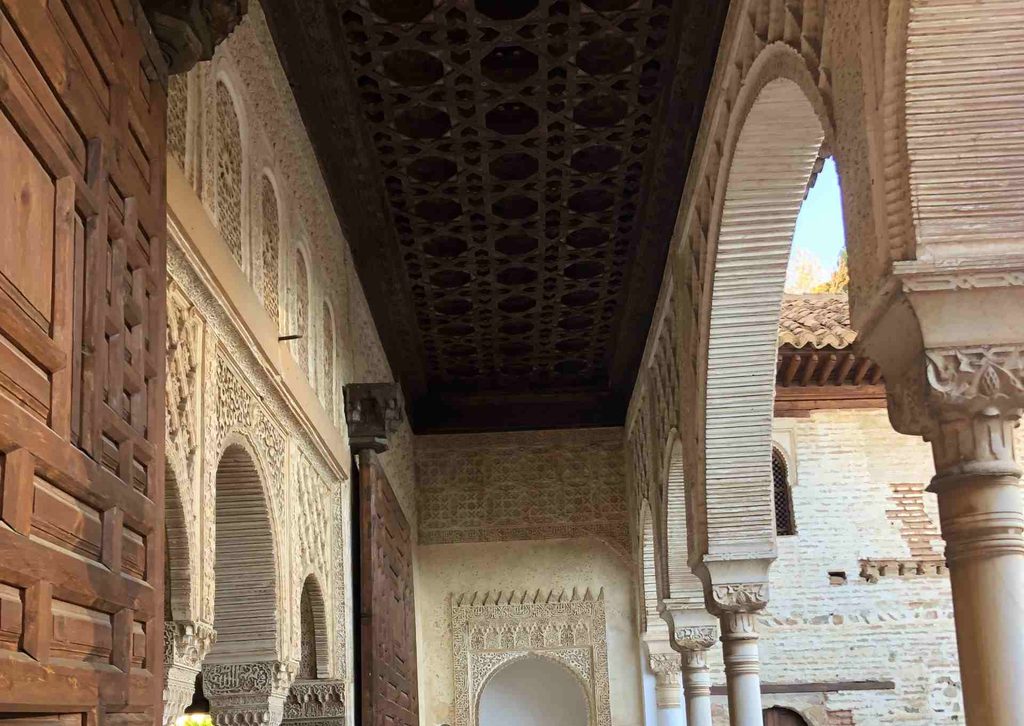
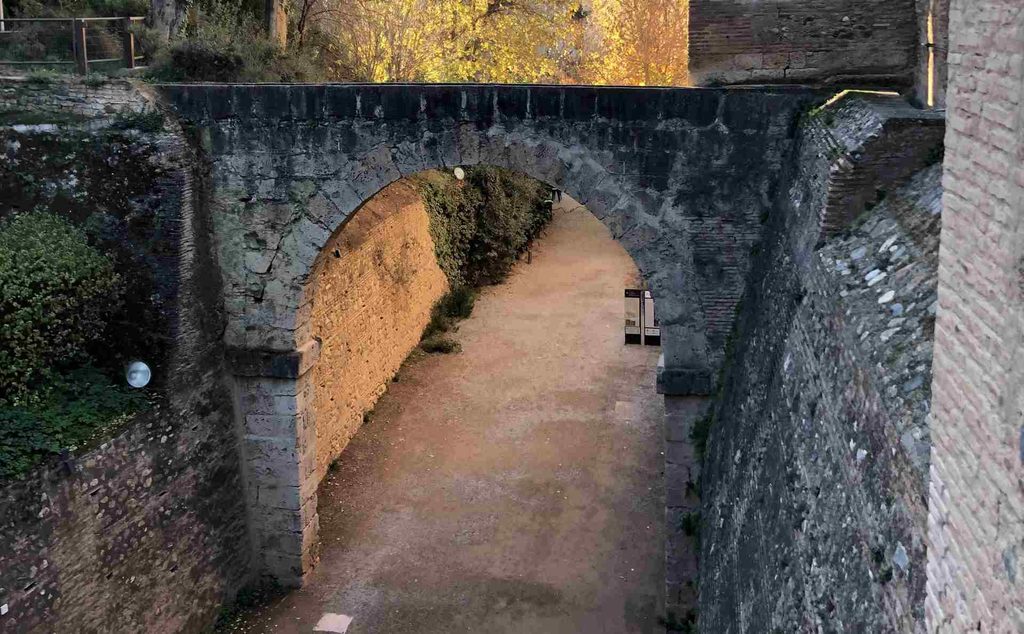
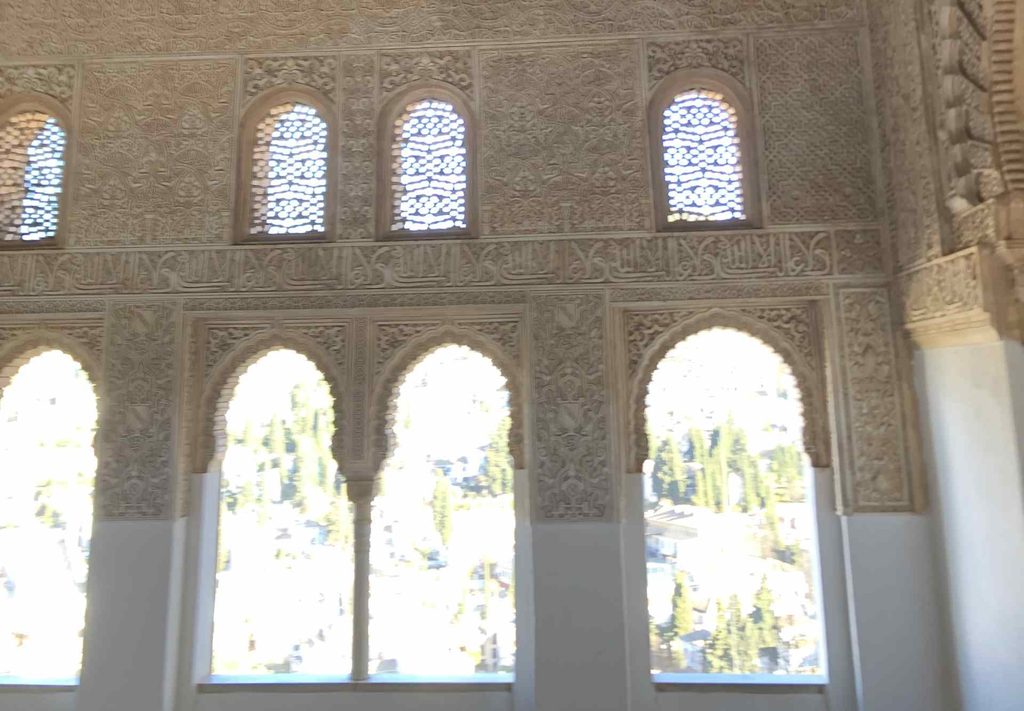
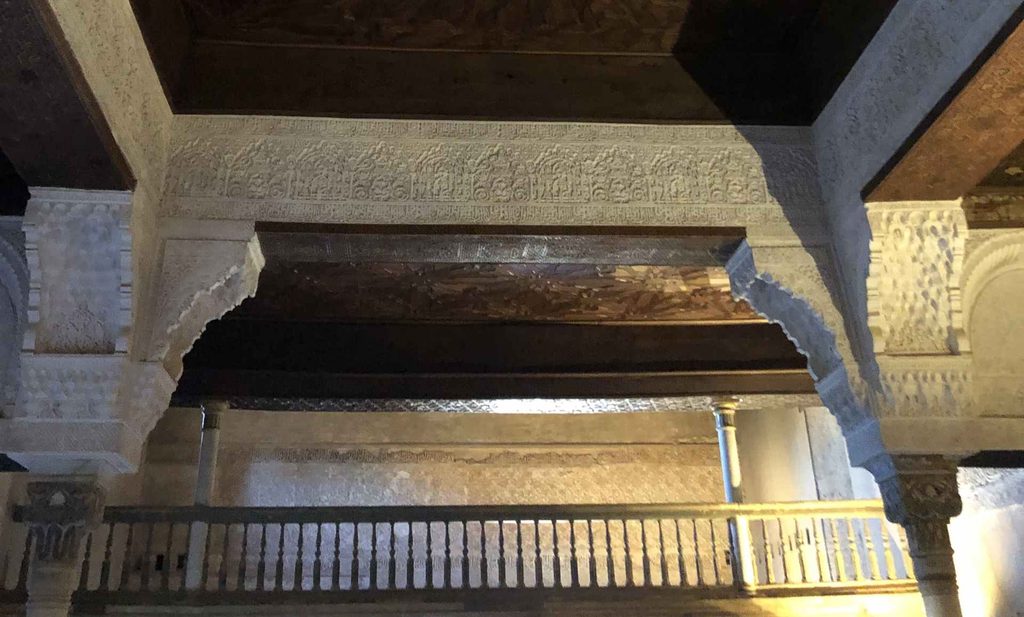
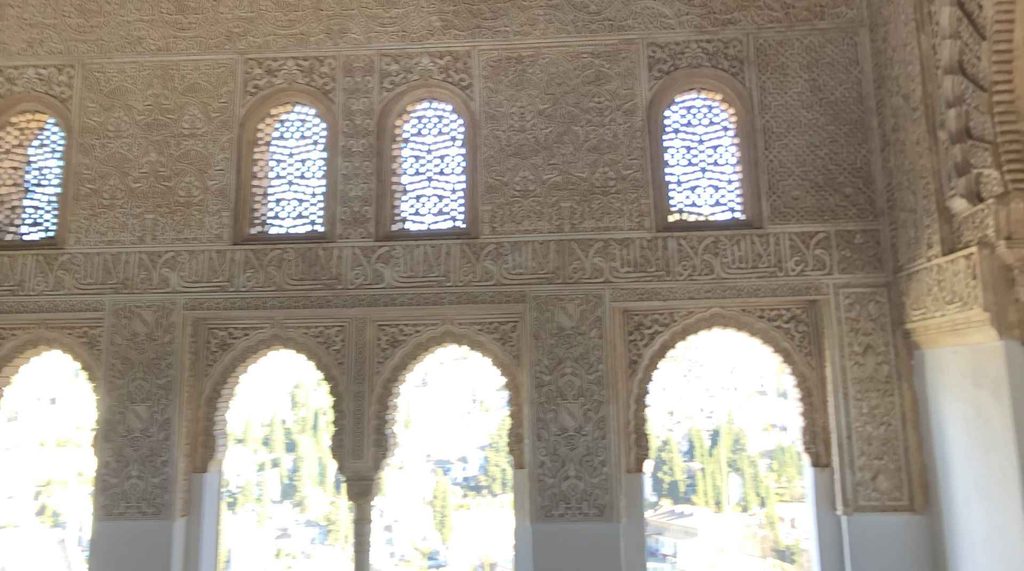
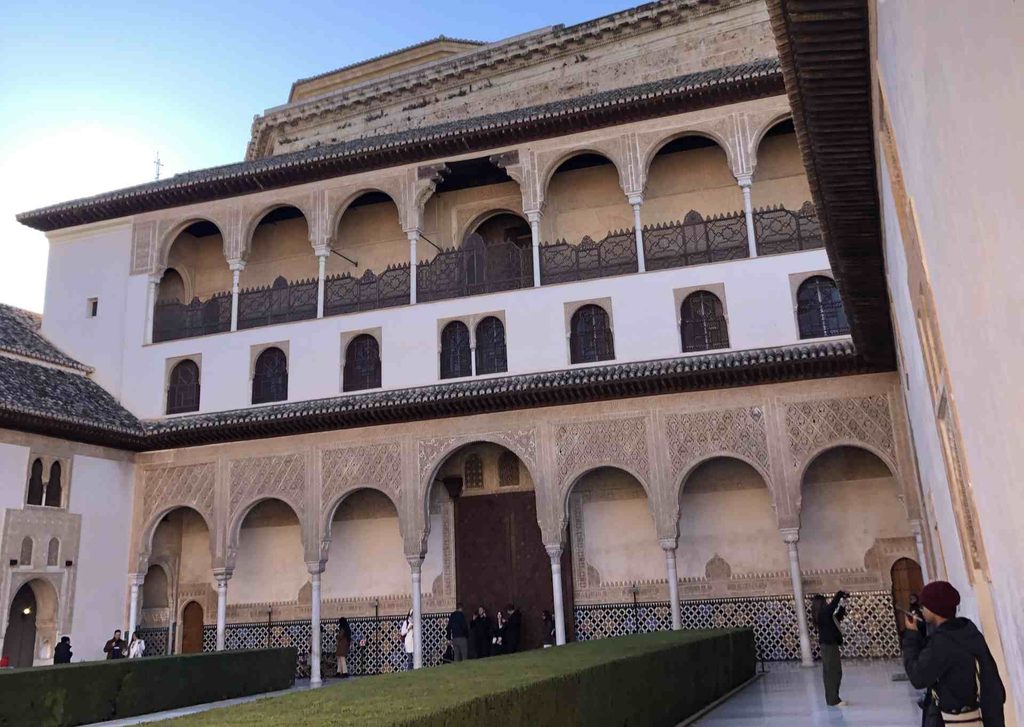
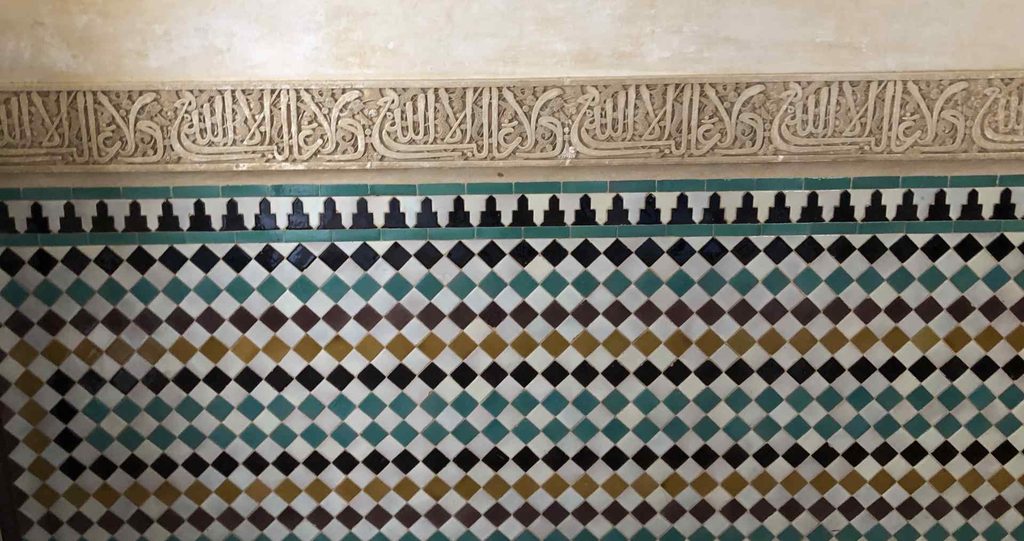
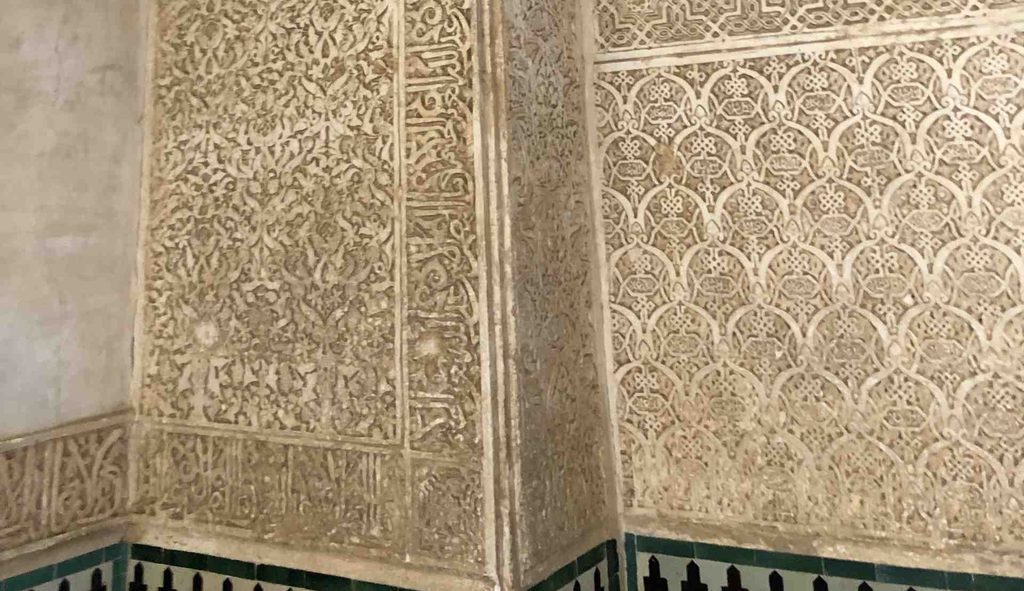
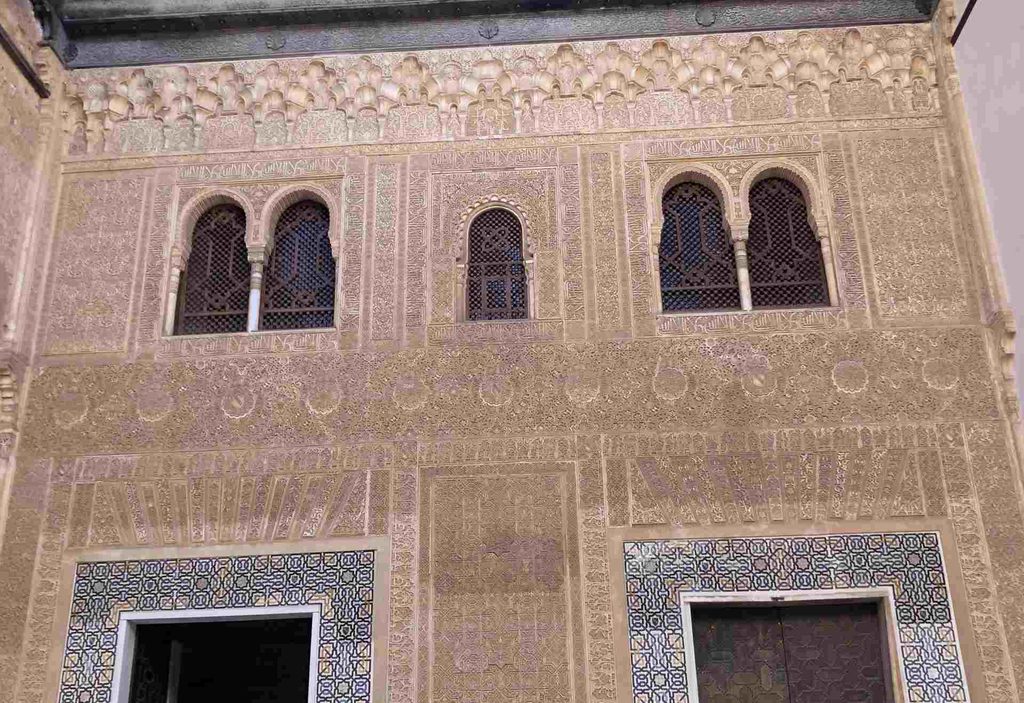
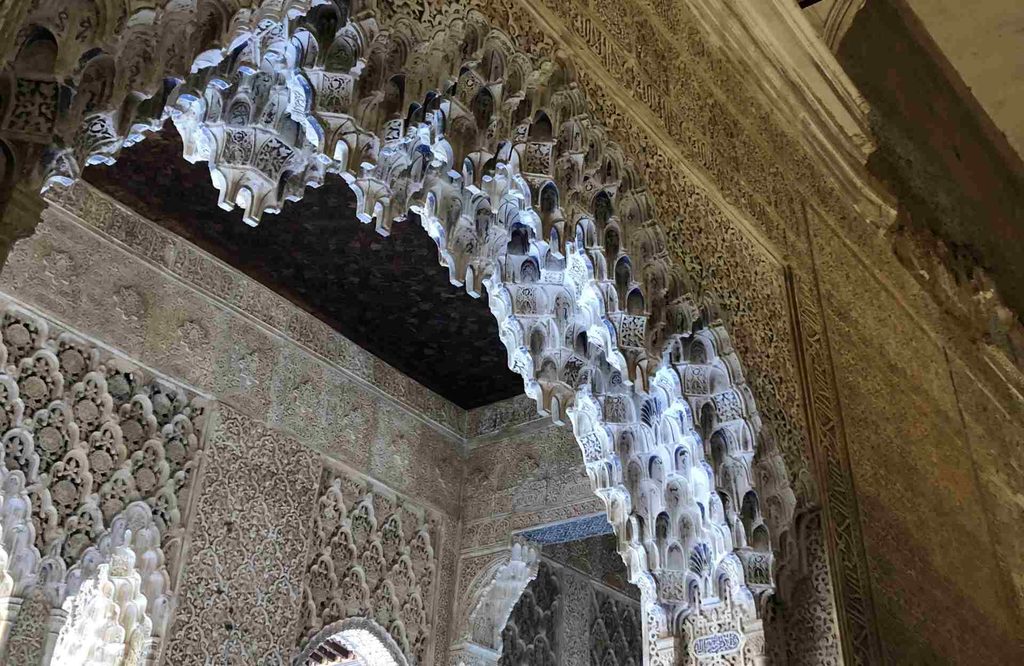
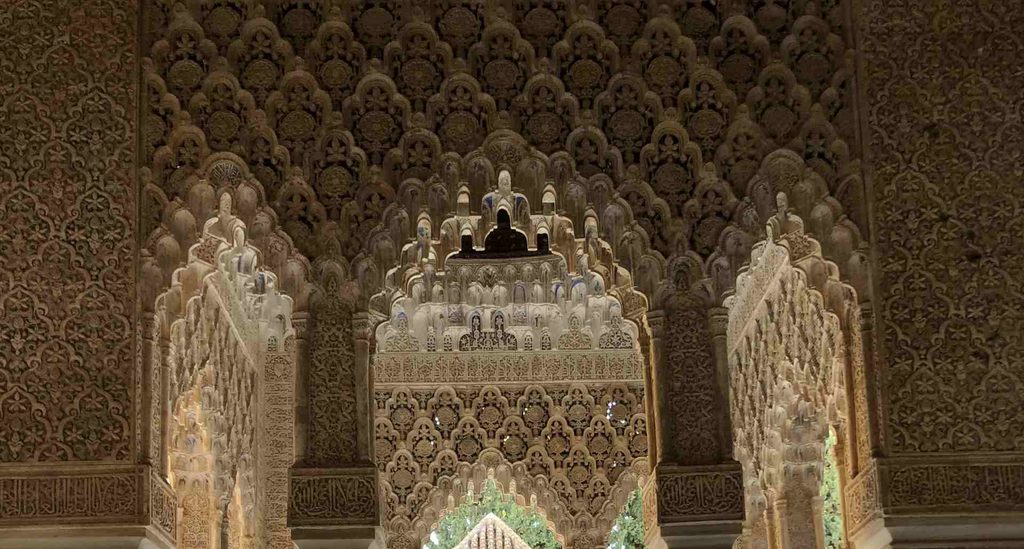
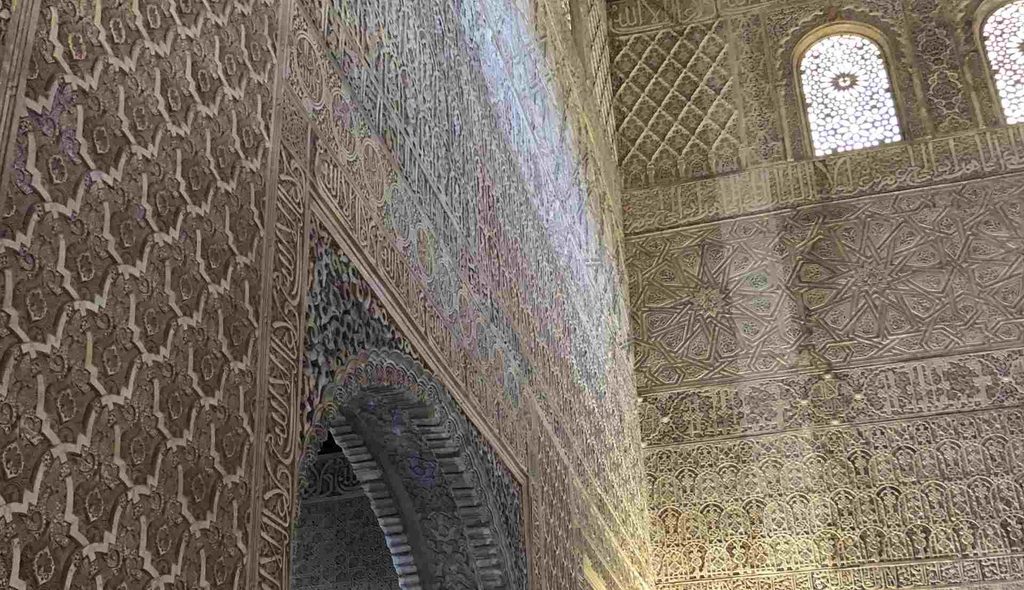
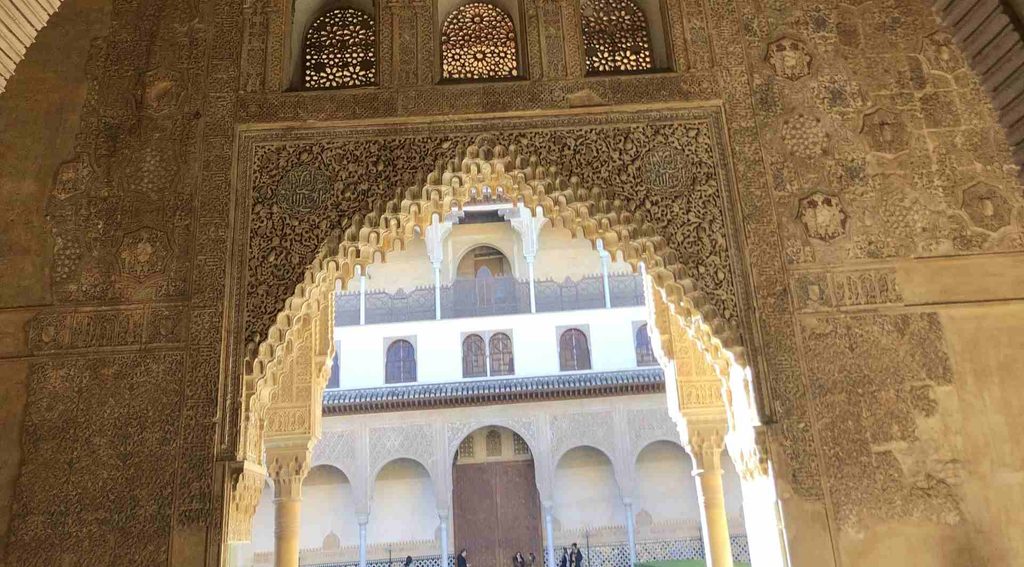
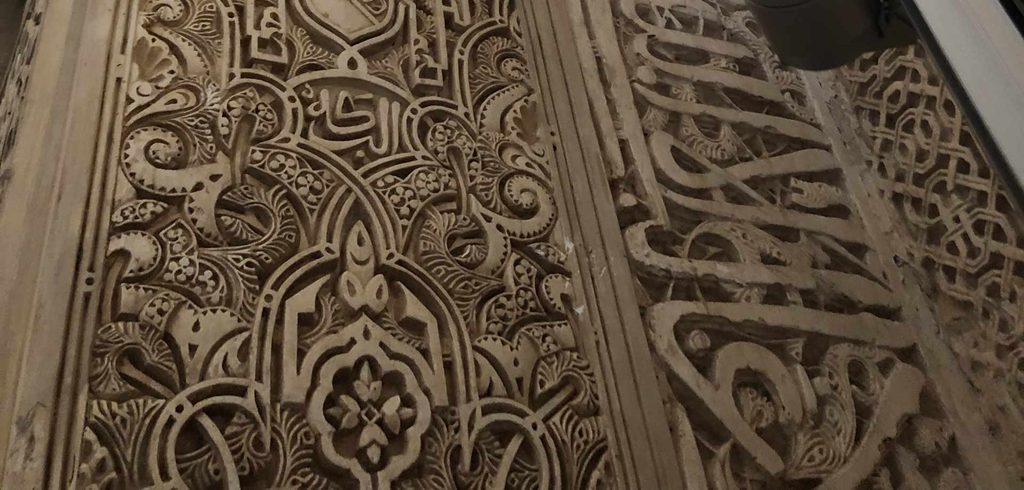
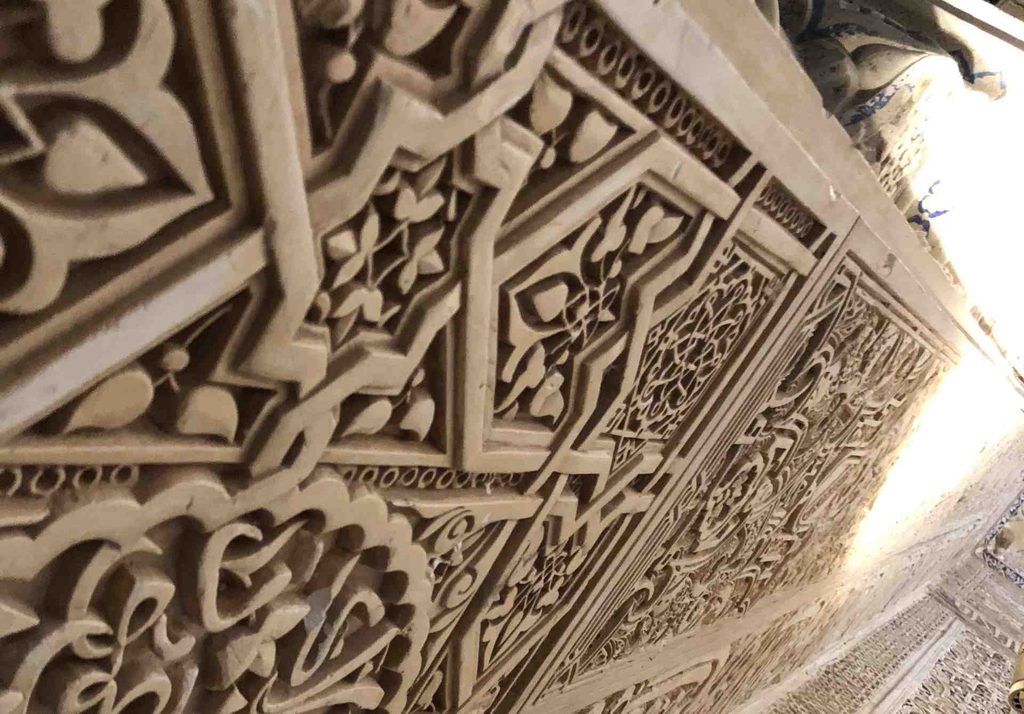
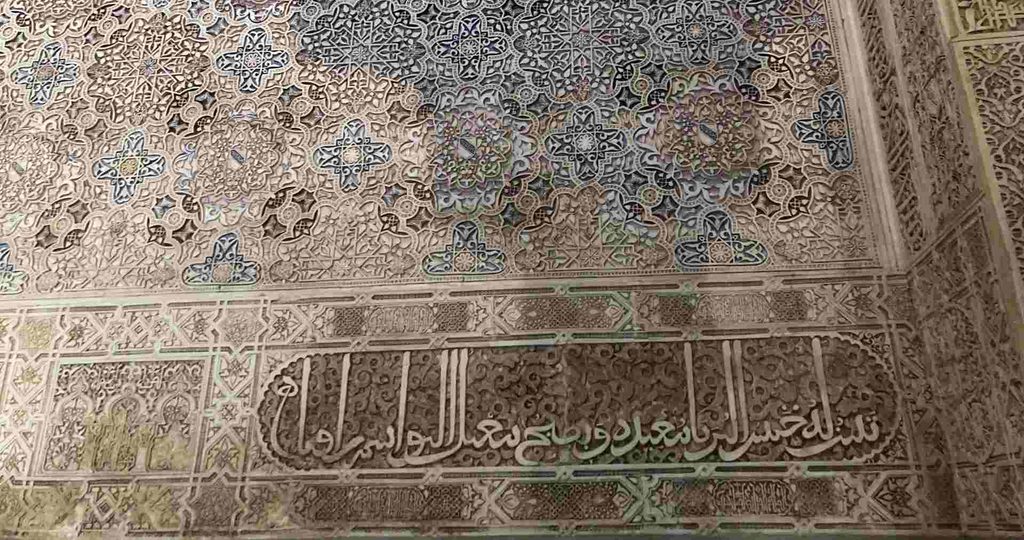
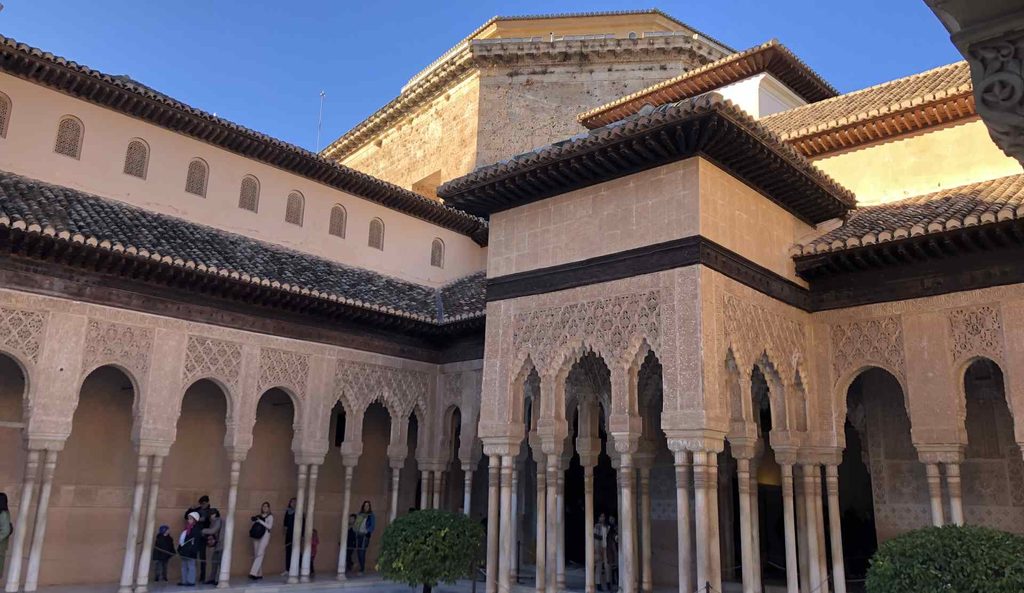
During this period, Granada became an important political and cultural center, while the Alhambra developed into a royal palace-city and fortress complex. Some of the most important construction and decoration of the Nasrid Palaces took place during the reigns of Yusuf I and Muhammad V in the 14th century. The outside of the complex can look relatively plain compared with what is waiting inside. That contrast is one of the first things I noticed. The defensive walls and towers tell you that this was a fortress, but once you enter the palace areas, the architecture becomes incredibly detailed. The walls are covered with geometric patterns, Arabic inscriptions, decorative stucco and colorful tiles. This is where the Alhambra becomes much more than a military fortress.
The Fall of Granada in 1492
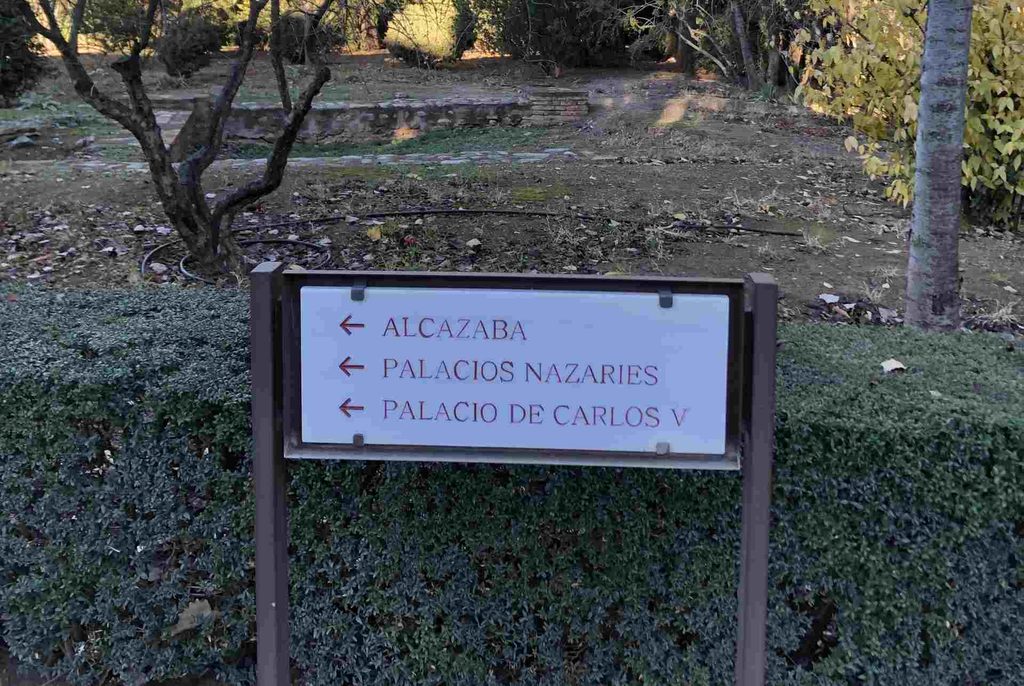
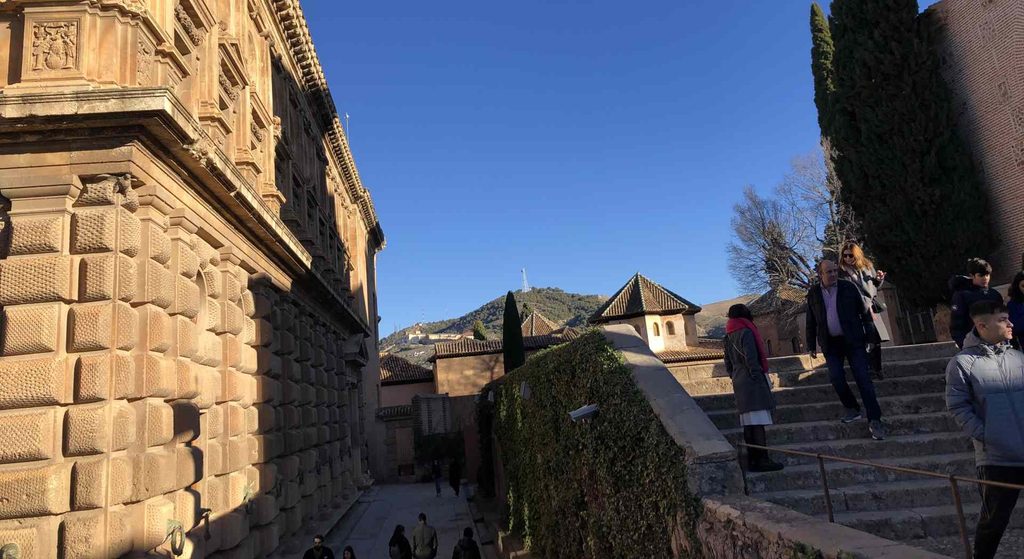
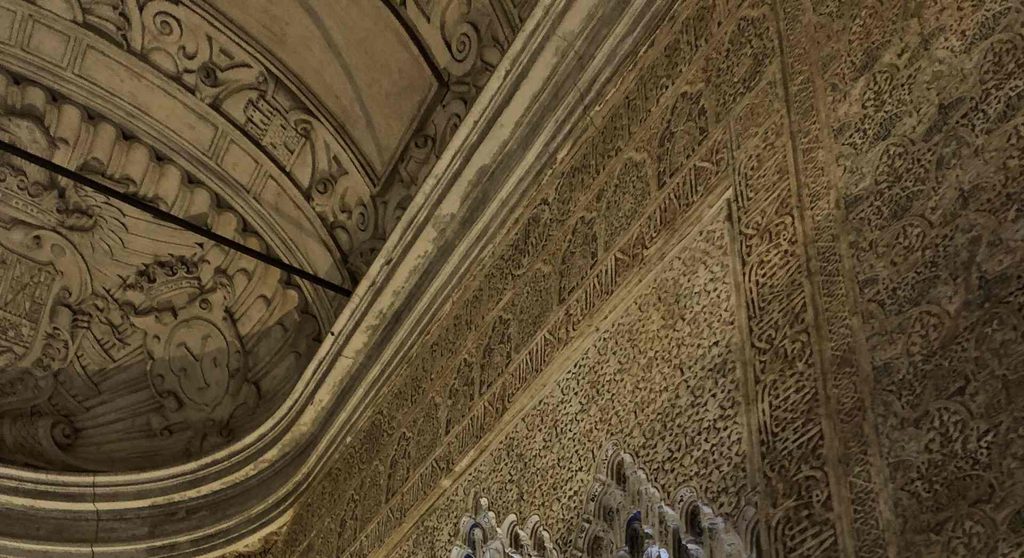
The Alhambra also played a major role in the final chapter of Muslim rule in the Iberian Peninsula. On January 2, 1492, Muhammad XII, commonly known as Boabdil, surrendered Granada to Ferdinand II of Aragon and Isabella I of Castile. This marked the end of the Emirate of Granada and the end of Muslim political rule in Iberia. For that reason, the Alhambra is connected to one of the most important turning points in Spanish history. After the Christian conquest, the complex continued to be used and modified. One of the most obvious later additions is the Palace of Charles V, a Renaissance building constructed within the Alhambra complex. So when walking through the Alhambra today, you are not seeing only one period of history. You are seeing layers of history that were added over centuries.
The Outside Looks Simple, but the Inside Is Extraordinary
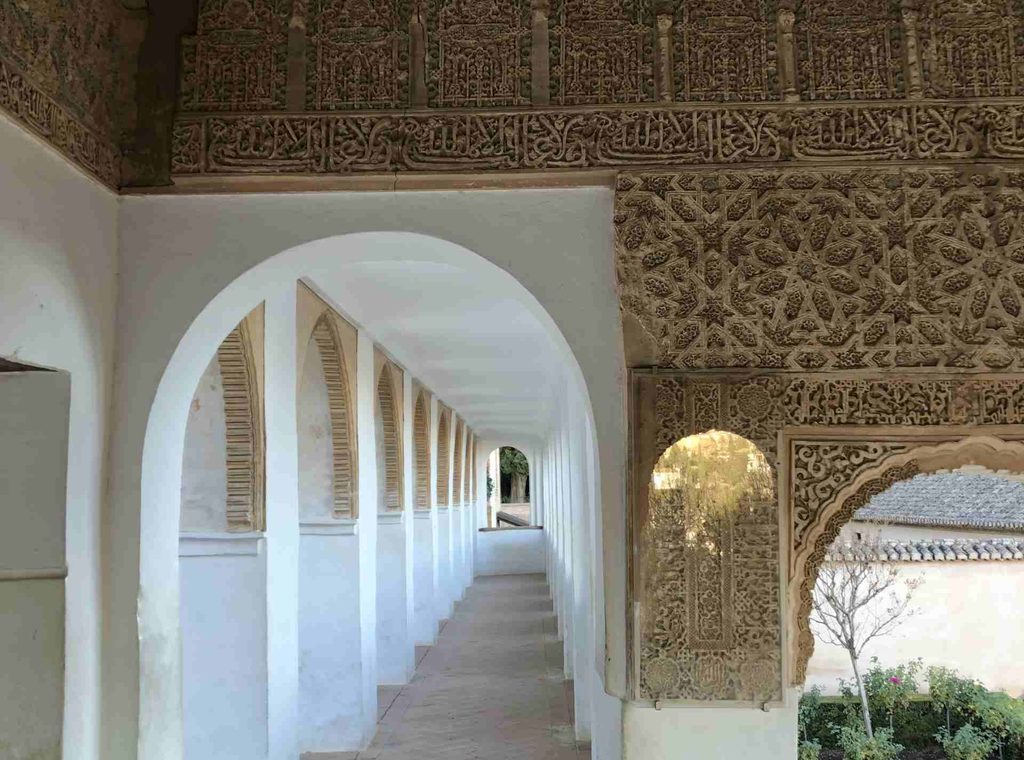
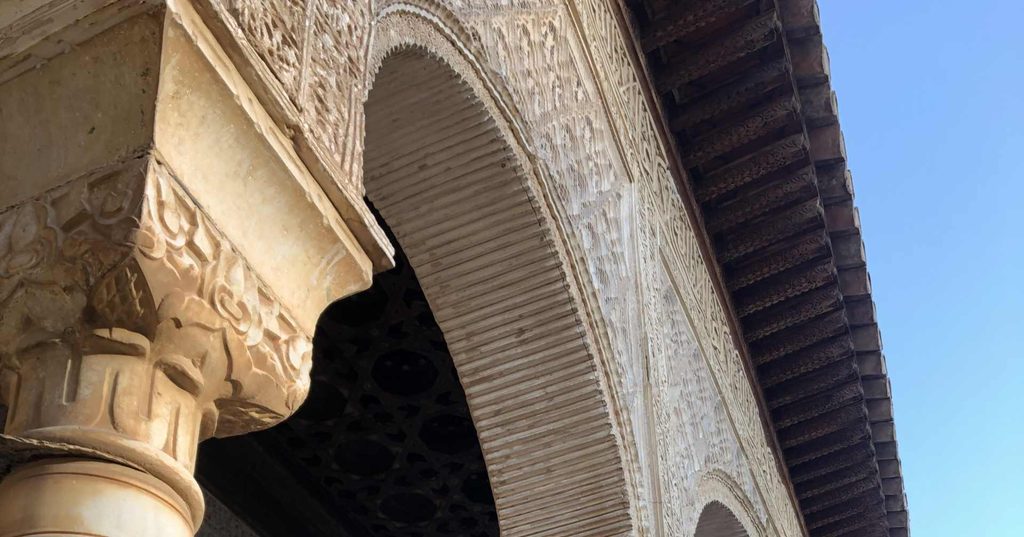
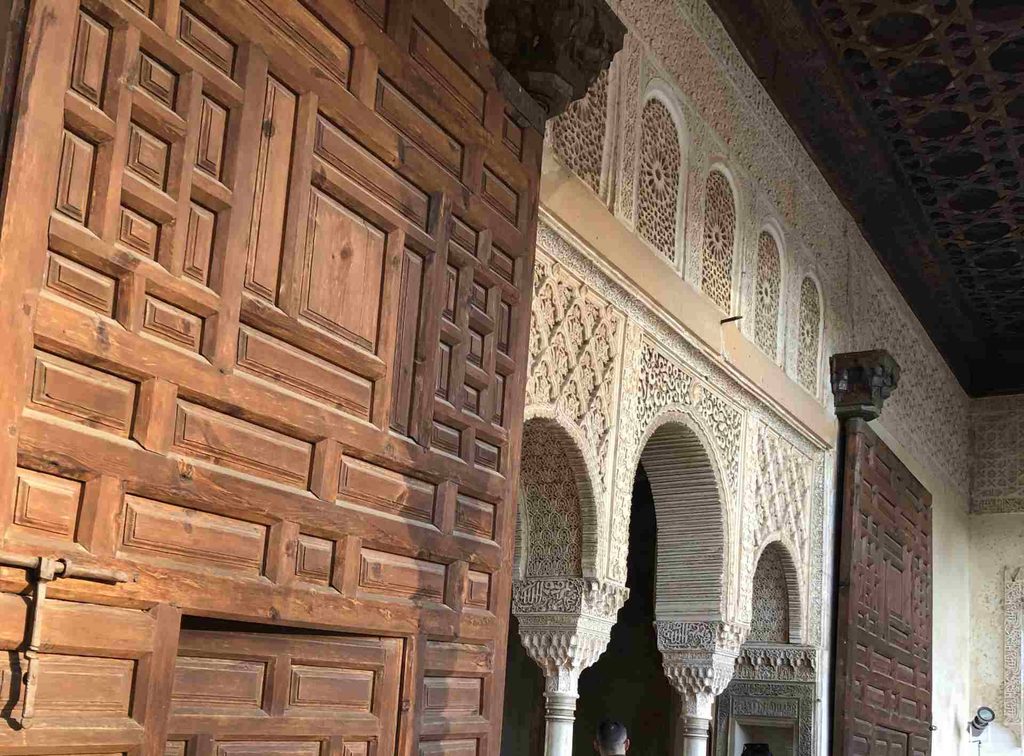
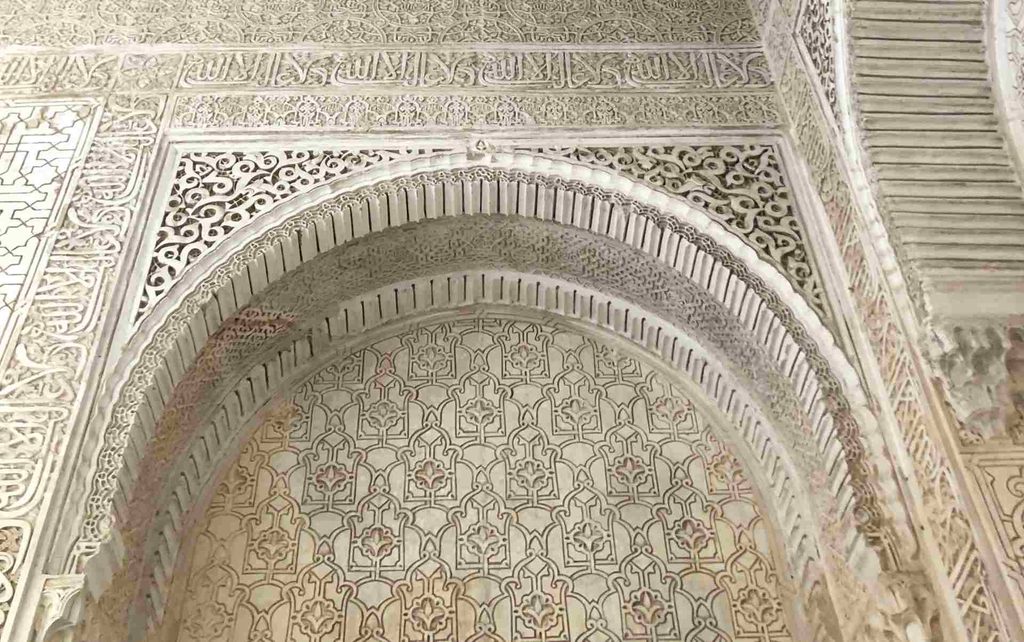
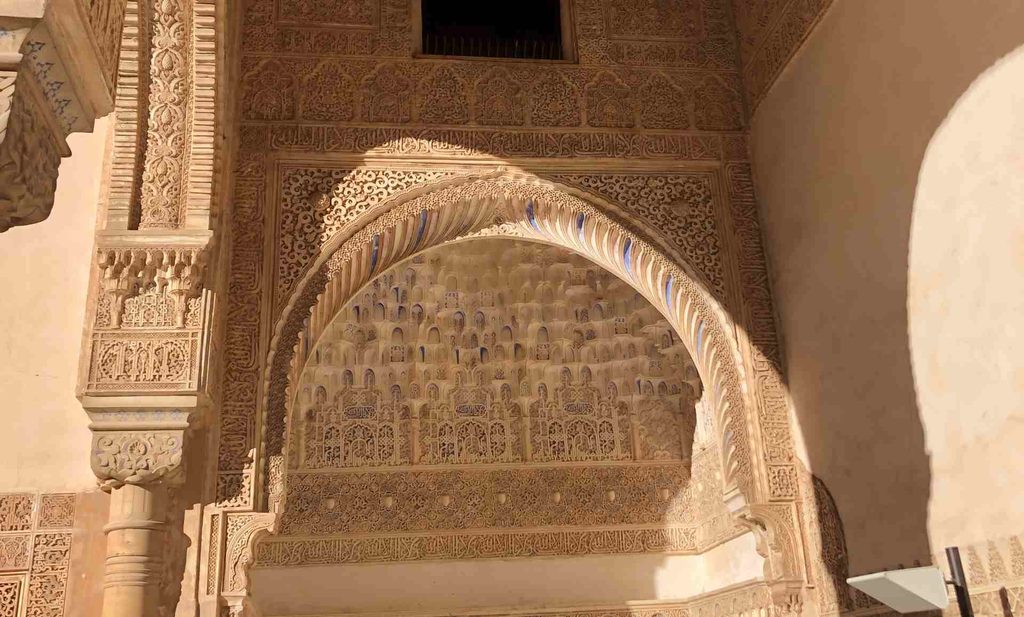
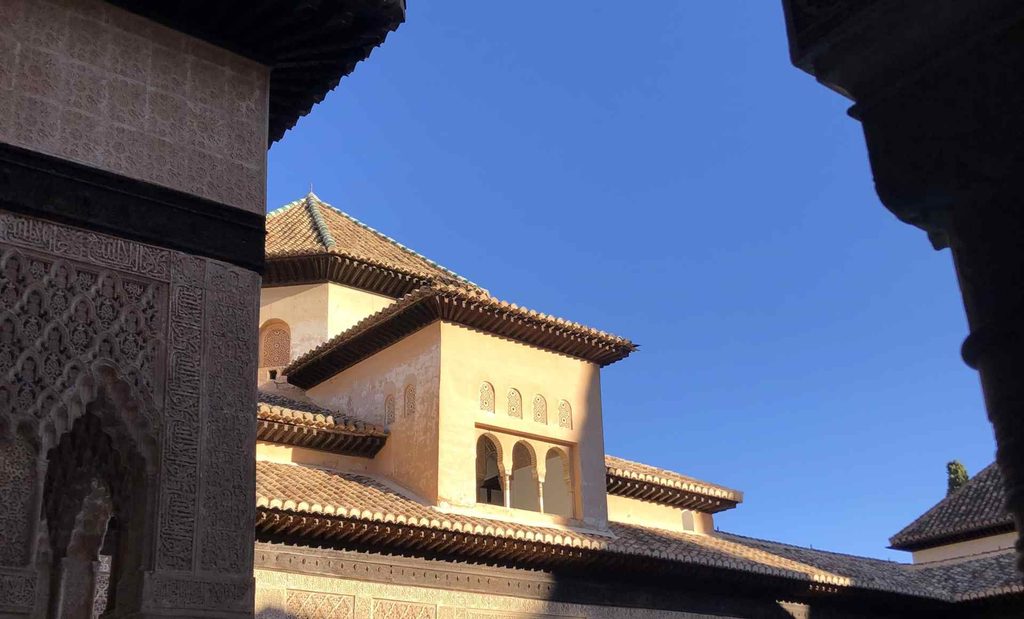
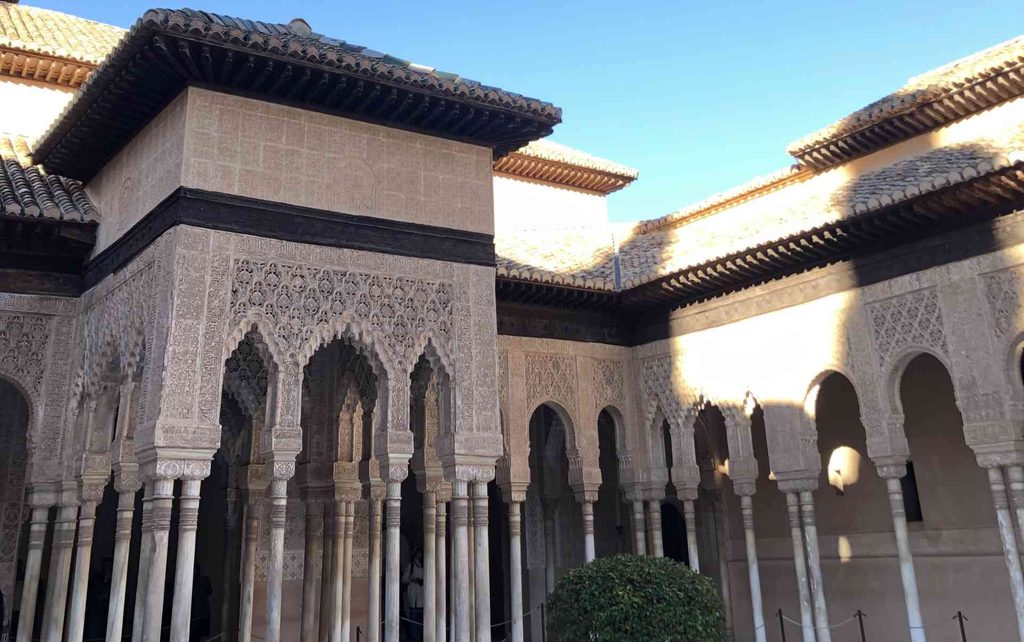
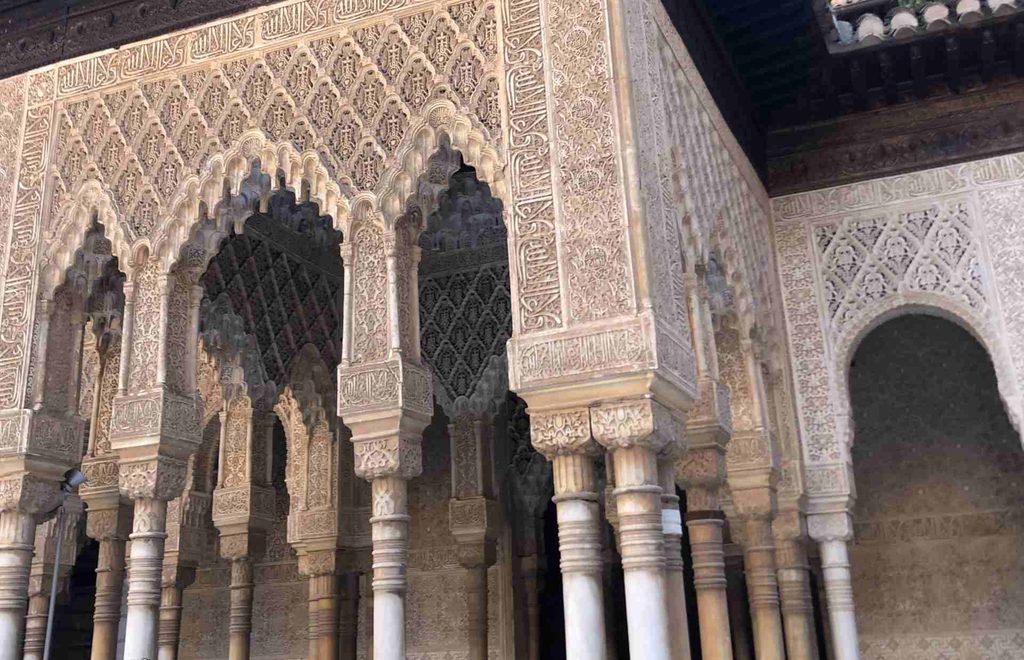
One of the biggest architectural contrasts at the Alhambra is between the exterior and interior. The exterior walls are largely functional. They are strong, defensive and relatively simple. Inside, however, everything changes. There are decorated arches, patterned tiles, carved surfaces, inscriptions, courtyards, fountains and carefully designed spaces.
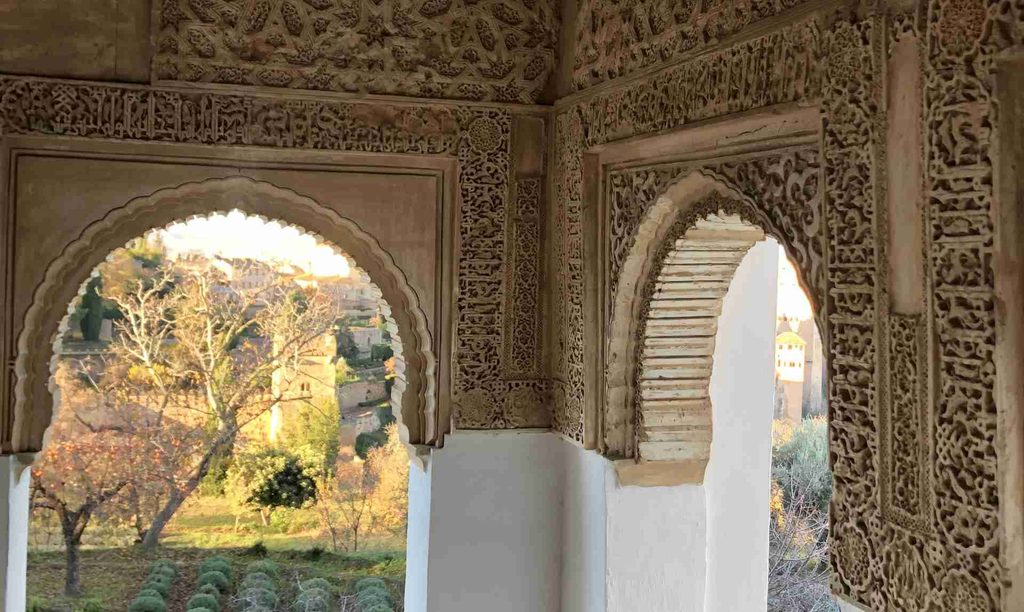
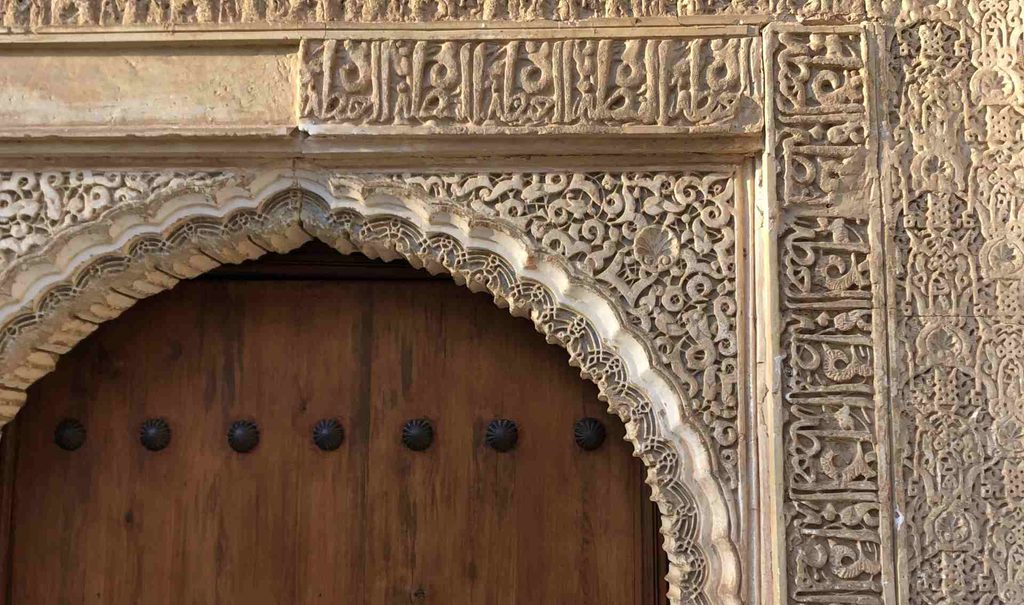
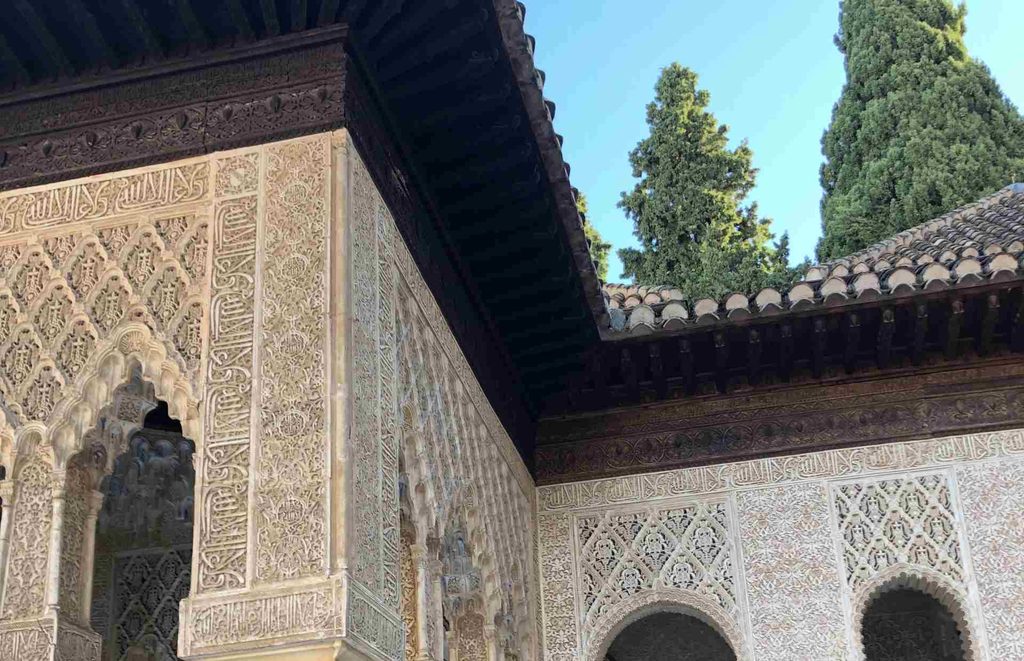
The Nasrid builders created an architecture where decoration was not simply added to a building as an afterthought. It became an essential part of the experience. The geometric designs are especially impressive. You can look at a wall from a distance and see one pattern, then move closer and discover countless smaller details. This is one reason I took so many photographs. Even after spending time in one room or courtyard, I often noticed something else that I had not seen at first.
Water at the Alhambra
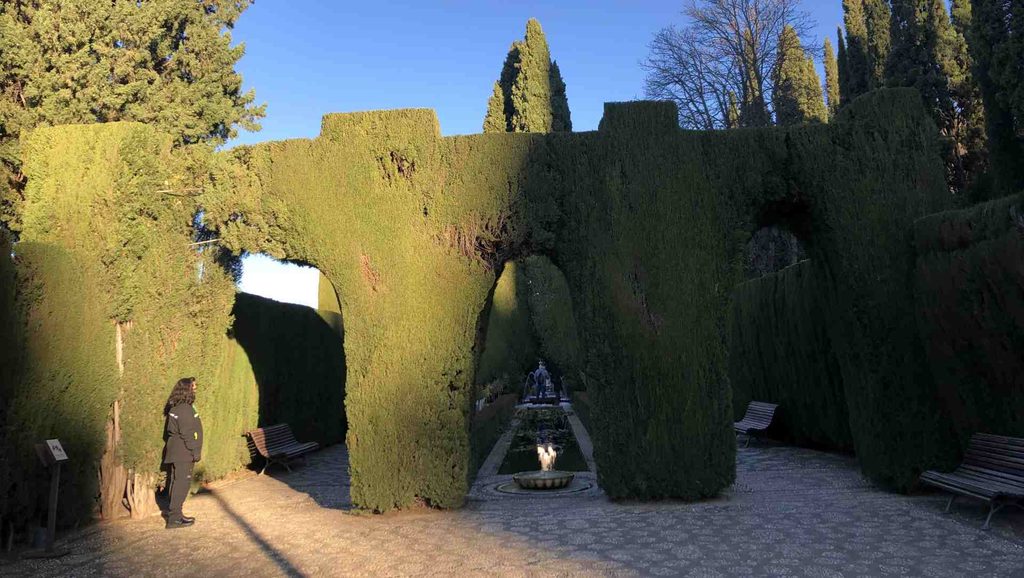
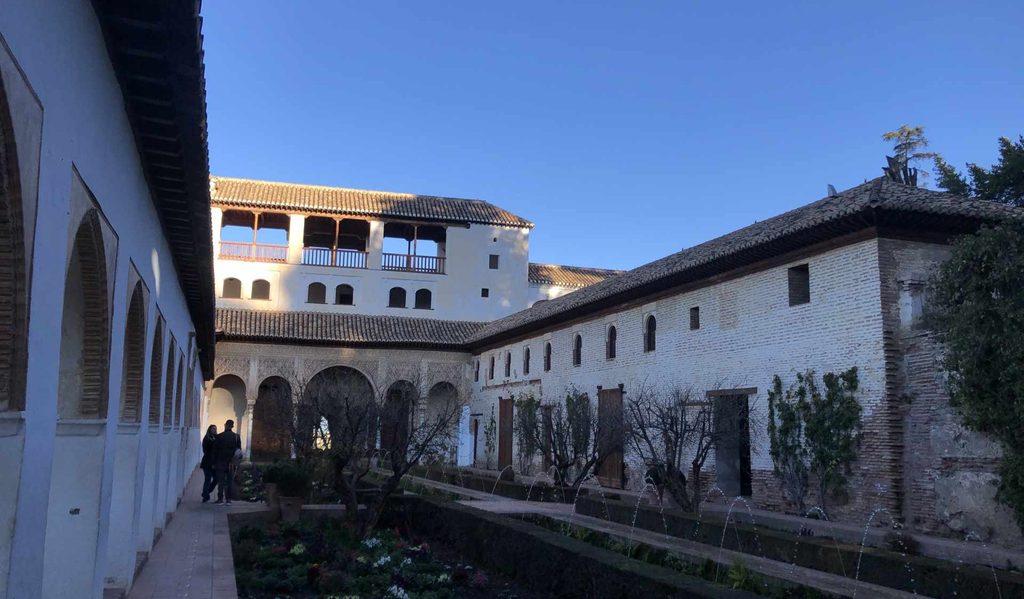
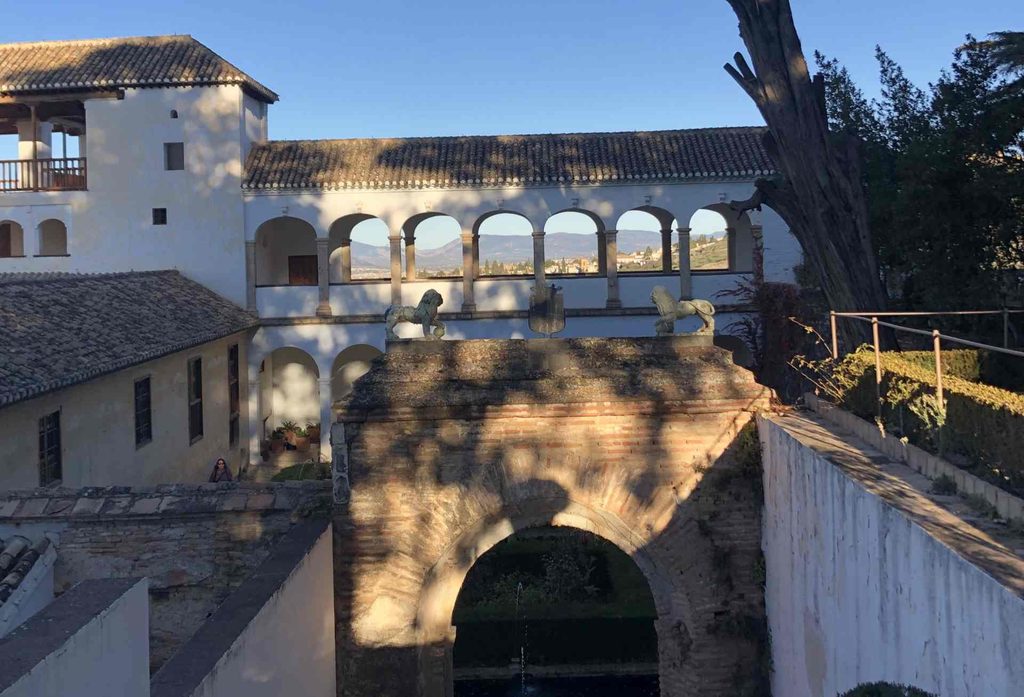
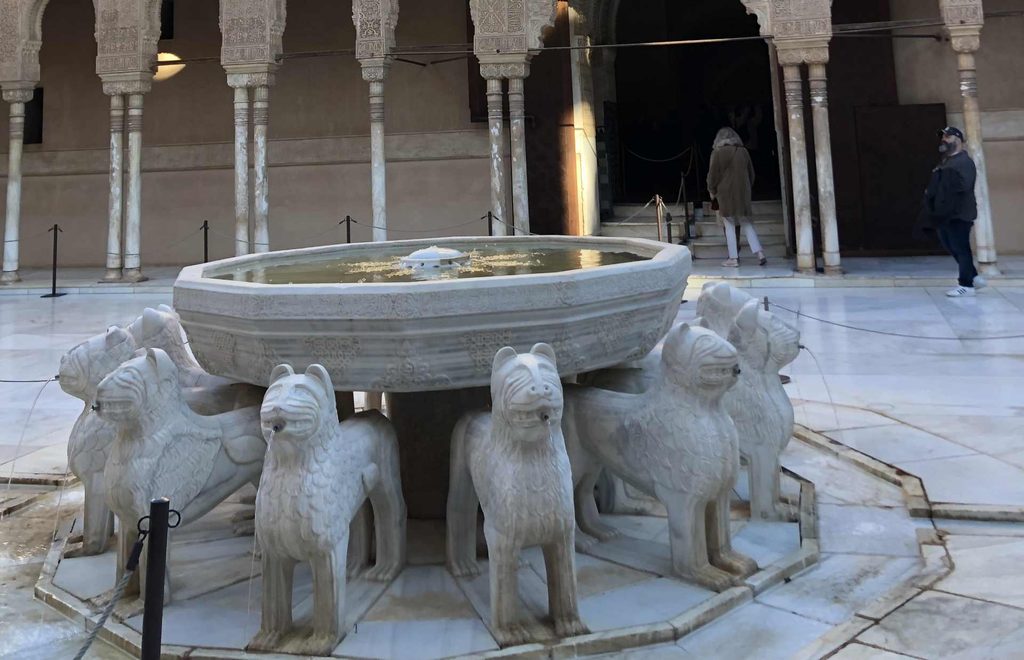
Water is one of the defining elements of the Alhambra. Throughout the complex, you encounter fountains, channels, pools and other water features. I found this particularly interesting because water is not just decorative here. It is integrated into the architecture and gardens. One of the areas I visited was the Sultan’s Royal Water Channel.
Water had enormous practical and cultural importance in Islamic societies, particularly in the hot climates of the Mediterranean and Middle East. It was important for drinking, irrigation, gardens, cleanliness and religious practices such as ablution before prayer. At the Alhambra, water also contributes to the atmosphere. The sound of moving water makes the courtyards feel cooler and calmer, while the reflections create another visual dimension. There are also places where visitors can find drinking water, which is useful because walking around the whole complex can take everal hours. I recommend carrying a reusable bottle, particularly if you visit during warmer weather.
Generalife and the New Gardens
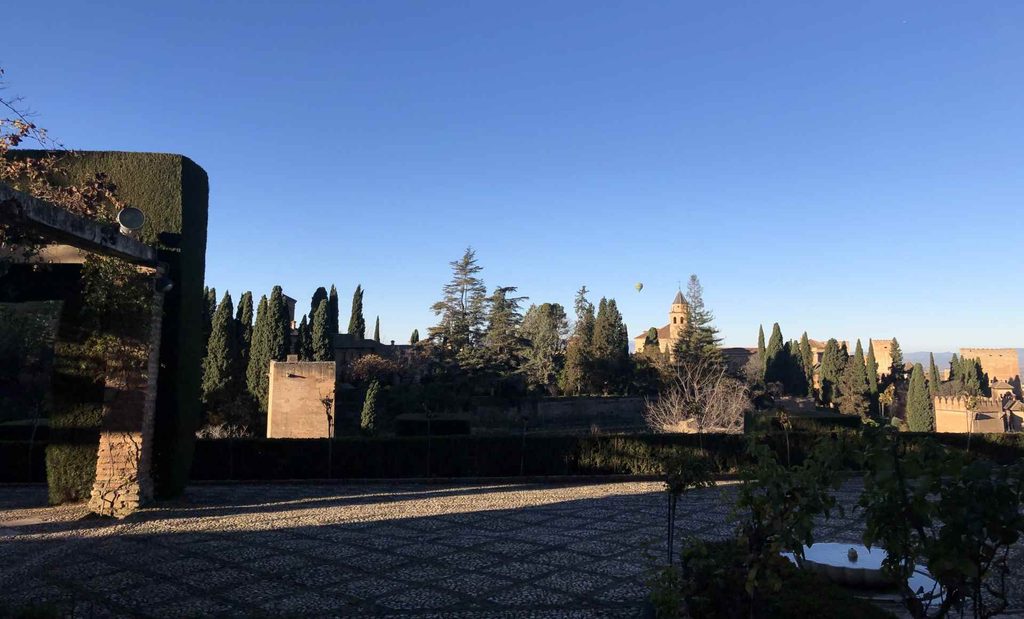
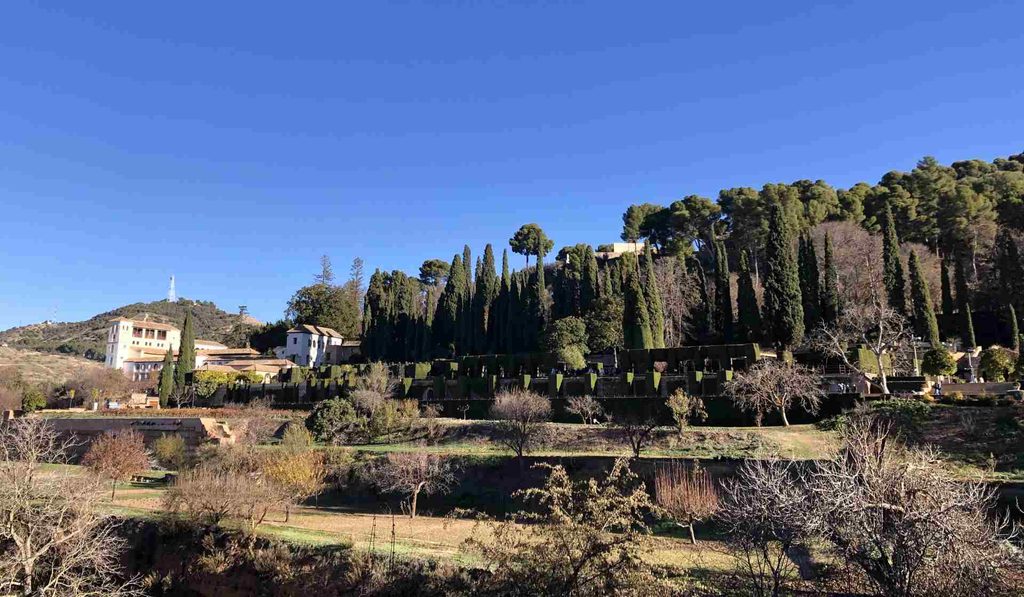
After exploring some of the first areas, I continued towards the Generalife and its gardens. This was one of my favorite parts of the visit. The Generalife area is much greener and more open than some of the palace interiors. There are trees, flowers, planted areas, paths and water features. After spending time looking at detailed architectural decoration, it was nice to enter an area dominated by greenery. I particularly liked the combination of plants, water and the surrounding architecture. Another detail that caught my attention was the pavement. Some paths and areas use small stones arranged into decorative patterns. It gives the gardens a very distinctive appearance and is another example of how even seemingly ordinary parts of the complex were carefully designed. The Generalife is also a good reminder that the Alhambra was not only about buildings. Gardens were an important part of royal life, and the landscape was designed as carefully as the architecture.
The Architecture of the Nasrid Palaces
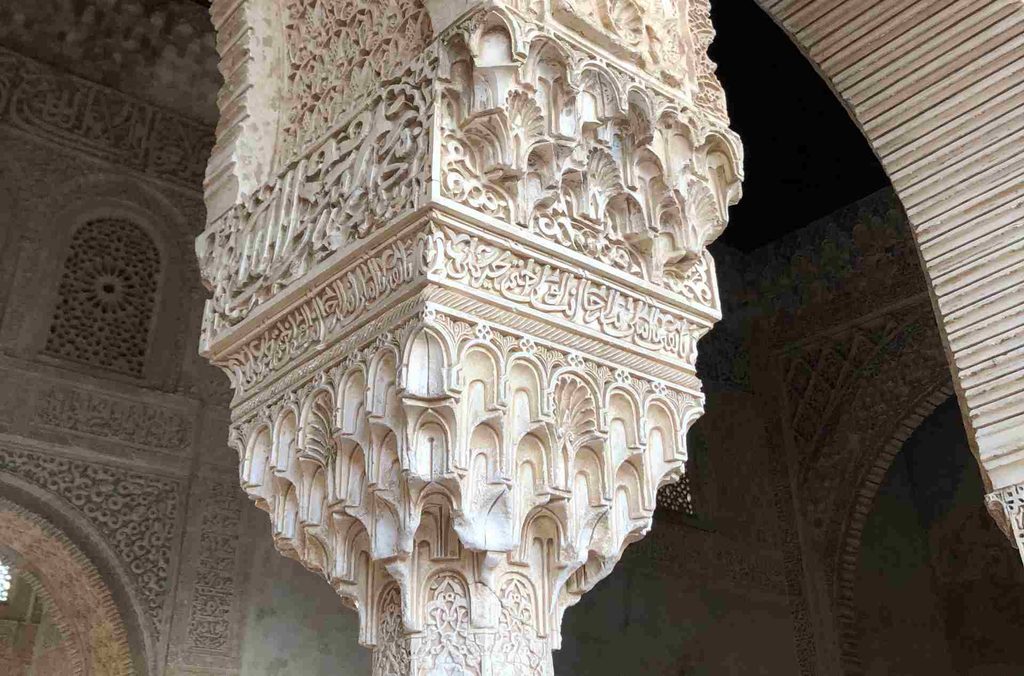
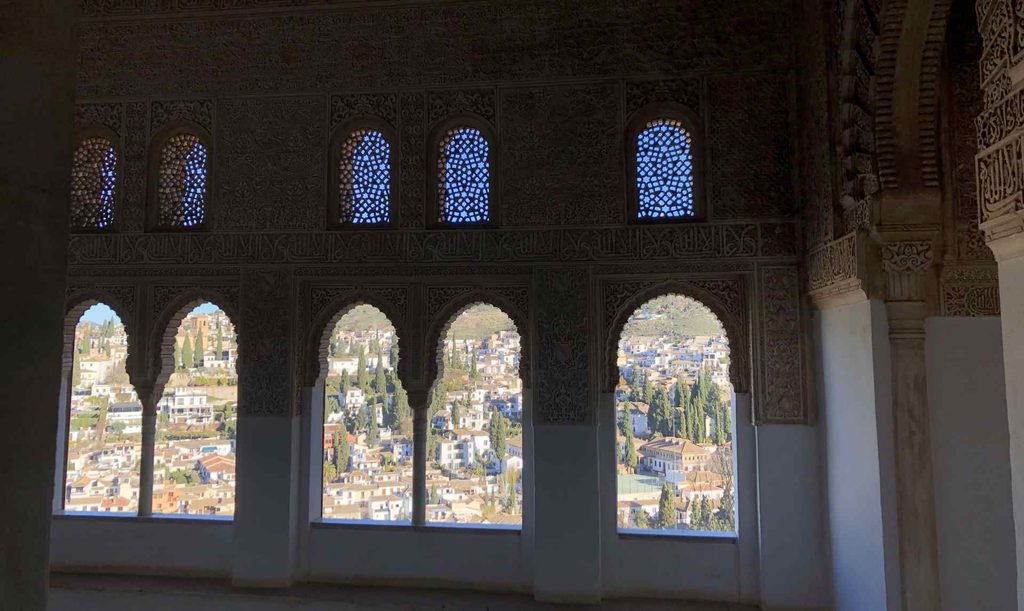
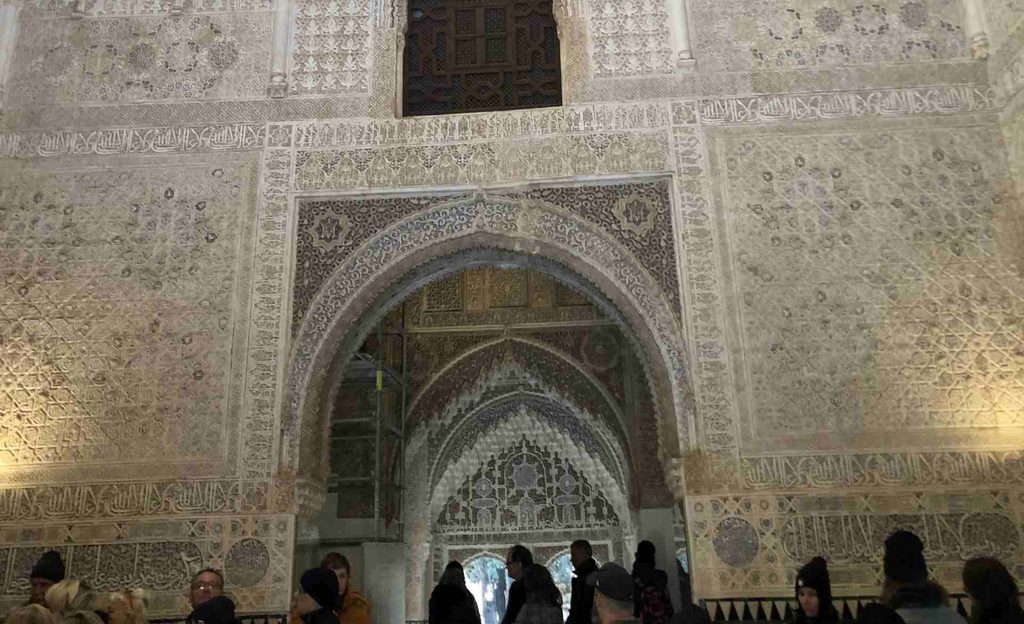
Eventually, I continued towards the Nasrid Palaces. This was one of the areas I was most interested in seeing because it contains some of the most famous architecture at the Alhambra. The experience starts even before entering the main palace rooms. Walking through the complex towards the palaces gives you time to notice the walls, gardens, courtyards and surrounding landscape. Inside, the level of decoration becomes even more impressive. There are intricate patterns almost everywhere.
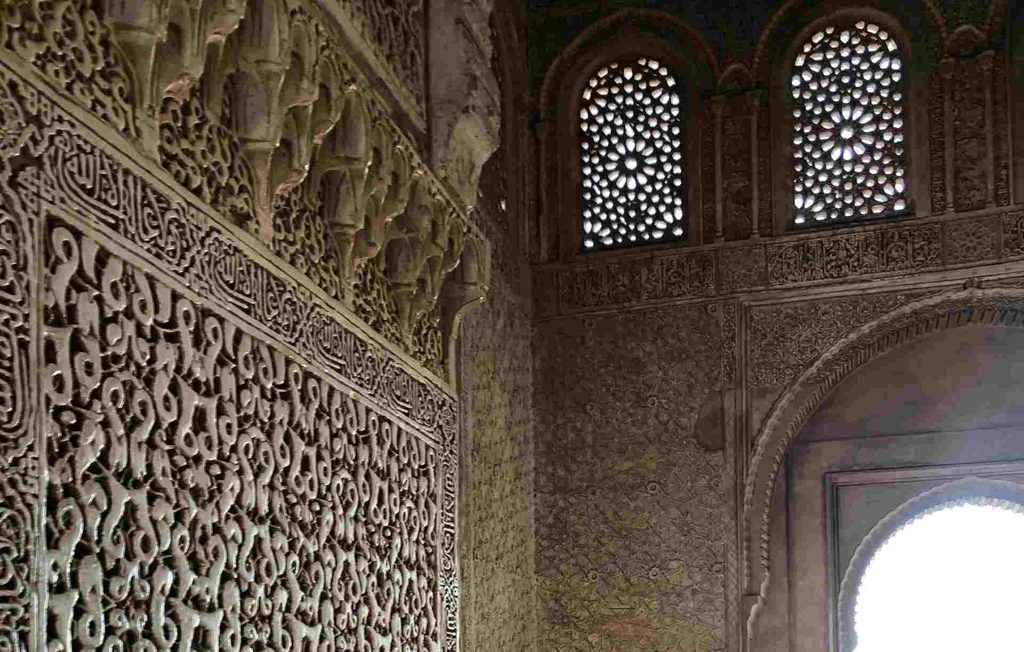
Arabic calligraphy is an especially important feature of Nasrid architecture. The walls contain inscriptions and decorative texts, showing how writing itself became part of the architecture. For me, this was one of the most fascinating things to see.
When you look at these walls today, it is easy to focus only on their visual beauty. But the inscriptions also remind you that these were spaces created within a sophisticated Islamic cultural environment. The builders were not simply decorating walls. They were combining geometry, mathematics, calligraphy, architecture, light and water into one visual experience.
A Small Shop Inside the Alhambra
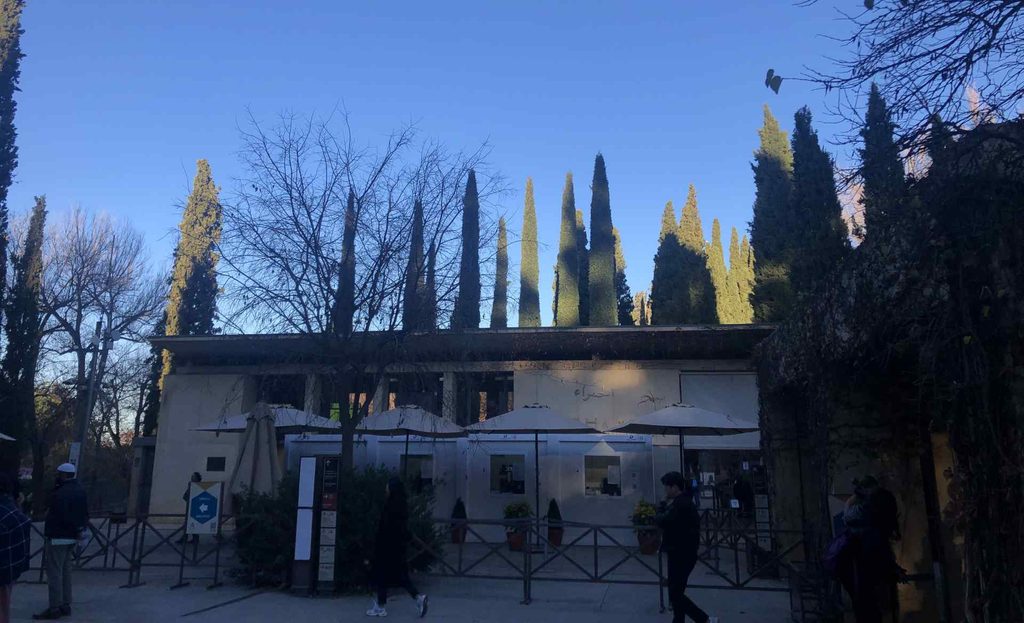
One thing I did not expect was to find a small shop designed in a style that matched the atmosphere of the Alhambra. After seeing so much historic architecture, it was slightly surprising to suddenly encounter a modern shop inside the complex. Of course, it is designed for visitors, but I still found it interesting because it fits into the overall atmosphere.
I expected the Alhambra to feel almost entirely like an archaeological and historical site, so seeing a little shop reminded me that this is also one of the most visited tourist attractions in Spain. Enjoy the pictures!
Gallery – Enjoy my pictures