When I first visited the Imperial Castle in Poznań, I knew that the building had a very interesting history. It was built as the residence of German Emperor Wilhelm II and later became connected with some of the darkest years of Poznań’s history. But one room inside the castle caught my attention more than the others. It was a room that had been prepared for Adolf Hitler during World War II.
Today, you can still enter this room inside the castle and see many of the architectural details that were created during the Nazi reconstruction. I visited the room myself and took my own photos, and standing there was quite a strange experience.
The Imperial Castle in Poznań
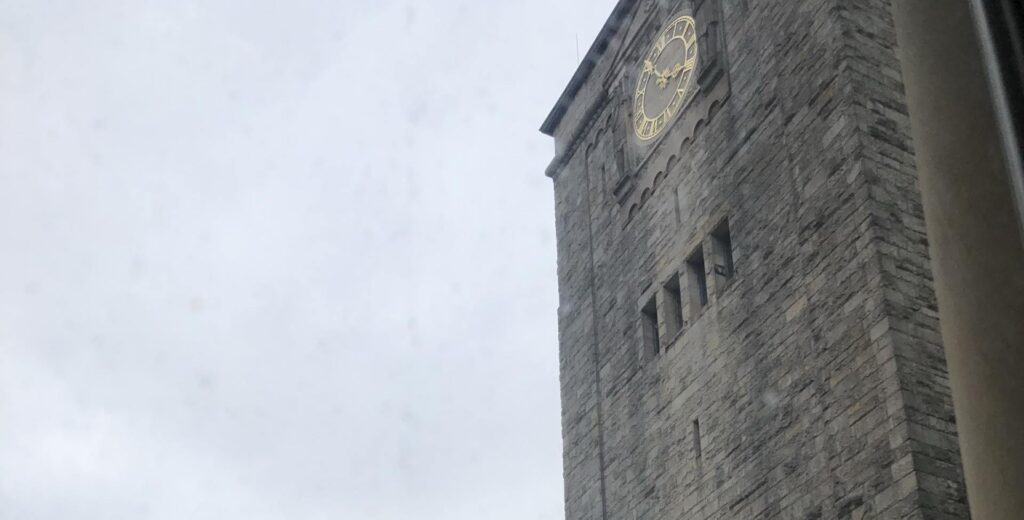
The Imperial Castle is one of the most recognizable buildings in Poznań. It was built between 1905 and 1910 as a residence for German Emperor Wilhelm II. The castle was designed to look impressive and powerful. It was not simply a place where the emperor could live. The entire building was also meant to represent German power in Poznań, which at that time was part of the German Empire. After World War I, the situation changed completely. Poznań became part of the newly independent Polish state, and the castle was given new functions. Some of its rooms were used by the Polish government and the newly established University of Poznań. In 1939, Nazi Germany occupied Poznań, and the castle was once again transformed. This time, the Nazis had much bigger plans for the building.
Hitler’s planned office or bedrom
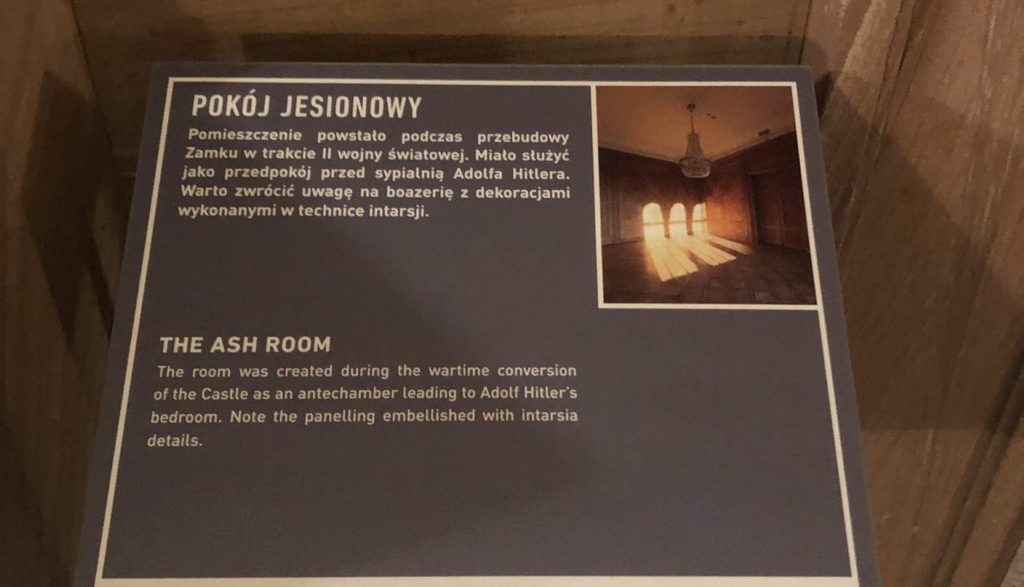
During the German occupation, the castle was heavily rebuilt. One of the most unusual changes happened in the place where the imperial chapel had previously stood. The chapel was divided by a new ceiling, creating two separate levels. The room on the first floor was transformed into a study that was intended for Adolf Hitler. The Nazis wanted the castle to become an important residence and symbol of German power. The planned office was not designed as an ordinary workplace. Its architecture was meant to communicate power and authority. Marble was used on the walls and floor, and the room was connected with a balcony. The design was also influenced by the architecture of the New Reich Chancellery in Berlin. Looking at the room today, it is easy to see that it was supposed to be an important place. Hitler never came to Poznań to use it. In Museum it’s written that it was planned to be bedrom but on interent to be an office.
Hitler never sat in his room
This is probably the most interesting part of the story. The room is often described as Hitler’s office, but this can be misleading. It was actually a planned office for Hitler. He never used it. There is no evidence that Hitler ever visited Poznań, despite the enormous effort that went into transforming the castle for the Nazi leadership. So when you stand inside the room today, you are not standing in a place where Hitler worked. You are standing in a room that the Nazis prepared for him but that he never actually used. For me, this makes the room even more interesting. It is almost like looking at a plan that was never completed.
What does Hitler’s room look like today?
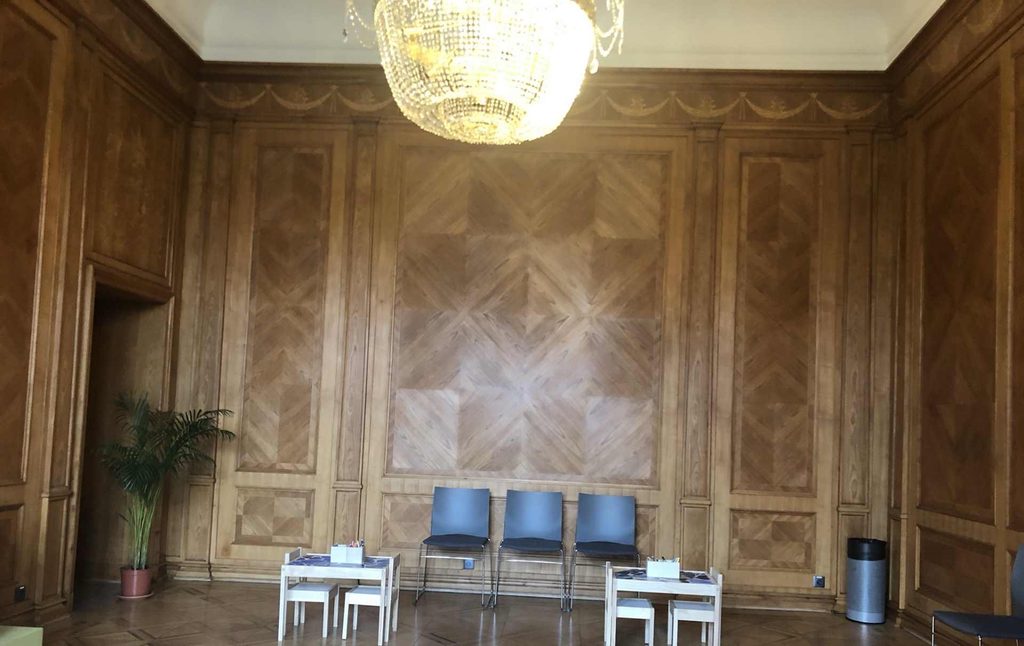
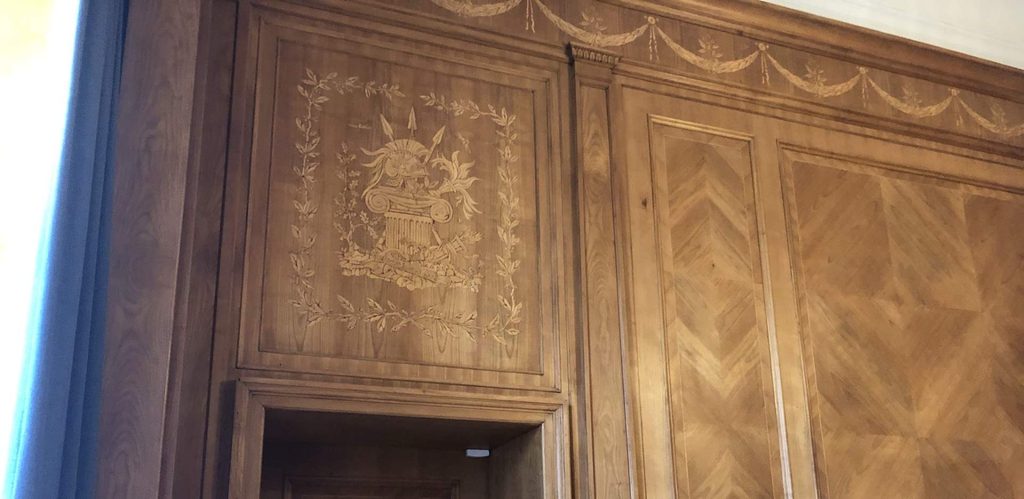
When I entered the room, the first thing I noticed was how large and impressive it was. The walls and floor are covered with marble, giving the room a very cold and monumental appearance. There are tall windows on one side, and the central window leads toward the balcony. The room also has a large fireplace, which is why it is now known as the Fireplace Chamber. It does not look like a normal office.There is no feeling of a modern workplace here. Instead, the room feels more like a ceremonial hall. The architecture was designed to impress. And that was exactly the point. The Nazis wanted architecture to communicate power
The balcony
One of the details I found especially interesting was the balcony. The balcony was created during the wartime reconstruction in the place where part of the old chapel had stood. The central window of the room opens toward it. It is another reminder that this was not simply a renovation of an old room. The Nazis were changing the castle according to their own plans. They wanted the building to become part of the new political order they were trying to create in occupied Poznań.
Why did Hitler need a place in Poznań?
The castle was important to the Nazi authorities because Poznań had a strategic and political role in occupied Poland. Arthur Greiser, the Nazi German governor of the Warthegau region, was based in the castle. The Nazis wanted to transform the building into an important centre of German power. Hitler himself was supposed to have a residence and office there. But the plans were never fully realized. Hitler remained in Germany and never used the office that had been prepared for him. This is one of those historical details that makes the building much more interesting than it might appear from the outside.
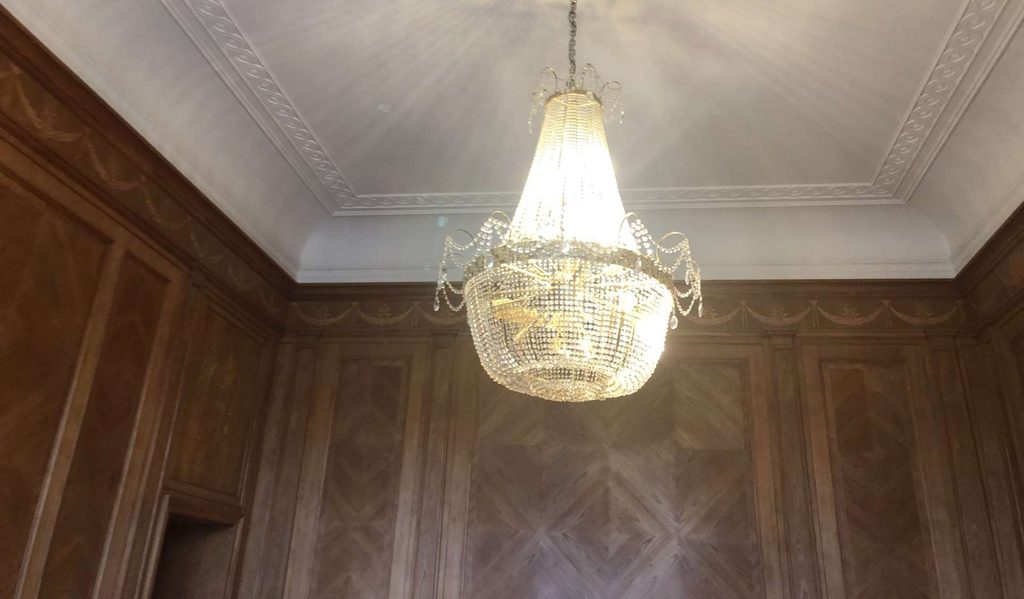
Standing inside a room prepared for Hitler
For me, this was one of the strangest places I visited in Poznań. I have visited many castles, museums and historical buildings, but it is different when you stand inside a room connected so directly with World War II. At the same time, it is important to remember that Hitler never actually stood in this room. The room represents a plan rather than an event. Someone designed it for him. Workers rebuilt the space. The Nazis expected him to use it. But he never came. That makes the room a strange reminder of how much effort was put into creating a vision of Nazi power that ultimately did not last.
Visiting the room today
Today the castle is used as a cultural centre and hosts exhibitions, events and other activities. The former Hitler study is now called the Fireplace Chamber. Depending on what is happening in the castle, the room can have a different use. It is not presented simply as a “Hitler museum.” That is actually something I found interesting. You can walk through a functioning cultural building and suddenly encounter a room whose history goes back to one of the darkest periods of European history. The contrast is quite strong.