Hajnówka is a small town in eastern Poland with about 20,000 inhabitants. Most of the population is older, and life here is quiet and peaceful. The town is located in the Podlasie region, right next to the famous Białowieża Forest, one of the oldest forests in Europe.
This article is part of my series about Poland. I spent a long winter in Hajnówka, so I want to share some interesting places, local stories, history, and useful travel tips. Although the town is small, it has a unique atmosphere and is a great base for exploring the Białowieża Forest.
One thing you will notice immediately is the European bison (żubr). It is the symbol of the region, and you can see it almost everywhere. There are bison images on trains, railway tickets, monuments, shops, restaurants, souvenirs, and even pancakes. If you are lucky, you may even see wild bison in the fields around the town.
A Brief History
The first information about Hajnówka comes from the 18th century. At that time, one of the forest guard stations of the Białowieża Forest was located here. The settlement was probably named after a forest guard called Hayno, who lived in the area. In 1795, only 33 people lived in the whole settlement, including 23 people on today’s Lipowa Street. A royal road connected Białowieża with Straż Hajnowska (Hajnów Watchhouse). Today, the old route can still be seen in the layout of Ks. A. Dziewiatowskiego and Batorego streets. This road already appeared on a map prepared in 1784 for the royal hunt of King Stanisław August Poniatowski.
For many centuries this area was located near important state borders. Until 1772 it was the western border of the Grand Duchy of Lithuania and the Polish Crown. After the Third Partition of Poland, the Białowieża Forest became part of the Russian Empire. During the 19th century the forest was divided into administrative sections, and in 1856 the Hajnówka Forestry Office was established to manage the royal forest. In 1869 local farmers received their own land after the end of serfdom.
Growth of the Town
Until the end of the 19th century, Hajnówka remained a small forest settlement. Everything changed with the development of the timber industry. Between 1918 and 1939, Hajnówka became one of the biggest wood industry centres in Poland. The population grew quickly, and cultural and social life also developed. In 1934 the settlement became the seat of the local municipality.
During the 1930s, several unusual wooden buildings were built in the fashionable transatlantic style. Their rounded shapes, balconies, and decorative elements looked like ocean liners. These buildings reflected the dream of modernity at a time when ships and fast trains represented progress. Some examples can still be seen today, including the City Bathhouse, the former State Forests Timber Plant office, and the Forester’s House.
WW2
The rapid development of Hajnówka ended with World War II. The town suffered under several occupations, and many residents were deported or killed. Unlike many forests in Europe, the Białowieża Forest was not always a safe hiding place. Because it was a valuable hunting area controlled by rulers and occupying armies, it was closely watched. During the war, many local people experienced tragedy instead of finding safety there. When the Red Army entered Hajnówka in July 1944, the town had only about 8,000 inhabitants.
Modern Hajnówka
Hajnówka received city rights in 1951 and became the capital of the local county (powiat) in 1998. Today it is the economic, cultural, and administrative centre of the region. Most people work in forestry, the wood industry, or the public sector. The connection with the forest is still very strong and shapes everyday life.
The town is also known for its religious diversity. There are churches of several Christian denominations, including Roman Catholic and Orthodox churches, as well as Baptist, Pentecostal, Seventh-day Adventist, Church of God in Christ, and Jehovah’s Witness communities. People from different Christian traditions are buried in the local cemeteries.
The First Post Office
The first post and telecommunications office in Hajnówka opened in 1920 in a railway wagon next to the station. After World War II, workers rebuilt the damaged telephone lines and equipment. On 28 September 1944, the first twenty-line telephone exchange in the Białystok region started operating here.
The current post office building was opened in 1964, and the telephone exchange was expanded to 600 numbers. The first postman in Hajnówka was Józef Zasim, who had served in the Polish Air Force squadrons in England during World War II. In 1974 the building was enlarged again, and a fully automatic telephone exchange was installed.
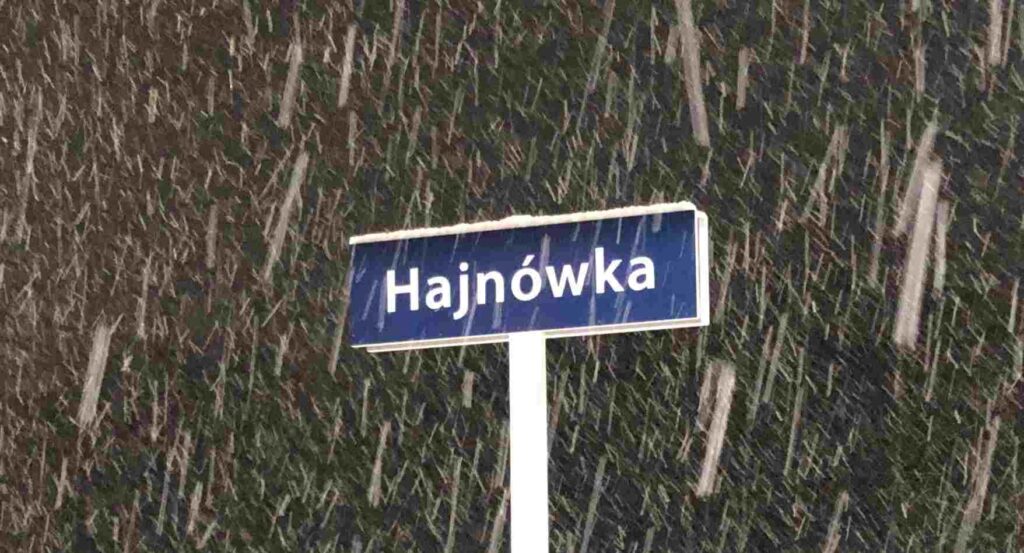
How to go to Hajnowka
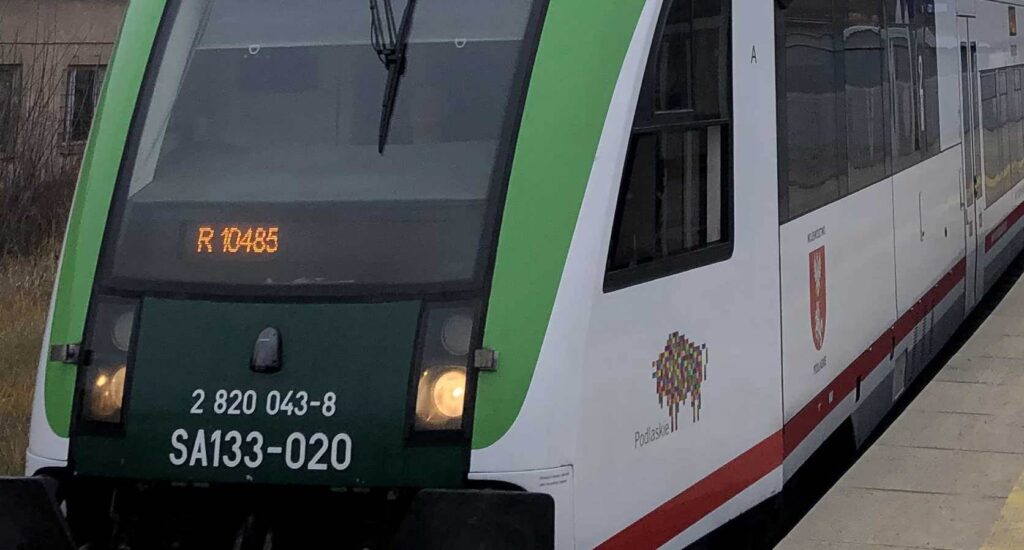
If you are travelling from Warsaw, you have two main options. You can take a PKP Intercity train from Warszawa Centralna (Warsaw Central Station), or you can travel with regional trains from Warszawa Śródmieście (Warsaw Downtown). They are next to each other.
The first time I went to Hajnówka, I tried to buy my ticket at the wrong station. After walking around for quite some time, I finally found a ticket office. However, the lady at the counter could not understand the name of my destination. I showed her “Hajnówka” on my phone, and she immediately realized the problem. She smiled and explained that I was in the wrong place and that I needed to go to Warszawa Śródmieście station, where the regional trains depart.
If you choose the regional train, keep in mind that you will usually need to change trains once, in Siedlce or another station along the route, depending on the timetable. If you take the PKP Intercity “Bałtyk” train, the journey is easier because there is no need to change trains. However, tickets are usually more expensive than reg train.
If you are travelling from Białystok, you can also reach Hajnówka by train. The journey is simple and takes around one and a half hours. Another option is to travel by bus from Białystok. Buses run regularly, but in my opinion they are less comfortable than the train. They are also slower because they stop in many small villages along the way. Unless the bus schedule fits your plans much better, I would recommend taking the train.
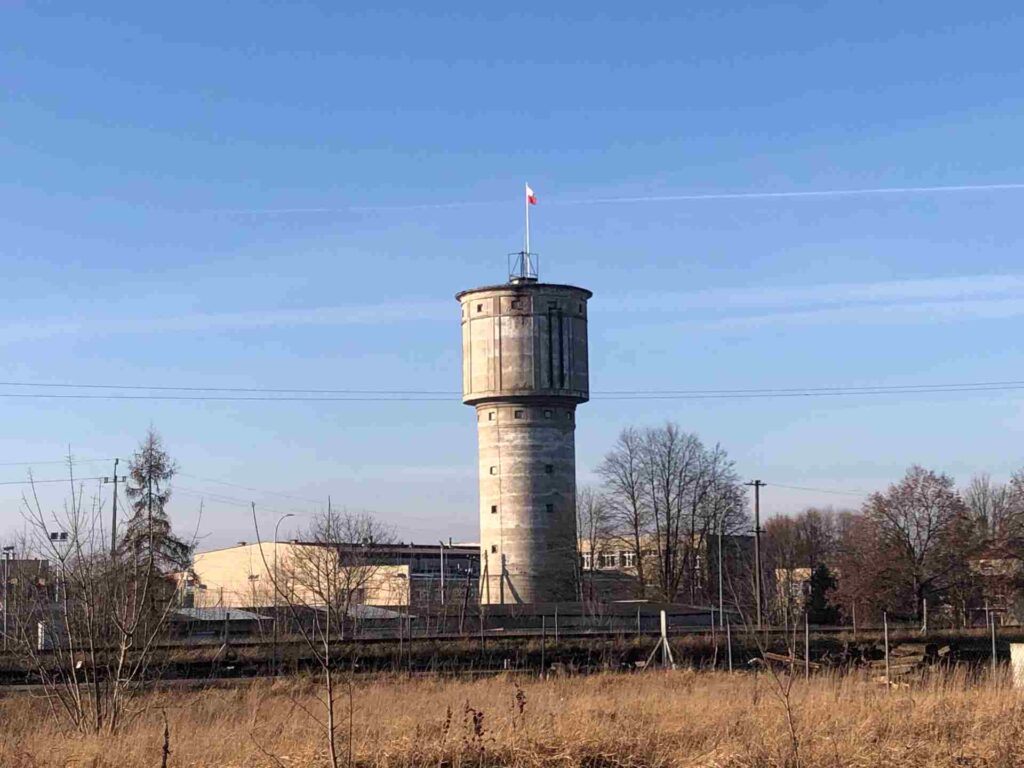
Monuments
Although Hajnówka is a small town, it has a surprisingly rich history. Because of its location near the Białowieża Forest and close to today’s Belarusian border, many important historical events happened here. As a result, you will find several monuments that remember different periods of the town’s past.
Moument to gulag prisoners
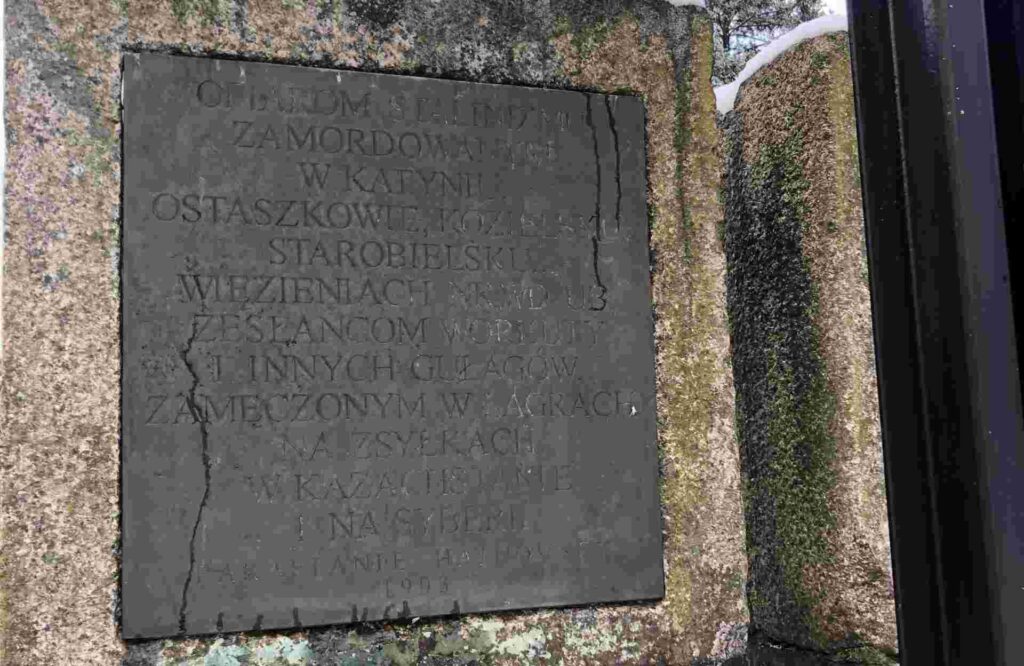
“To the victims of Stalinism murdered in Katyn, Ostashkov, Kozielsk, and Starobielsk…NKVD prisons or exiles from Vorkuta and other gulags, tortured to death in labor camps, exiles in Kazakhstan, and exiles to Siberia.”- Hajnówka parishioners
Another important monument remembers the victims of Soviet repression. The inscription is dedicated to people murdered during Stalin’s rule, including the victims of Katyn, Ostashkov, Kozielsk, and Starobielsk, as well as prisoners who died in NKVD prisons, labour camps, the gulags, Kazakhstan, and Siberia. The monument was erected by the parishioners of Hajnówka to honour those who never returned home.
Bison Monument
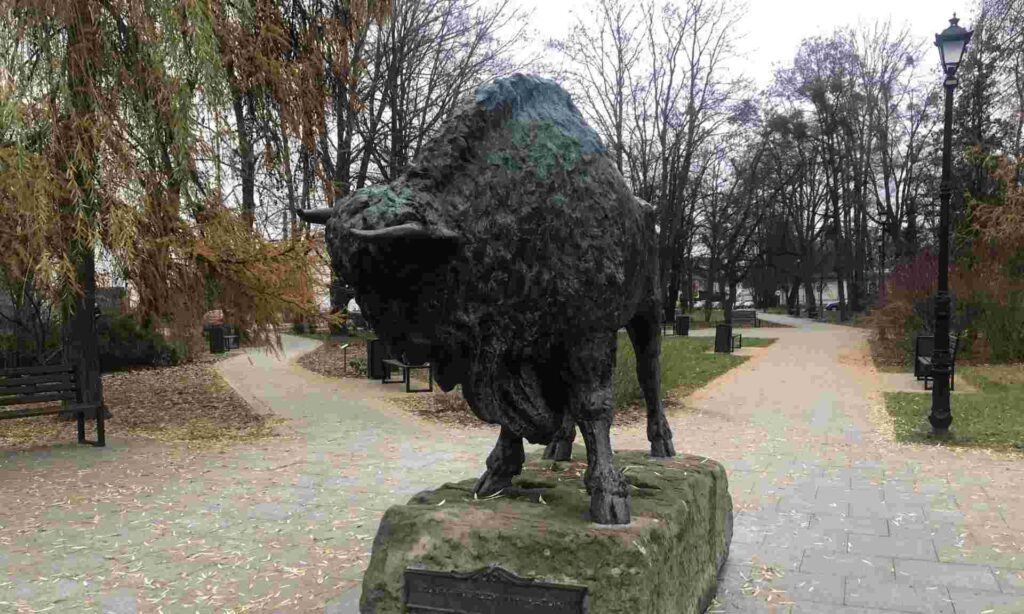
The most famous monument in Hajnówka is the Bison Monument, located in the town centre. The European bison (żubr) is the symbol of the Białowieża Forest and the entire region.
The inscription on the monument calls the bison “The Emperor of the Forest.” This phrase comes from the famous Polish epic Pan Tadeusz by Adam Mickiewicz.
The bronze statue was created by the Kraków sculptor Jan Siuta. In 2022, the surrounding square was completely renovated with new walking paths, lighting, benches, plants, a drinking water fountain, and other public facilities. Today it is one of the nicest places to relax in the town.
Monument to Józef Piłsudski
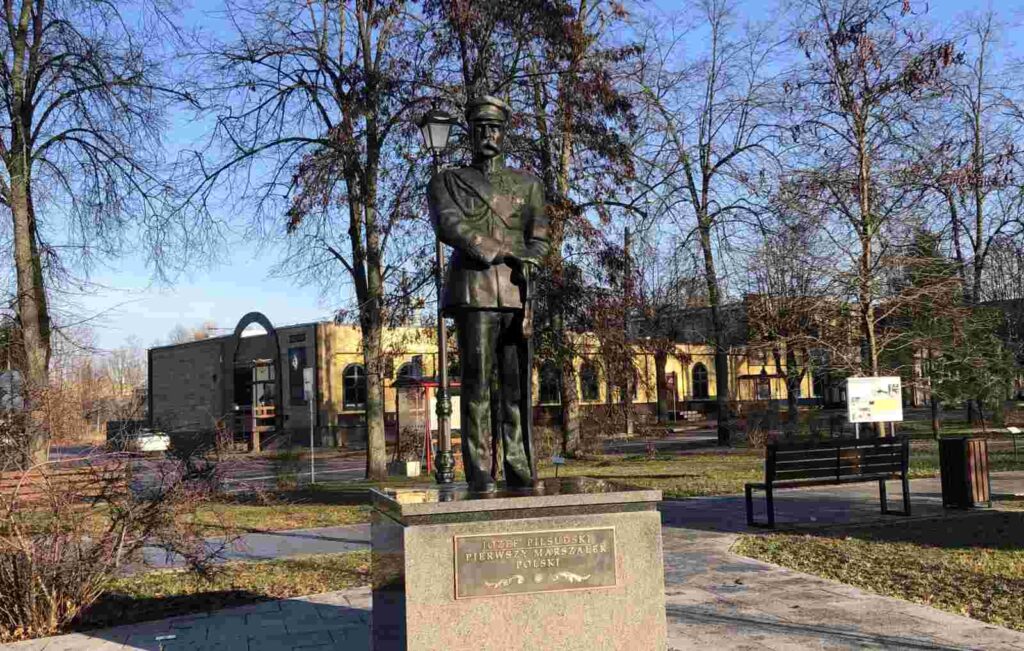
There is also a monument dedicated to Józef Piłsudski, one of the most important figures in modern Polish history and the founding father of the Second Polish Republic after World War I.
His body is buried in Kraków, while his heart rests in Vilnius, according to his wishes.
War Memorials
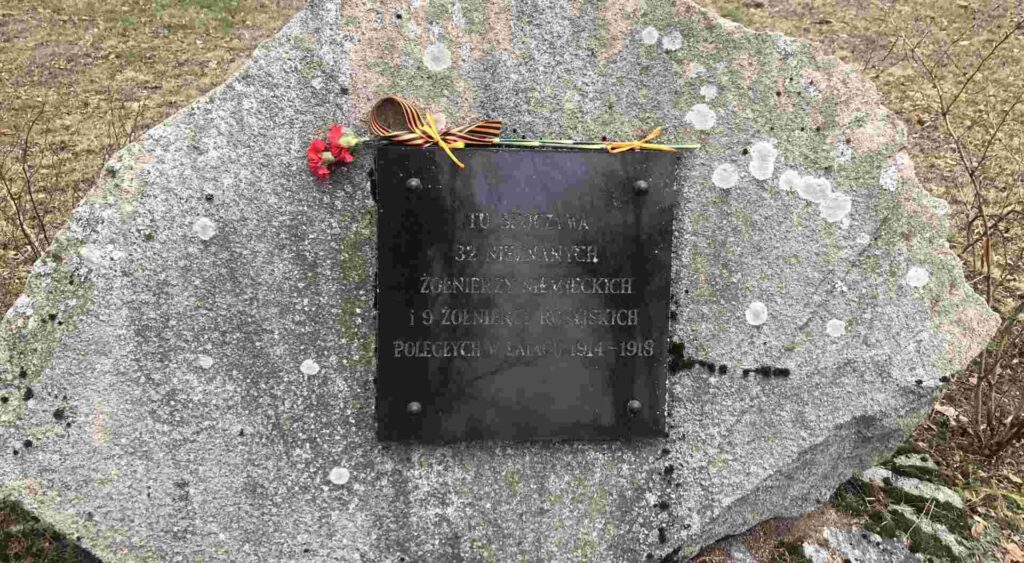
Several monuments and cemeteries remind visitors of the tragic events of the Second World War. During the German invasion of Poland in September 1939, German troops entered the Białowieża Forest. Shortly afterwards, according to the Molotov-Ribbentrop Pact, they withdrew, and the area was occupied by the Soviet Union. During the Soviet occupation, many local residents, including forestry workers, were deported to Siberia and other parts of the Soviet Union.
In 1941, Germany invaded the Soviet Union and occupied the region again. Many villages inside the forest and around its edges were destroyed because their inhabitants were suspected of helping the resistance movement. Hundreds of civilians lost their lives. In 1944, the Red Army returned. Around Hajnówka and inside the Białowieża Forest there are still isolated graves and places of mass executions. One of the largest reminders of the war is the military cemetery, where more than 1,000 Soviet soldiers are buried. Even after the war officially ended, fighting continued in the forests for several years between communist authorities and anti-communist resistance groups.
Churches
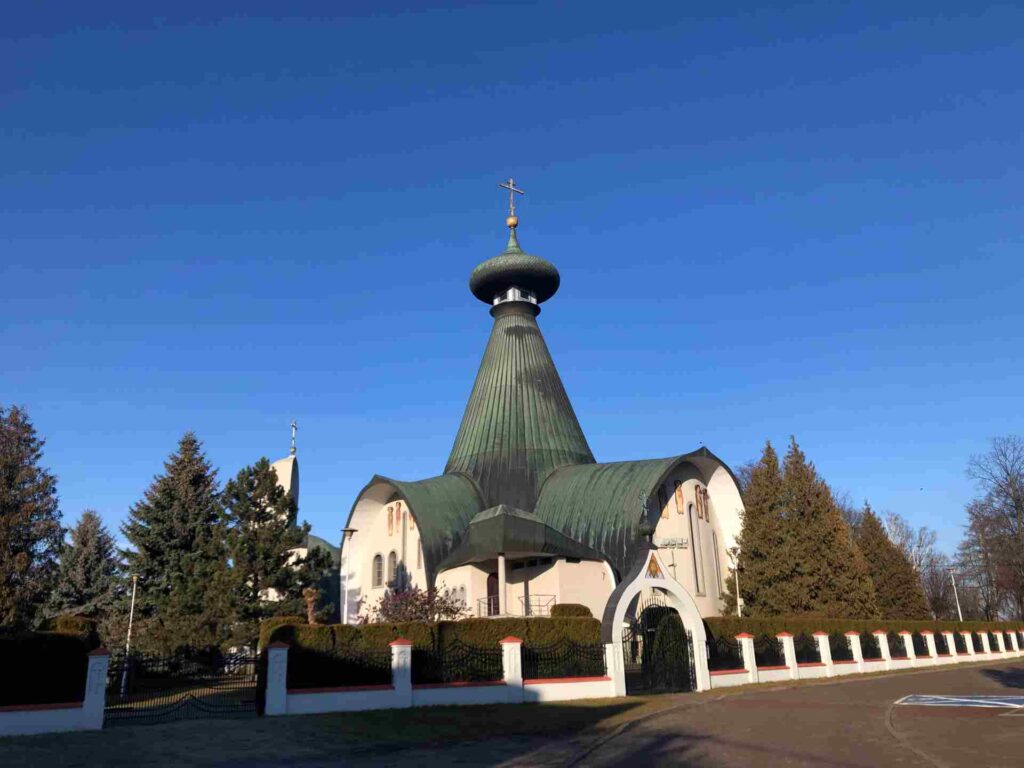
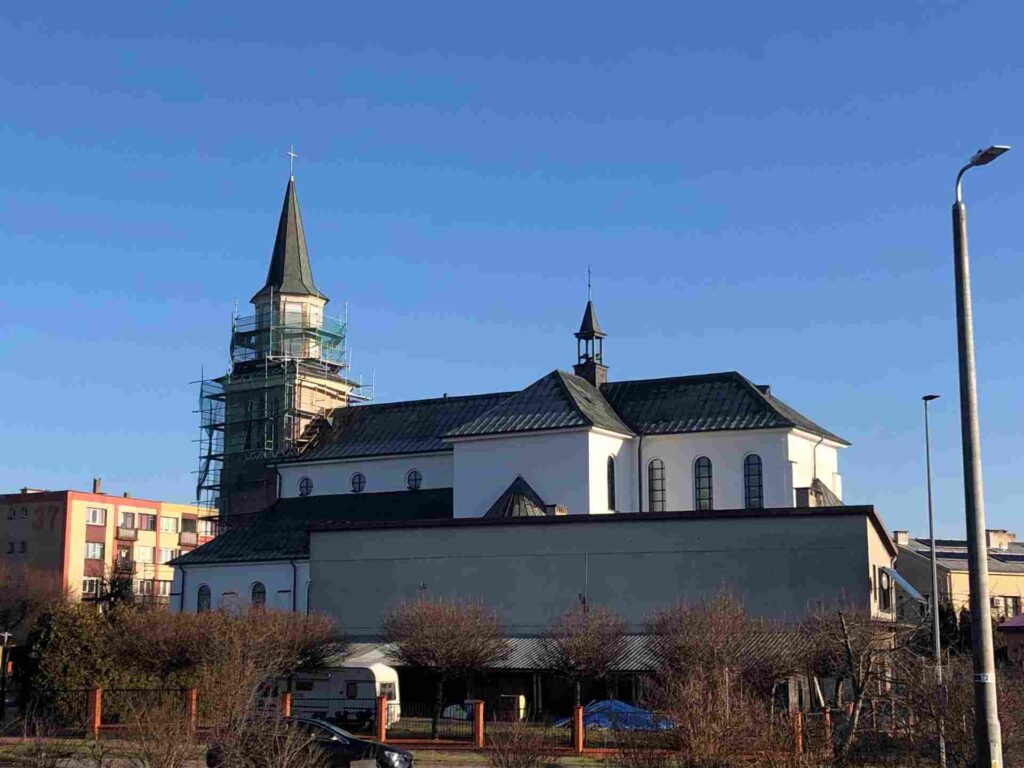
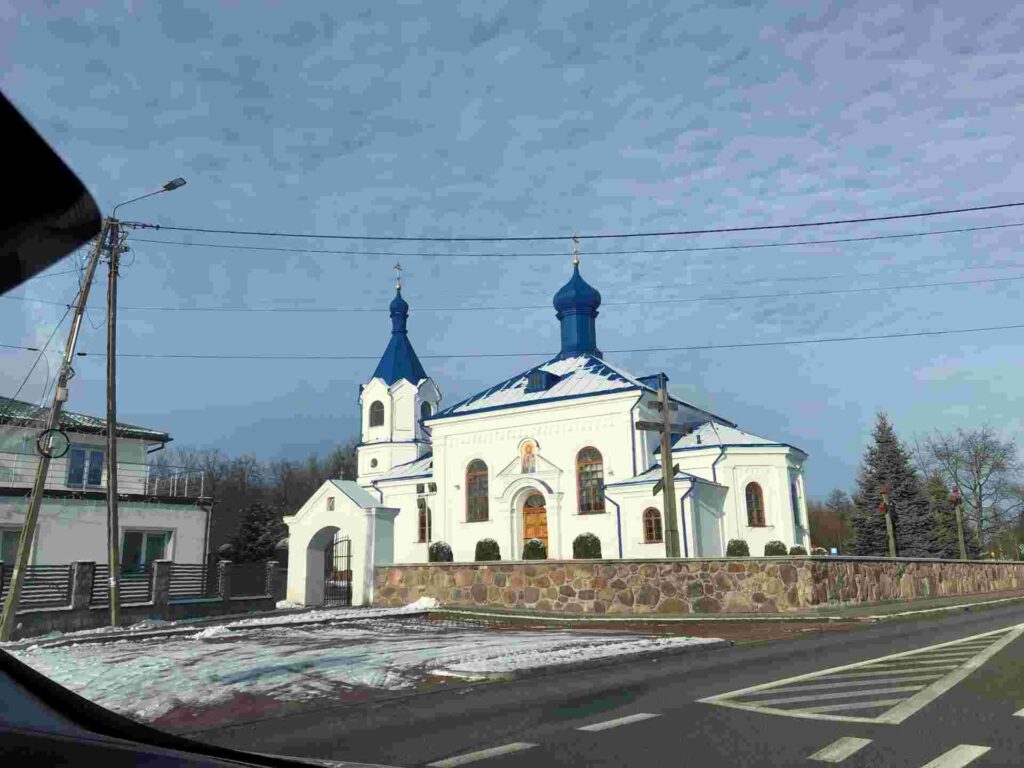
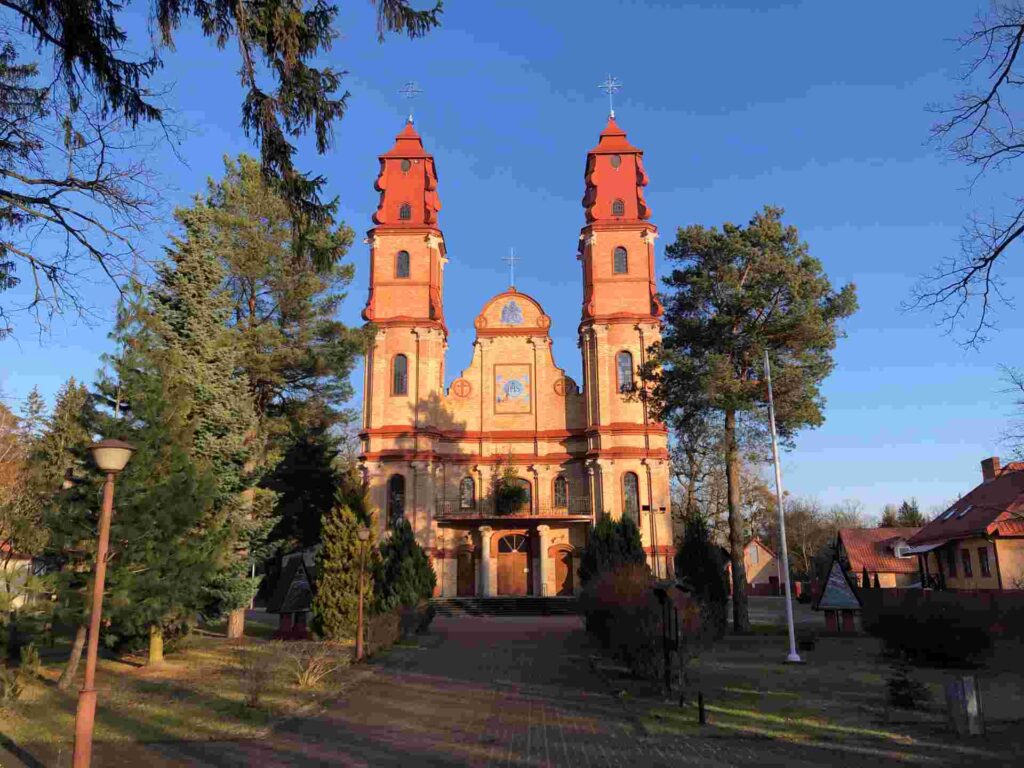
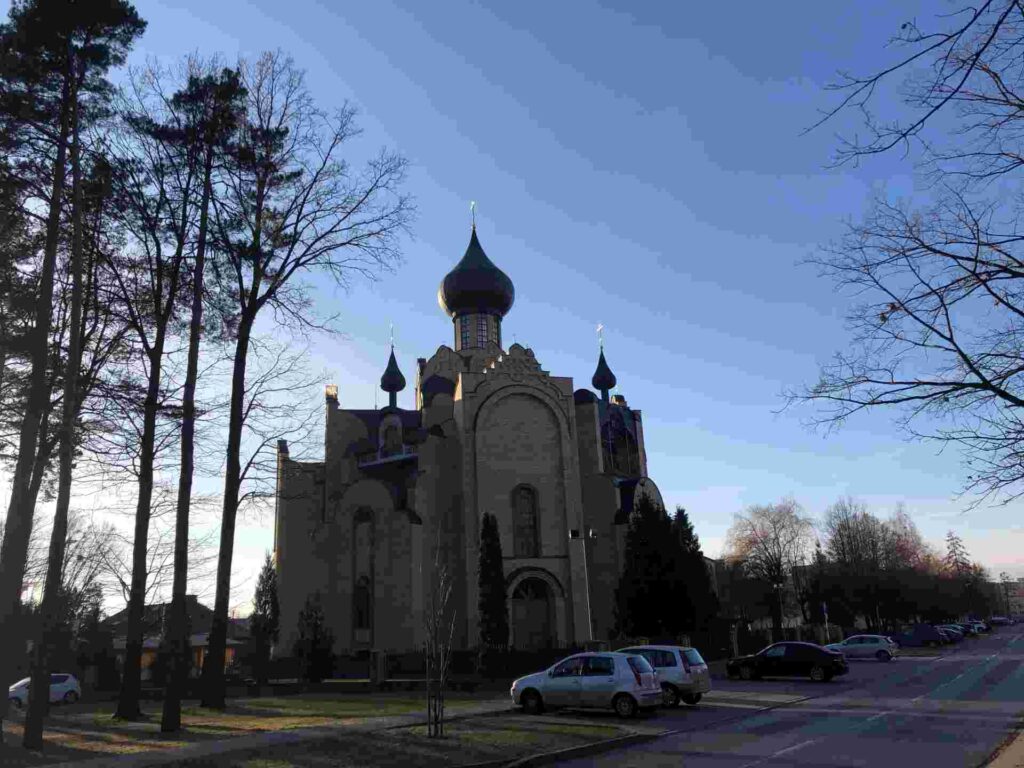
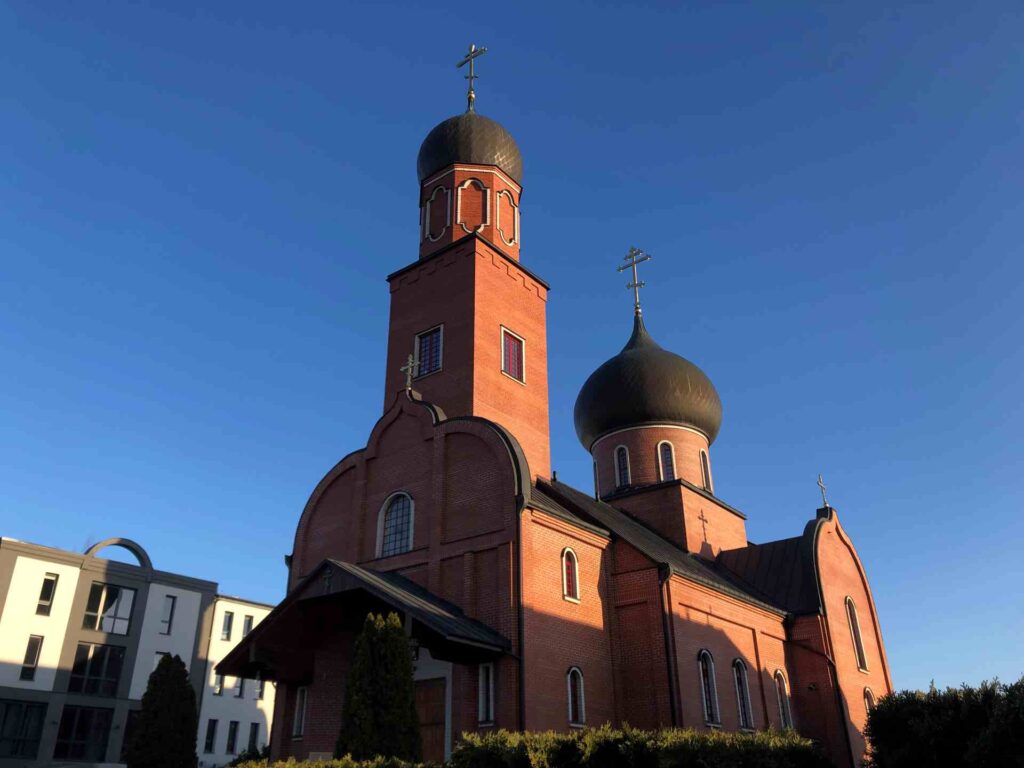
One of the most interesting things to see in Hajnówka is its churches. Almost every church has a different architectural style, and together they show the multicultural history of the region. The town has both Roman Catholic and Orthodox churches. Today there are three Orthodox parishes with four churches and two Roman Catholic parishes with three churches. The local cemeteries also reflect this religious diversity. Besides Catholics and Orthodox Christians, people belonging to Baptist, Pentecostal, Seventh-day Adventist, Church of God in Christ, and Jehovah’s Witness communities are also buried there.
Before the Second World War, Hajnówka was one of the most multicultural towns in eastern Poland. In 1939 it had more than 17,000 inhabitants, including Poles, Belarusians, Ukrainians, Russians, Jews, Roma, and Germans. Most of them worked in forestry, sawmills, and other wood-related industries. Even today, this mixture of cultures and religions is one of the things that makes Hajnówka different from most other towns in Poland. Walking through its streets, you can easily notice both Western and Eastern influences, making the town feel like a meeting place between different worlds.
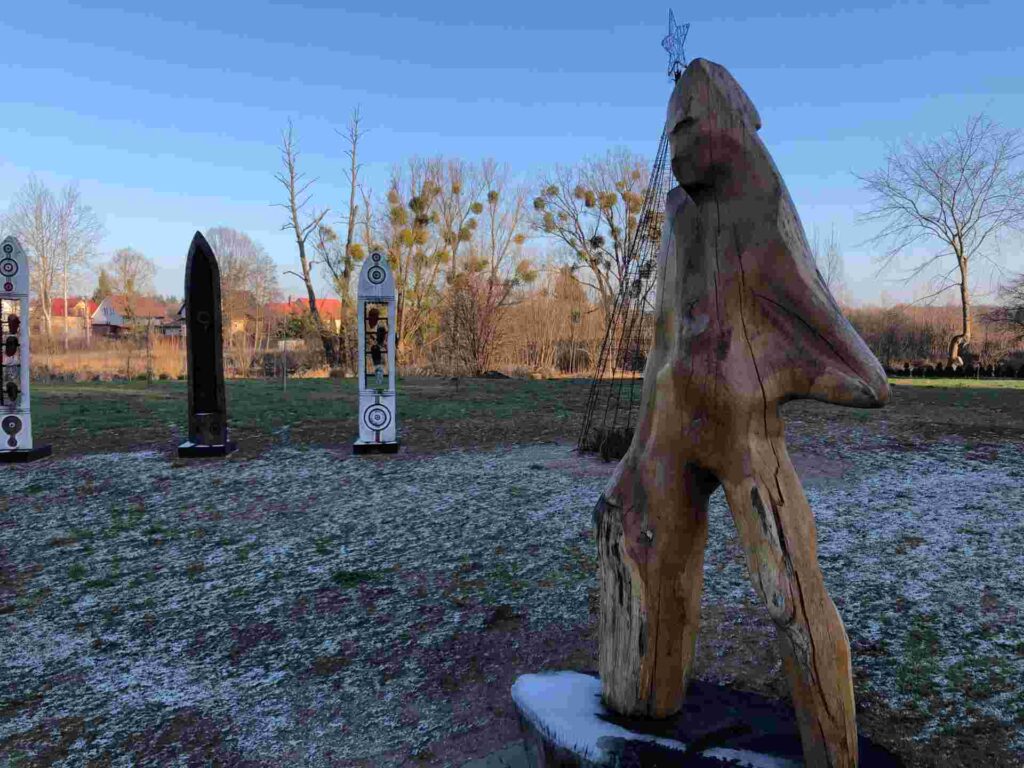
Wooden Sculptures
These wooden artworks reflect the strong connection between the local people and the forest. Since wood has always been the most important natural resource in the region, carving sculptures became a way to combine craftsmanship, art, and local traditions. Most of these sculptures are carved from a single tree trunk and represent people, forest spirits, animals, or characters connected with local folklore and the Białowieża Forest. One of the most impressive is a large humanoid figure carved from a single log.
Topiło Train / German WW1 Track
Hajnówka has been connected by railway since 1894, when the line was built during the time of the Russian Tsars. The first station was a wooden building known as the Tsar’s Pavilion. Later, it was replaced by a brick station built on the same site as today’s railway station. Unfortunately, the station was damaged and burned during both World Wars. After World War II, the remains of the old building were demolished. The current railway station was finally completed in 1986. The railway played a very important role in the development of Hajnówka. It made it much easier to transport timber from the Białowieża Forest and helped the local wood industry grow.
During the First World War, the German army took control of the area and quickly recognised the enormous economic value of the Białowieża Forest. Using the existing railway infrastructure, they expanded the forest industry on a large scale. The Germans built two large sawmills, a factory for the dry distillation of wood, and several repair workshops for the narrow-gauge railway. They also expanded the railway network deeper into the forest to make timber transport faster and more efficient.
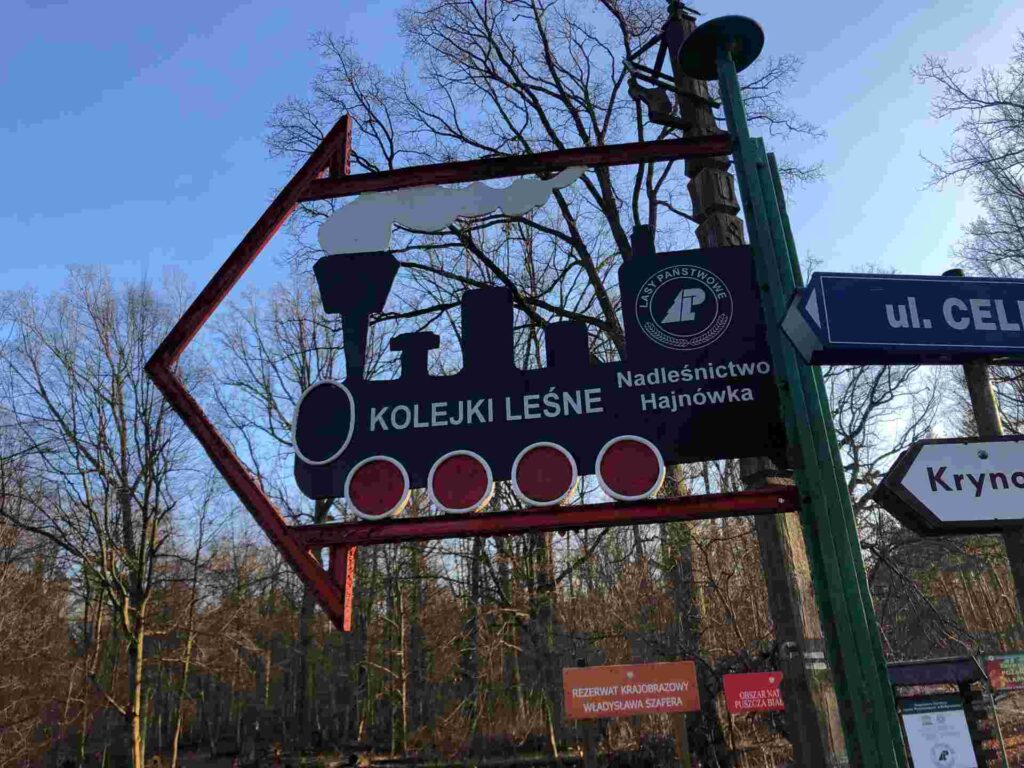
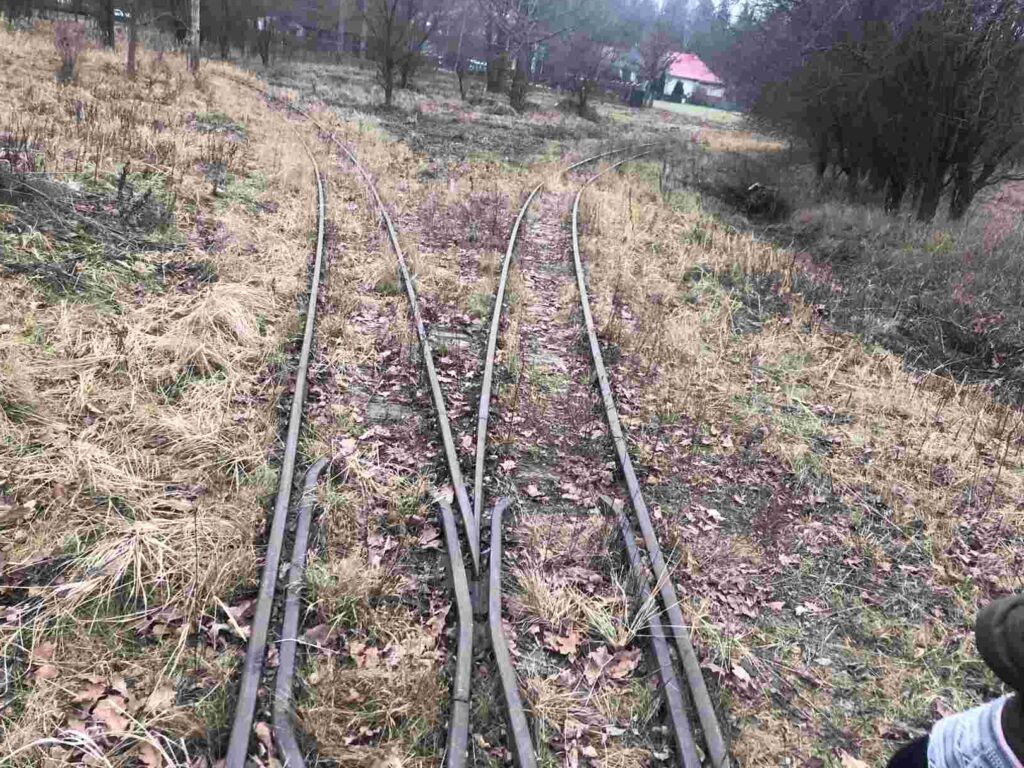
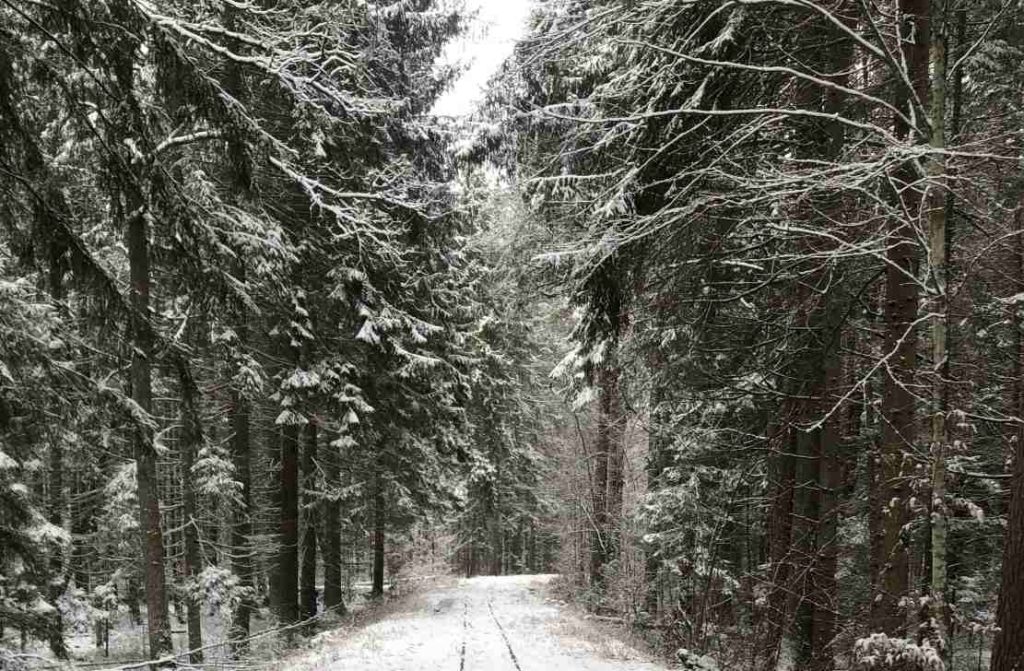
During the summer, train is touristic attraction but I have been here on winter and it was slosed. During the winter, it’s great place for hiking or treking. If you want to feel real winter magic, go there after snowy night.
Places to Eat and drink
Since Hajnówka is a small town, I can proudly say that I visited almost every place where you can eat or have a drink. I think this is the only town where I managed to try nearly everything. Below are the places I visited and the food I recommend. While you are here, don’t miss some local dishes such as beetroot soup (barszcz or beet soup), pierogi, and the local Hajnówka cake.
Bar (Warszawska 1B). This was the place where I ate most often. You can find it on Google Maps by searching for the address Warszawska 1B, as the business is easier to find by its location than by its name. They also offer accommodation, and the whole place feels like a small family-run business.
The prices are affordable, and every day they prepare a different daily menu. What I liked the most was that the soup changed every day, so there was always something new to try. If you want a simple, homemade Polish meal, I definitely recommend this place.
Other Places Worth Visiting: Vera Pizza (probably the best choice if you want pizza), Ema Caffee (a nice café for coffee, tea, cakes like Bison one, and other sweets), Trio ( place where you can eat, have a drink, or play billiards)
Babuska ( good restaurant if you want to try Belarusian cuisine and other traditional regional dishes)
There are also several kebab shops and a few other restaurants around town. I tried most of them, but the places above were my personal favourites.
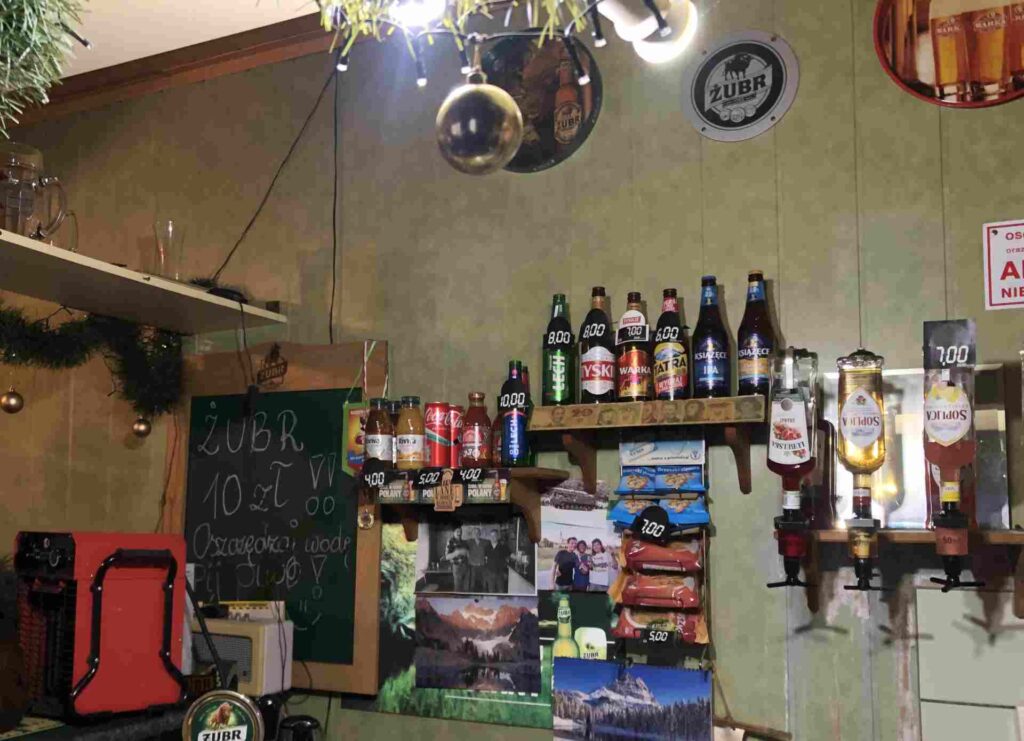

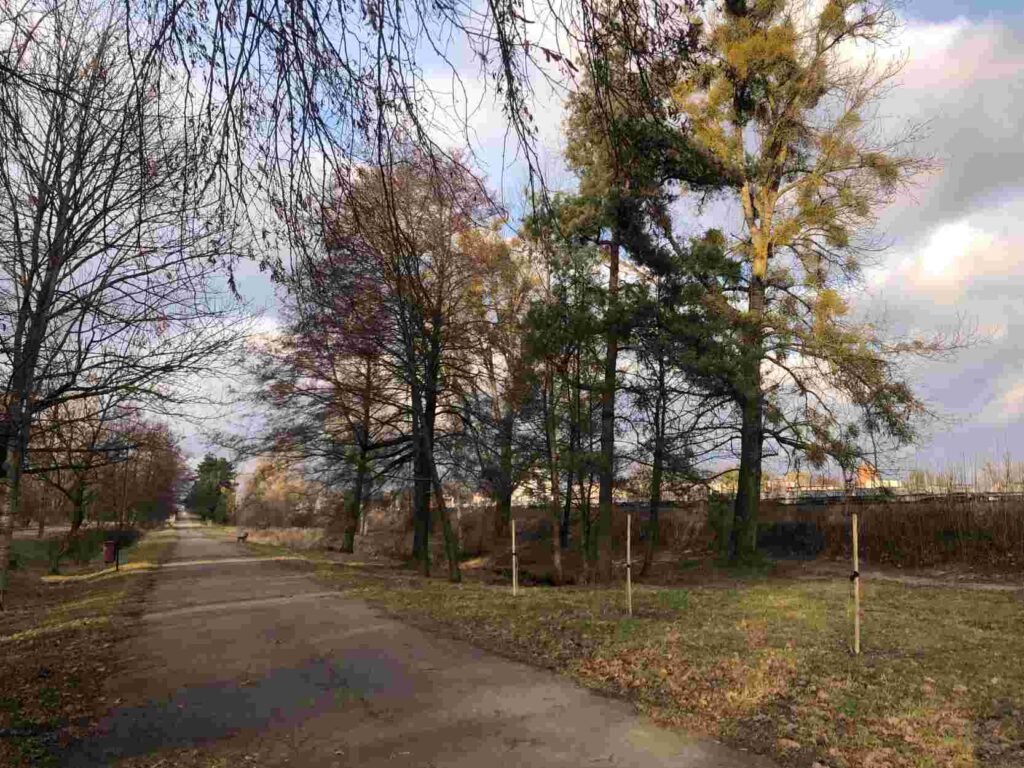
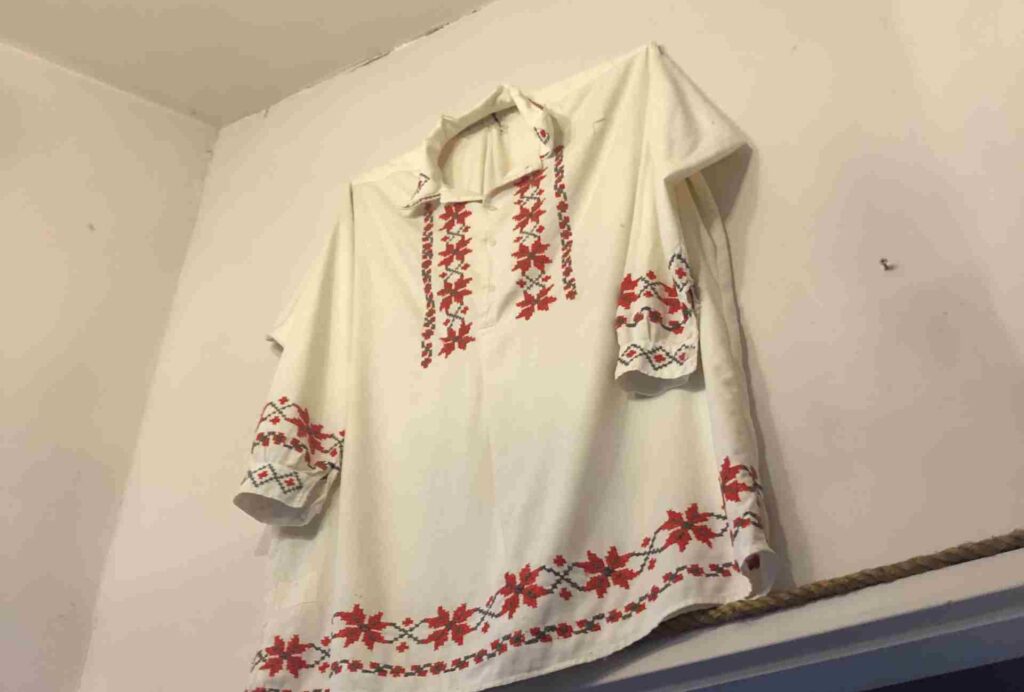
Inside “Babushka” restaurant.
Hajnówka began as a very small settlement of forest guards who were responsible for protecting the Białowieża Forest. At that time, there was nothing here except forests stretching in every direction. Even today, the Białowieża Forest remains the last ancient lowland forest in Europe. It has survived for centuries and is one of the most unique natural places on the continent. Many rulers and states controlled this region over the centuries, but Hajnówka remained. Today, it is one of the most interesting and unique towns in Poland and Eastern Europe.
Hajnówka stands at the meeting point of different cultures and traditions. It is close to the border between the European Union and Belarus. It is also where Roman Catholic and Orthodox traditions meet, where both the Latin and Cyrillic alphabets can be seen, and where Polish and Eastern Slavic influences mix in everyday life, architecture, religion, and food. This combination of history, cultures, and nature gives Hajnówka a special atmosphere that is difficult to find anywhere else in Europe.