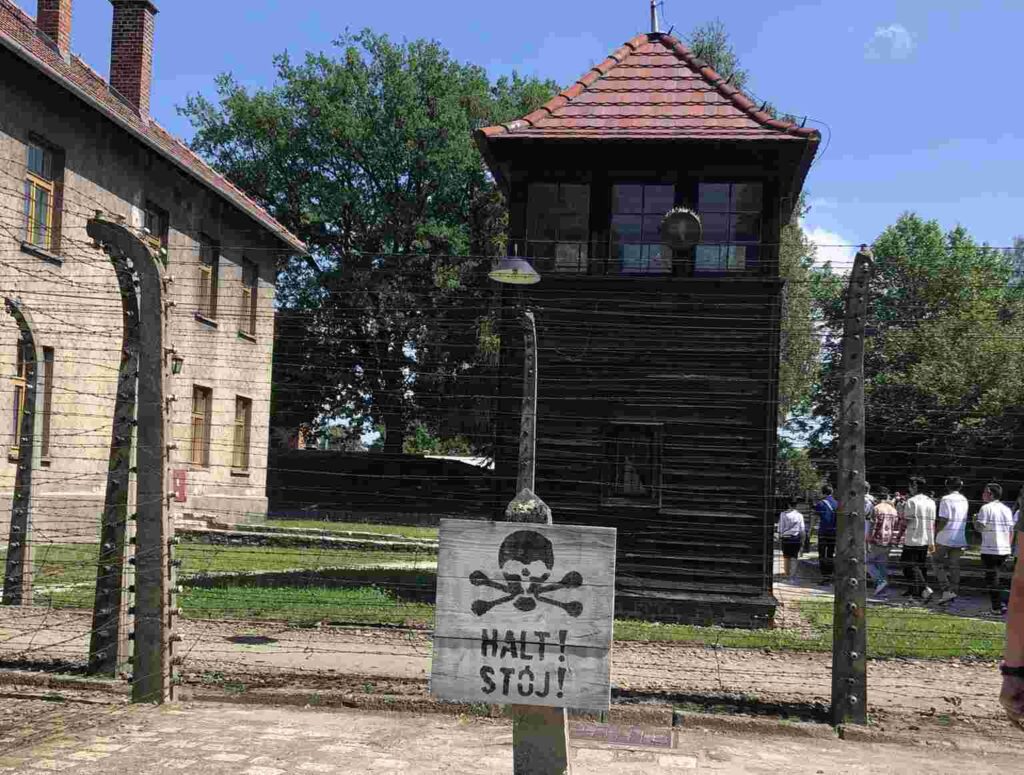
If there is one place in Europe that, when mentioned, takes everyone’s breath away for a moment, it would be Auschwitz. There are many texts, documentaries and reports about it, but here I will share my pictures with the stories behind it. There is no possibility of an individual visit, only with a guide who works there. It is not allowed to separate from the group. My group was about 15 people, similar to other groups that day. You will be given headphones. The easiest way to get there is from Krakow (the nearest large city). The tour takes about three hours and it is crucial to be punctual. Guided tours are organized at set intervals every 30 minutes. There are many options, including public transport and private van tours if you don’t have a car. It is about 40 km from Krakow, but the road is not a motorway, so it will take about 1 hour. It is strictly forbidden to take anything out of the site.
Before you go, you will need to book your tickets online in advance. Entrance to Auschwitz is free, but you must register in advance. After registration, you will receive a ticket by e-mail that will contain your name and unique number. When you enter the concentration camp, you can see many of the same buildings. They look very systematic, same from the same material. Roads and streets are also the same. Everything was the same for the people who went there. If you decide to visit Auschwitz, do so with respect and a willingness to learn. It’s not a “tourist attraction” or anything like that.
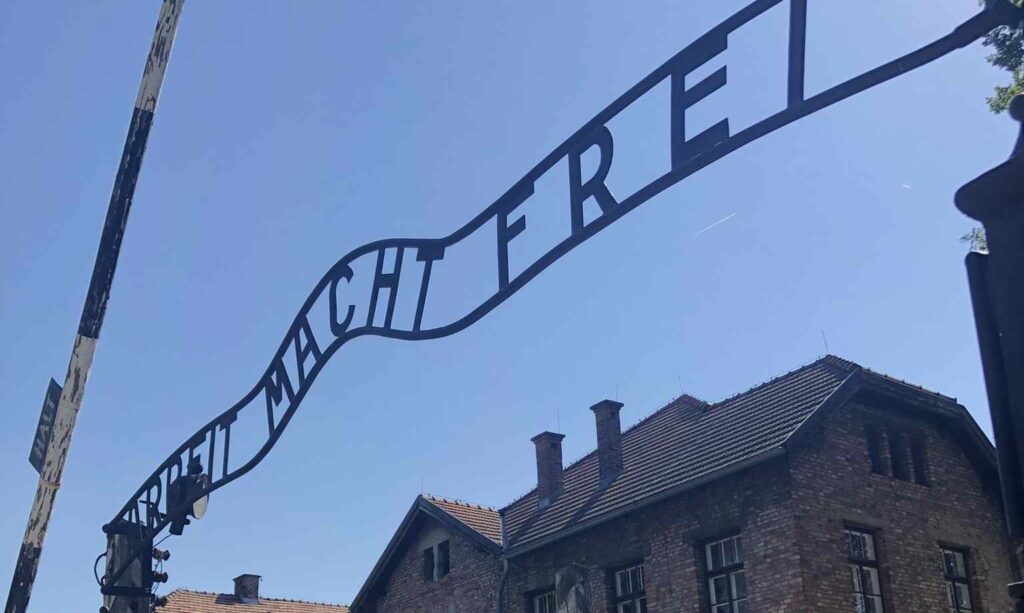
Gate of Darkness
At the entrance to the camp is written “Arbeit macht Frei” (work sets you free). Instead of a greeting message, the inscription “Greeting message” was written. Auschwitz Birkenau had forced labor. Its metallic signature makes the whole experience even creepier. The atmosphere is heavy and reflective, as it should be.
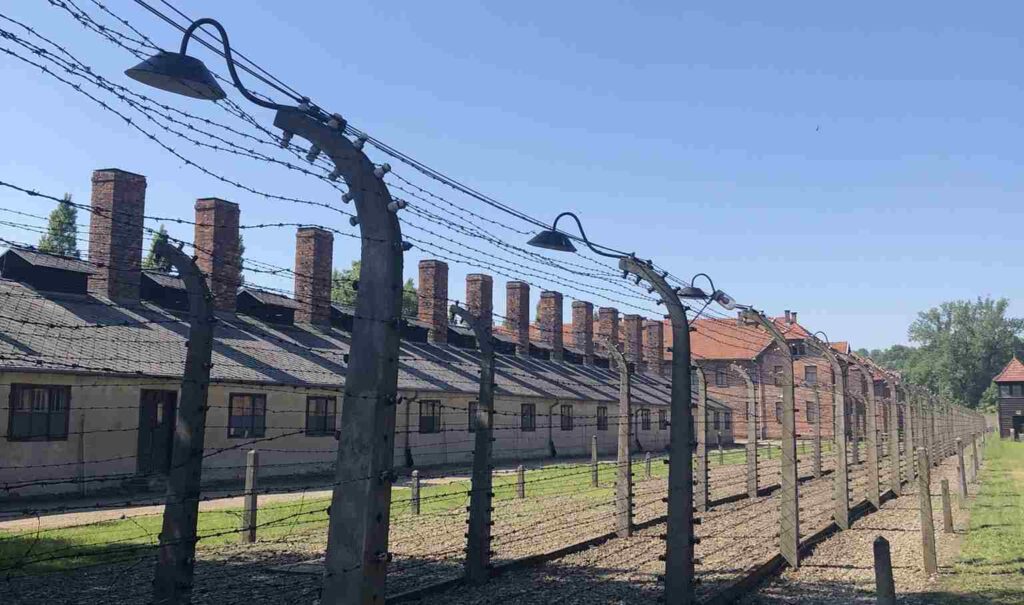
Fences of Prison
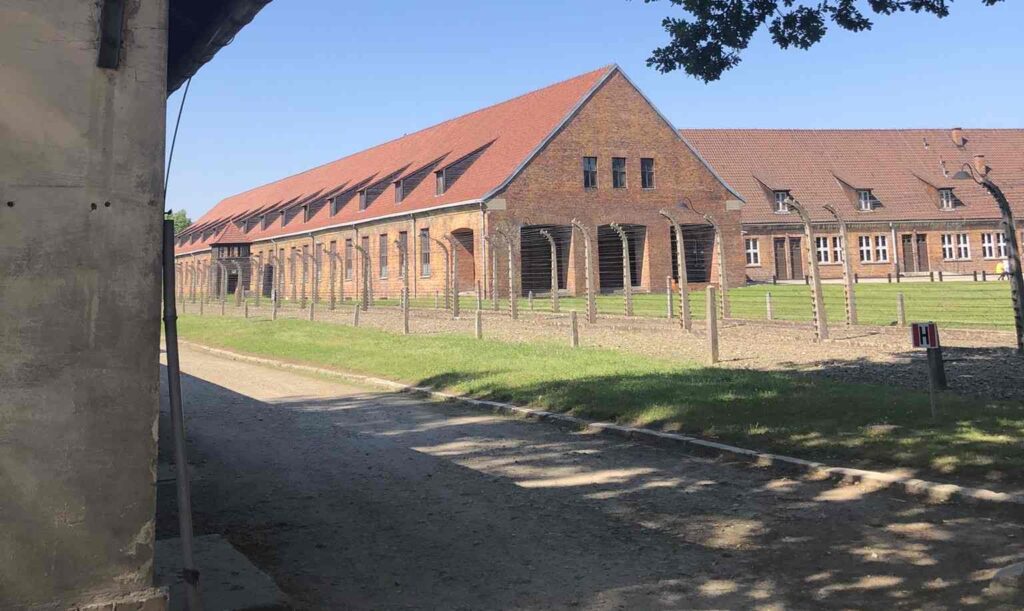
Upon entering the camp, it is noticeable that there are fences everywhere. This type of fence is now banned even for animals in the EU. It was used for people. You can see the double layer of electric wire fence and check the angle of the fence and the lamp. Escape is almost impossible. A path of several meters was made for patrolling inside. On the right you can see the observation tower. On the left side of the picture you can see a large number of chimneys.
Camp Orchestra Spot
The camp orchestra had to assemble here to play marches as the prisoners passed by in column. This was necessary to help the prisoners keep up with their pace and to make it easier to count them on their way to work.
Trees of Auschwitz, silent witnesses
I was surprised to see so many trees inside the camp. They were planted by SS guards to hide crimes. They are still there to this day. The tree you see in the picture is poplar.
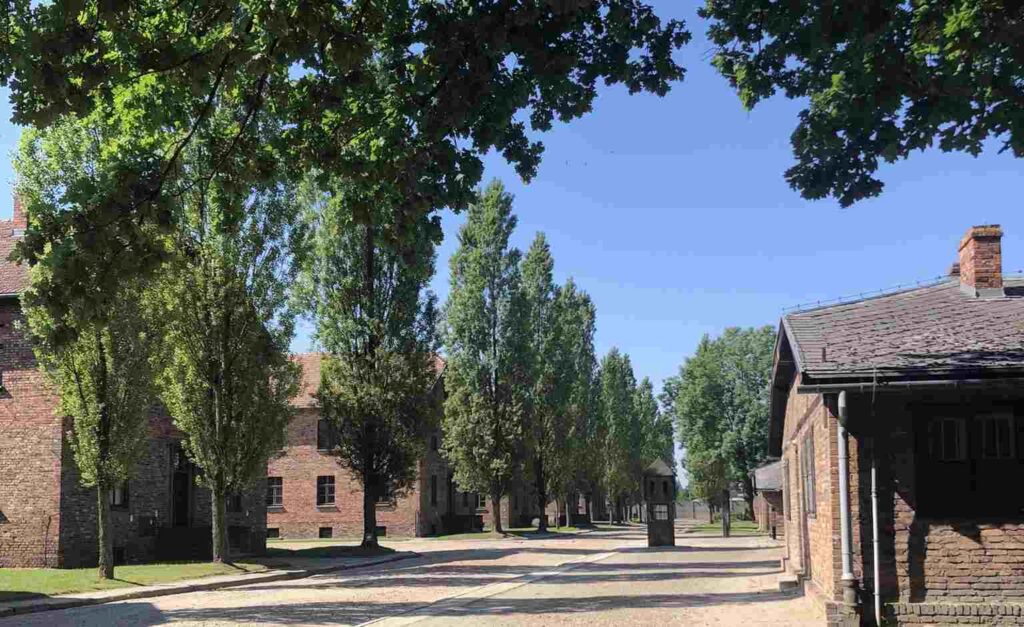
Streets of Auschwitz
One of the best examples of how well-organized this extraction camp was is the streets inside. The SS authorities forced prisoners to march to slave labor here, among the poplar trees.
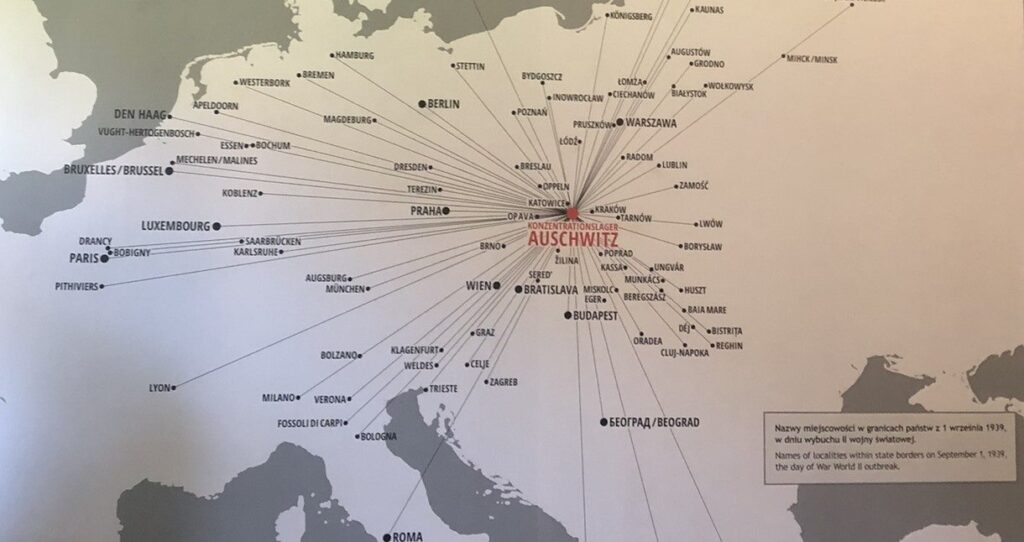
Map of transit camps
This map inside Memorial is showing transit camps to – main camp. If you look at the Map, you can see thar prisoners have been improsned in most of the Europe and transfered to here.
Remnants of the Horrors
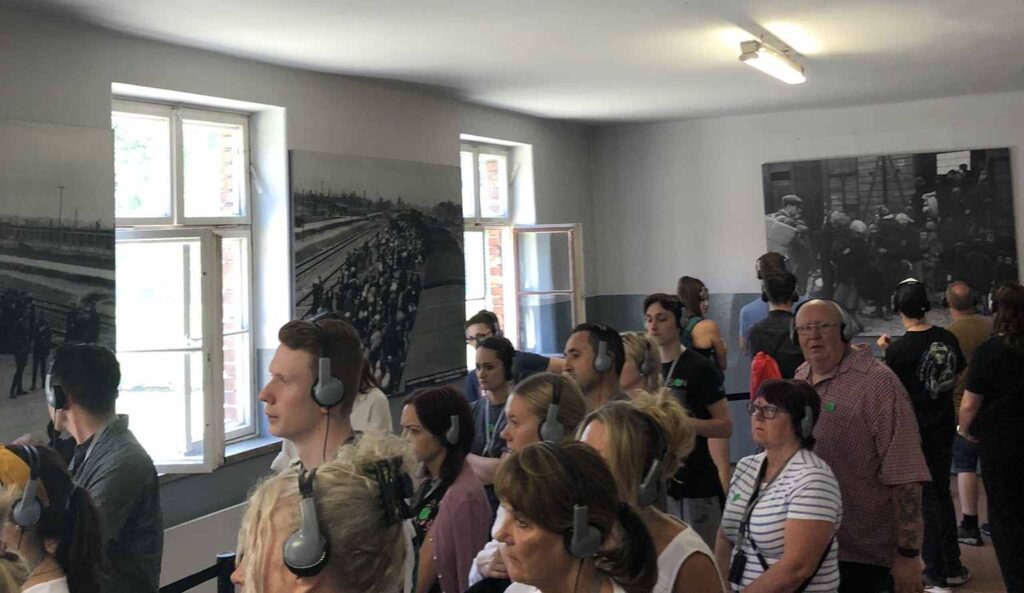
There are words on the wall from Otto Thierack (Mister of Justice of the Third Reich): “We must free the German nation of Poles, Russians, Jews and gypsies” inside permament exibitions building you will visit. In this part of the day, you will feel how Nazi’s dehumanised all prisoners. In this building there are some parts where it’s forbiden to take pictures, but you can check one i took.
Visitors wear audio guides while walking through exhibitions that explain the history of Auschwitz using photographs, testimonies, and original artifacts preserved after the war.
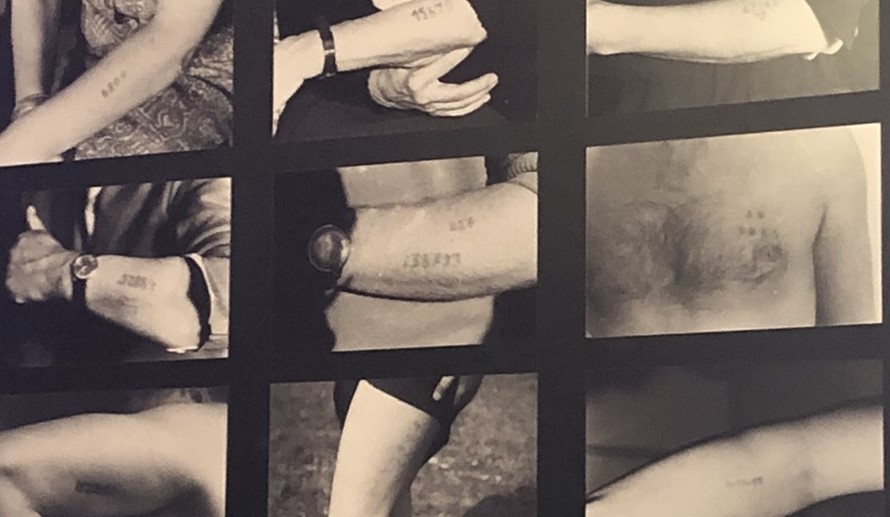
This was the only nazi camp where prisoners had their camp numbers tattooed onto them. This was due to a high mortality rate and difficulties in identifying corpses. From autumn 1941 Soviet Prisoners of War, as well as other prisoners group, were tattooed. From spring 1943 tattooing was used to mark all prisoners.
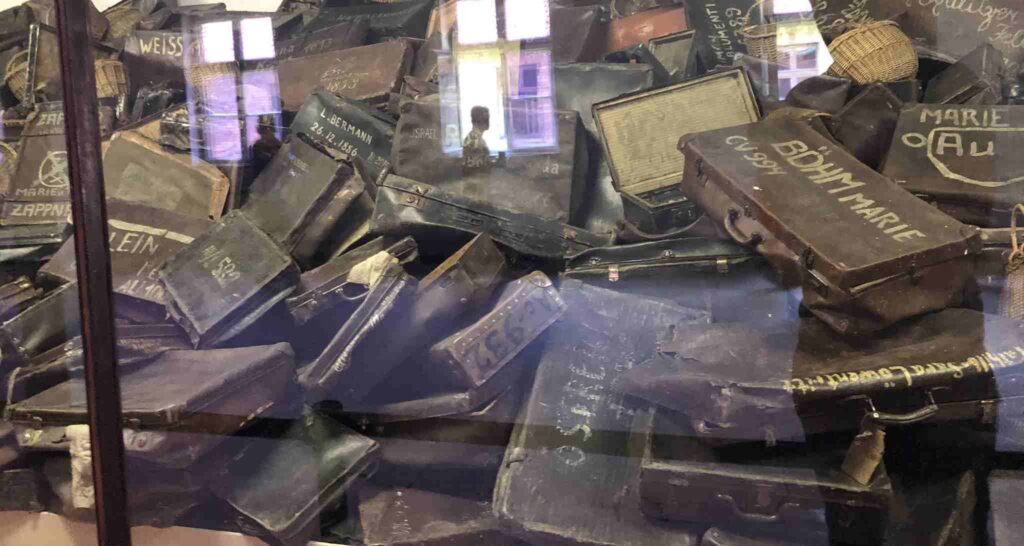
Victims often labeled their suitcases with names and addresses, believing they would collect them later. Instead, their belongings were confiscated immediately upon arrival.
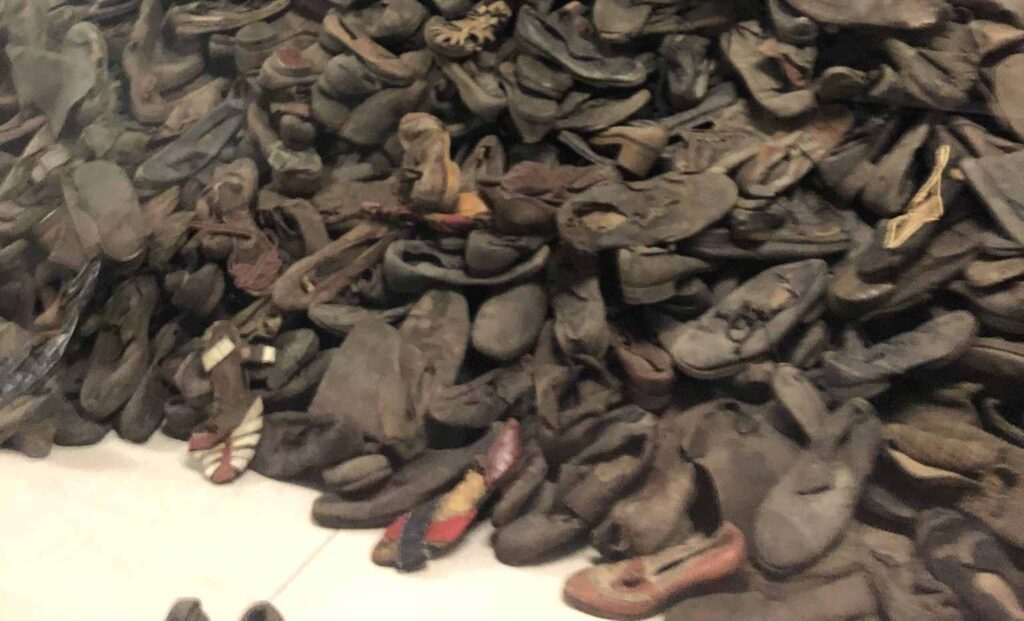
Thousands of shoes recovered after liberation belonged to victims of all ages. Together they reveal the unimaginable scale of the Holocaust more powerfully than numbers alone.
Children in Auschwitz
One of saddest thing about this conc camp is that The nazis deported about 232,00 children and young people
to Auschwitz, including 216,000 jewish children, 11,000 Roma children, 3,000 Polish children and 1,000 Slavic children of other nationalities. The majority of the jewish children perished in the gas chambers immediately after arrival. About 22,000 children and young people of various nationalities were registered as prisoners. On January 1945, red army soldiers liberated about 650 children and young people, of which 450 were under 15 years old, in the camp.
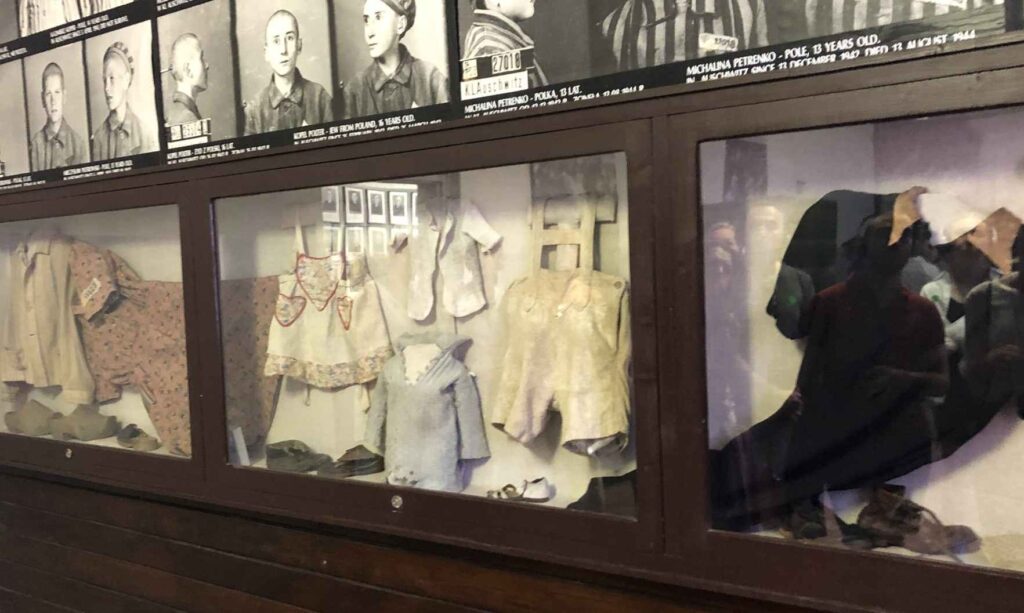
Many children’s clothes were taken from victims upon arrival and never returned. These personal belongings remind visitors that entire families, including the youngest, were murdered.
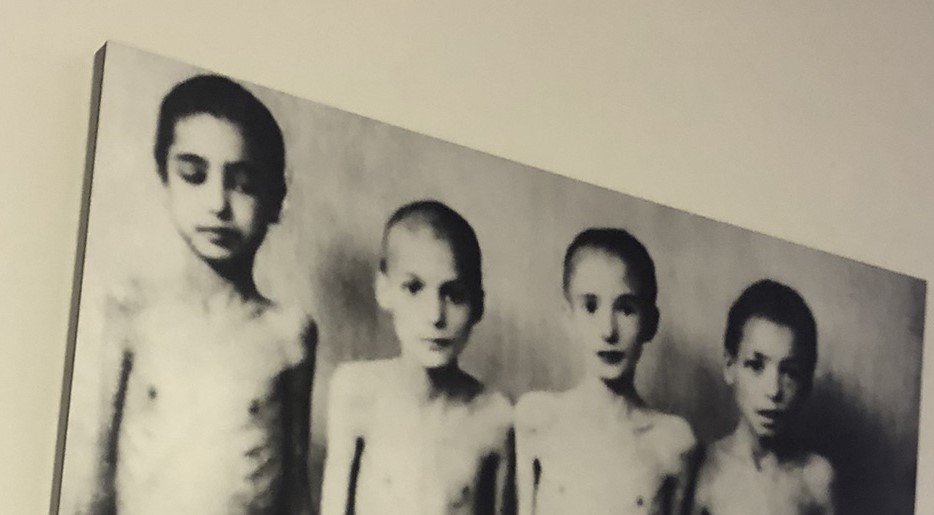
Historical photographs document the terrible effects of starvation on children imprisoned in Auschwitz. They did medical experiments on same kids. They remain among the most heartbreaking images preserved at the museum.
Rooms frozen in time and Barrack 11
The office of the camp administration contrasts sharply with the suffering outside. Decisions made in rooms like this affected the lives of thousands every day.
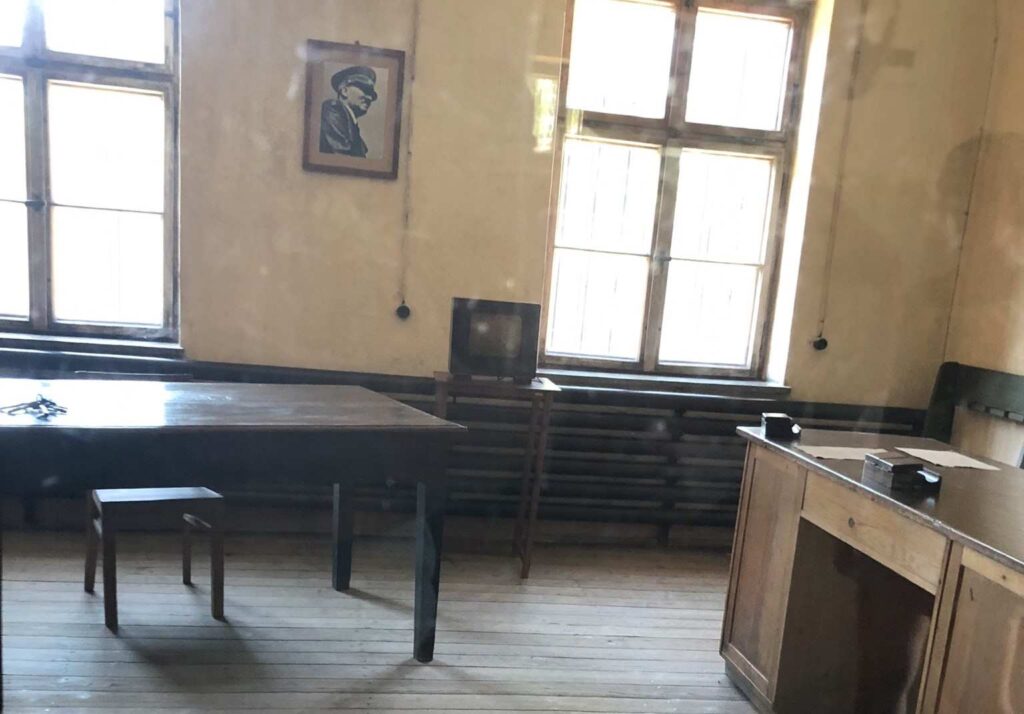
The police prisoners who were to be judged in the summary court, were put on the ground floor of barrack 11 they were not the inmates of the camp but of gestapo from Katowice, the victims of nazi terror in occupied Poland. Most frequently they were sentenced to death rarely to be put in Auschwitz.
Many corpses of prisoners who were murdered and who died during the last days of the operation of the camp were found in the basement and on the ground floor of barrack 11 by soviet soldiers after the liberation of the camp.
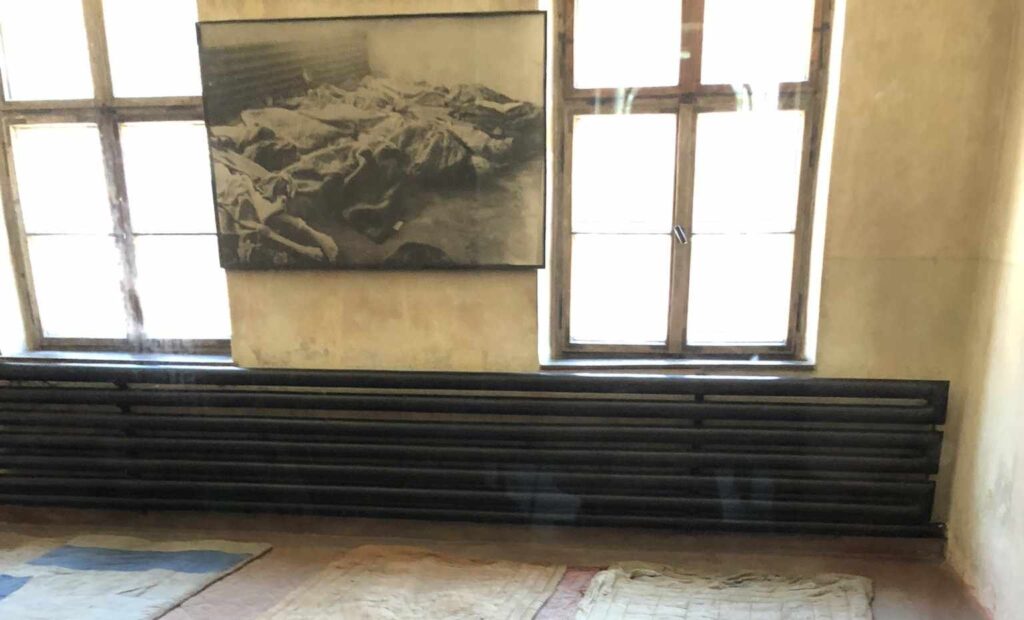
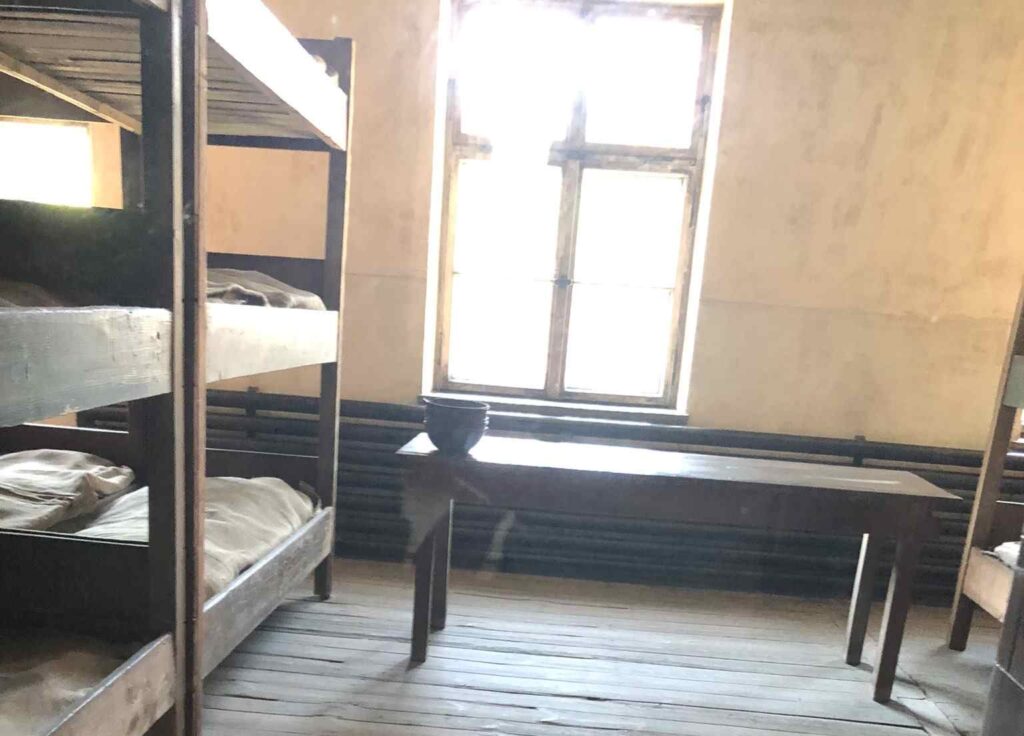
The habitable room for prisoners who were performing duties in Barrack 11.
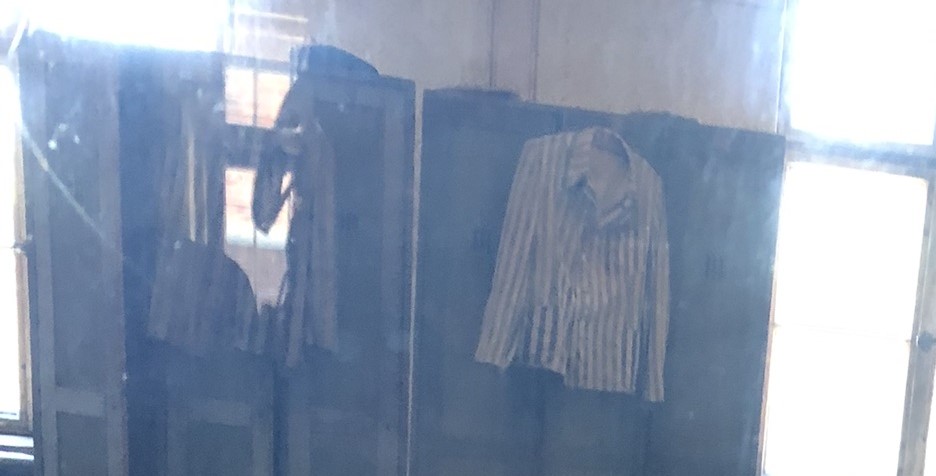
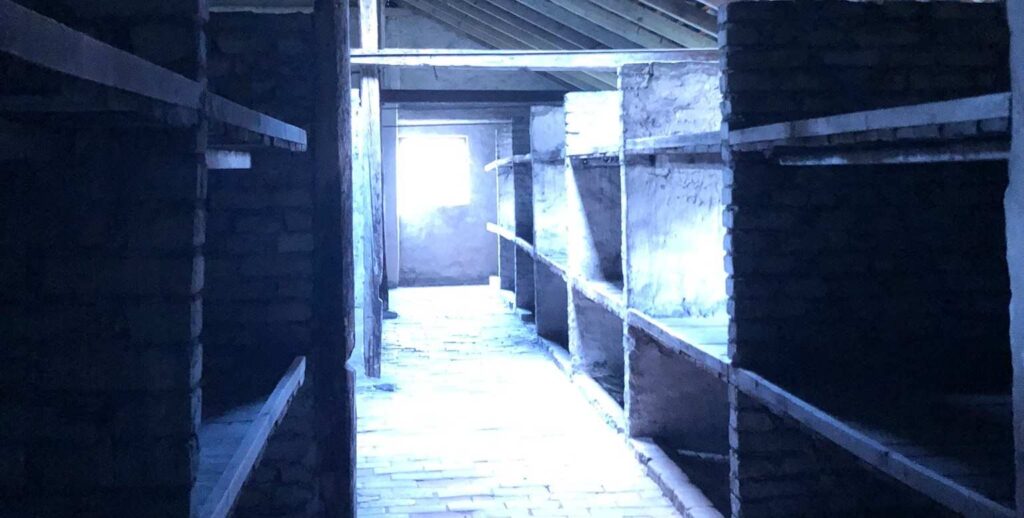
Sleeping place for prisoners
This is one of most dramatic place in the whole concetration camp. Hundreds of prisoners have been trapped in one room on wooden bed. Bed on top was better comparing to lower one, where it was much colder and more unhealty to be. Three-level wooden bunks held several prisoners on each platform. There were no mattresses in many cases, only straw, making sleep almost impossible.
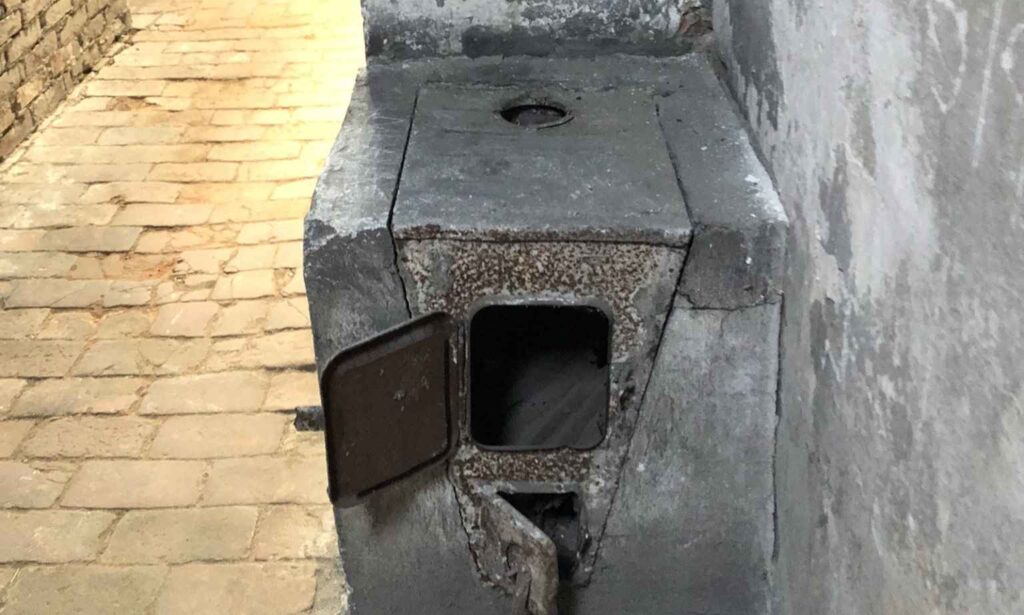
A simple cast-iron stove heated prisoner barracks during harsh winters. Despite its presence, freezing temperatures, hunger, and disease made survival incredibly difficult.
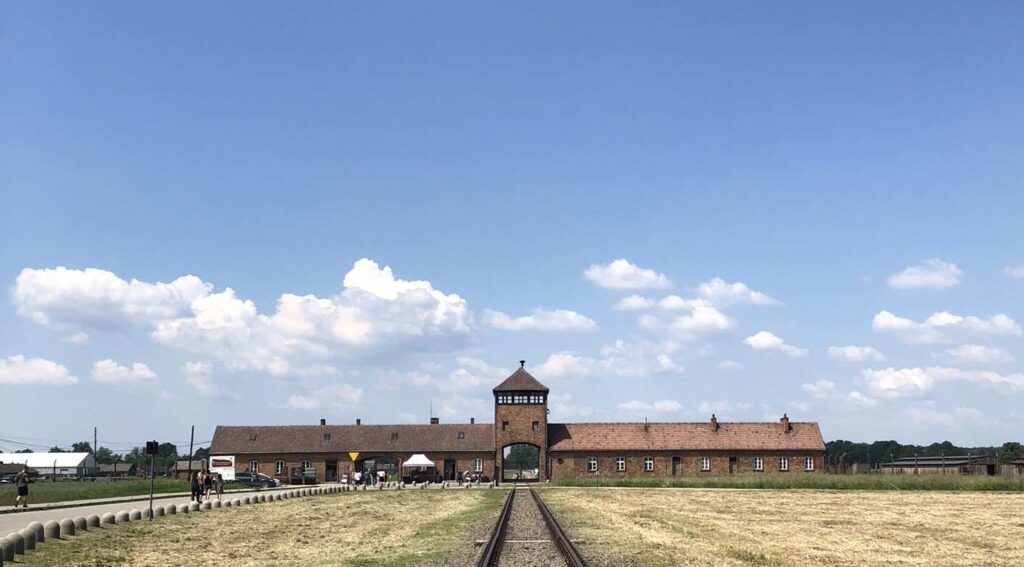
The railway tracks lead directly through the main gate of Birkenau. For countless deportees, this was the last place they ever saw before being separated from their families.
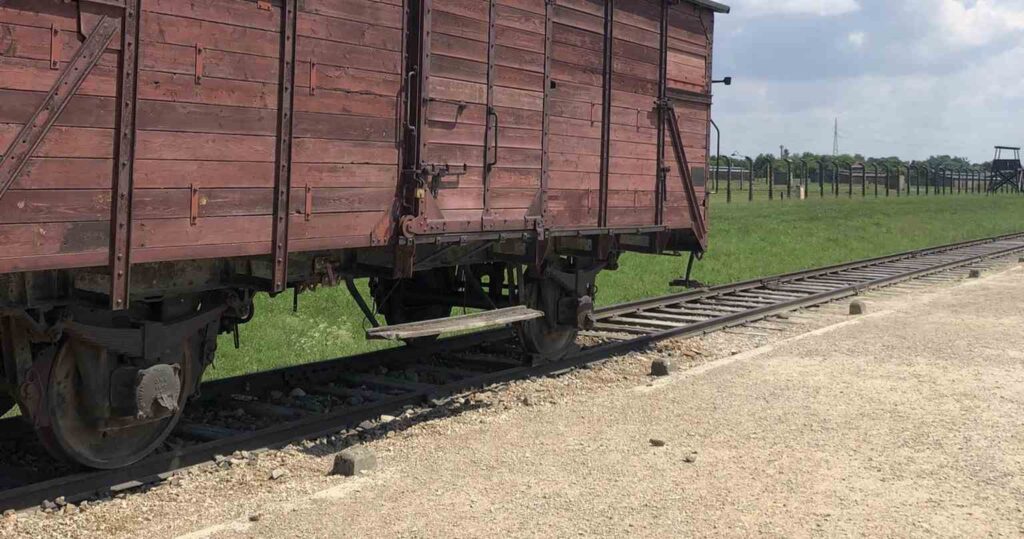
People were transported for days inside overcrowded wooden freight wagons without water, food, or sanitation. Many died before the train even reached Auschwitz.
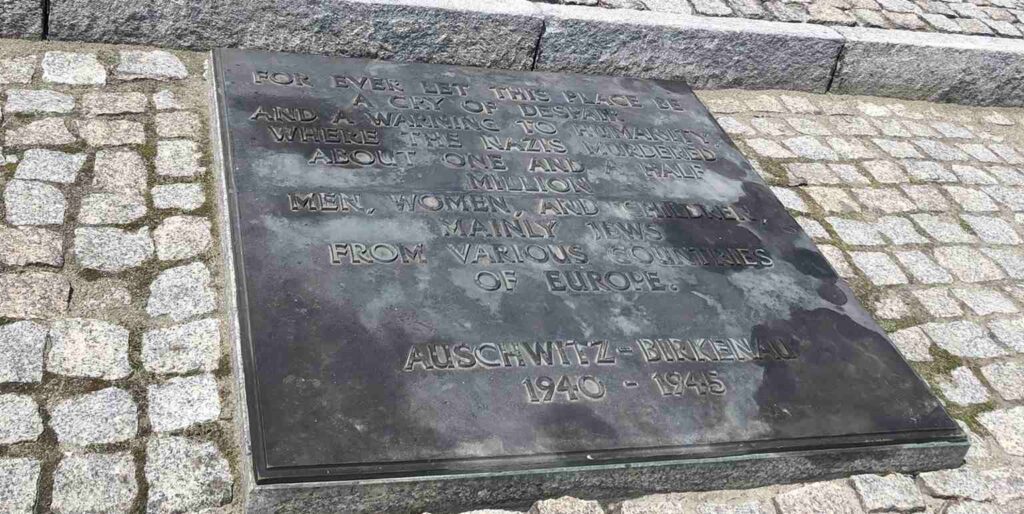
This memorial honors more than 1.1 million victims murdered at Auschwitz-Birkenau between 1940 and 1945. It reminds visitors that this place must always remain a warning to humanity.
It’s written “Forever let this place be a cry of despair and a warning to Humanity, where the Nazis murdered about one and a half million men, women, and children, mainly Jews from various countries of Europe. Auschwitz-Birkenau 1940–1945”
The wooden guard tower overlooked rows of electrified barbed wire, making escape almost impossible. Guards watched every movement from above, turning the camp into a prison with no safe way out.