During my travels through Andalusia, I realised that Andalusia is exotic even for many Spanish people. The combination of the sea and mountains within only a few kilometers, comfortable winters, fresh olives and oranges, tapas, historical cities and castles attracts people from all over Spain and also from all over the world. I spent a few months there travelling by bicycle and with my broken Spanish but good hands. I believe that by the end, I also became a little Andalusian. I started to speak loudly, take siestas and eat olives with almost everything. This is my blog about the stories, places, people and animals that I met during my slow travel through this paradise I took all the pictures myself. If you want to use some of them, please contact me.
Covered Topics
Cactus Park Motril, Lújar Viewpoints, Rain Shadow in Andalusia, Old Mines Hiking, Caves in Andalusia, Wildfire or Smoke from Collapsing Mines, Olive Fields and People Who Left, Swimming Area at River Guadalfeo, Valley of Río Chico, Órgiva, Oranges, Pitres, Chestnut Trees, Pampaneira, Bubión
Motril Cactus Park
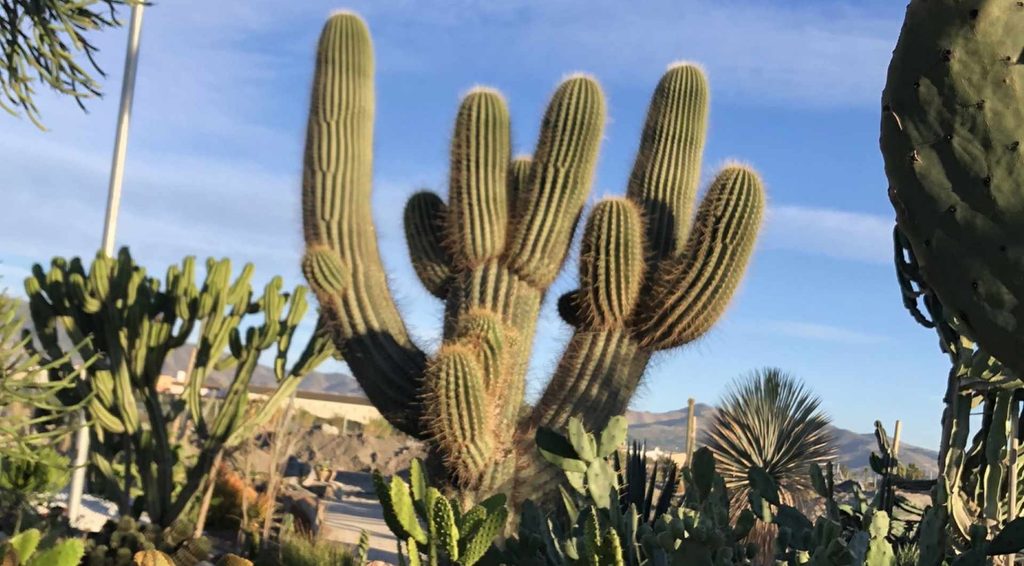
I want to start from here. I have always liked cactuses because they are very resistant, so I will start my story in Motril and then go farther north into the mountains. Motril is a port city in Spain, located on the Mediterranean coast. I stopped to visit the Cactus Park, and it was interesting to see so many different types and sizes of cactuses.
Motril is a small city on the Mediterranean coast. It is also a port and industrial city. I started my journey here because I wanted to go deeper into the mountains of Sierra Nevada to the north.
Sierra de Lújar South
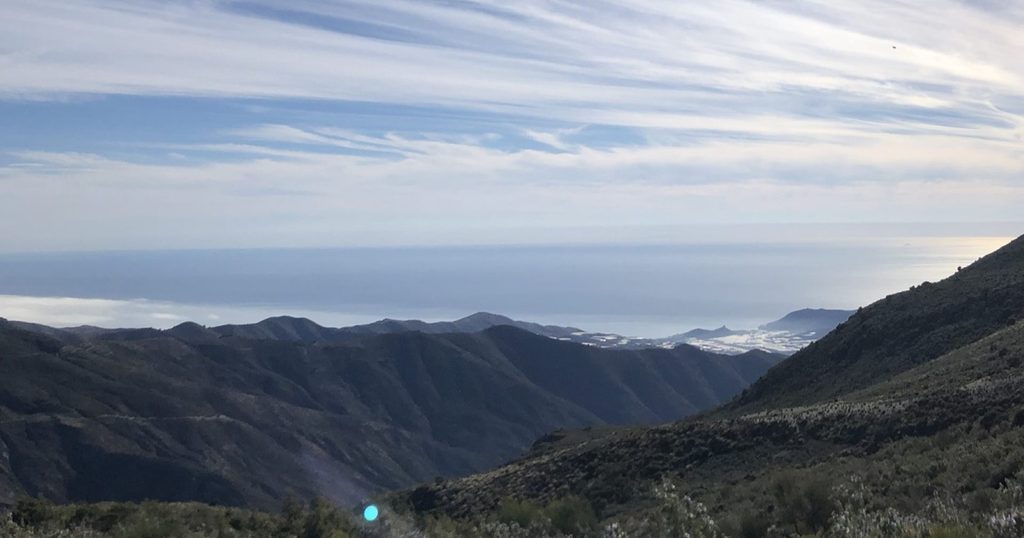
After only a few kilometers, but with an uphill climb of around 1,200 meters in elevation, we are on Sierra Lújar. This part was one of the best viewpoints I found in Andalusia. To the south, there is the Mediterranean Sea and, in clear weather, Africa. Basically, from here we can see from almost sea level to more than 1,000 meters above sea level. There are also radio and telecommunications towers and many viewpoints in this area. There are some villages and isolated houses around the mountain, but for me, the views were the best thing about this part of the journey.
To understand the region better, in the next section I will explore one interesting natural phenomenon.
Sierra de Lújar North Viewpoints
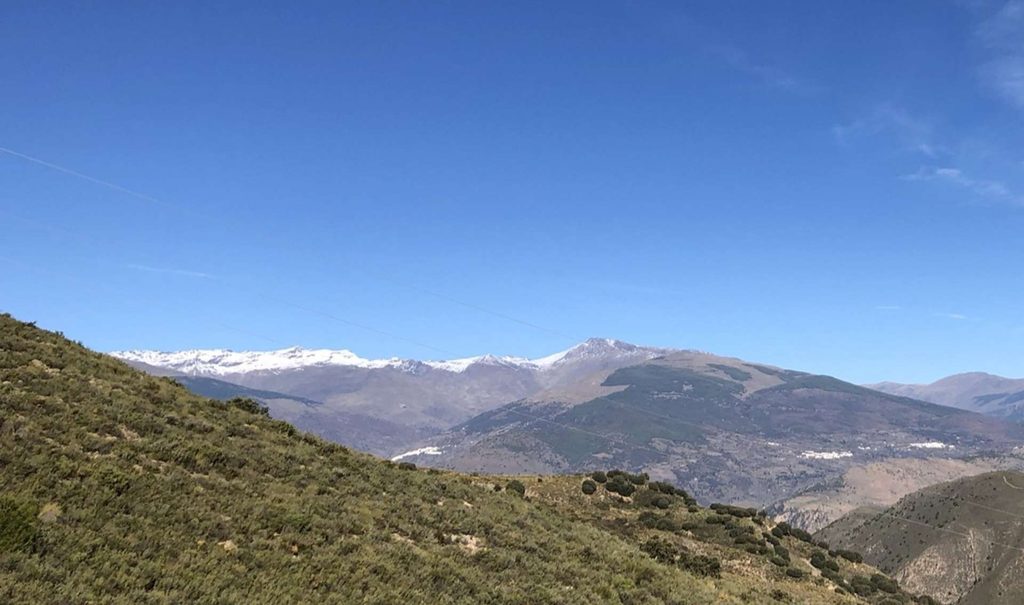
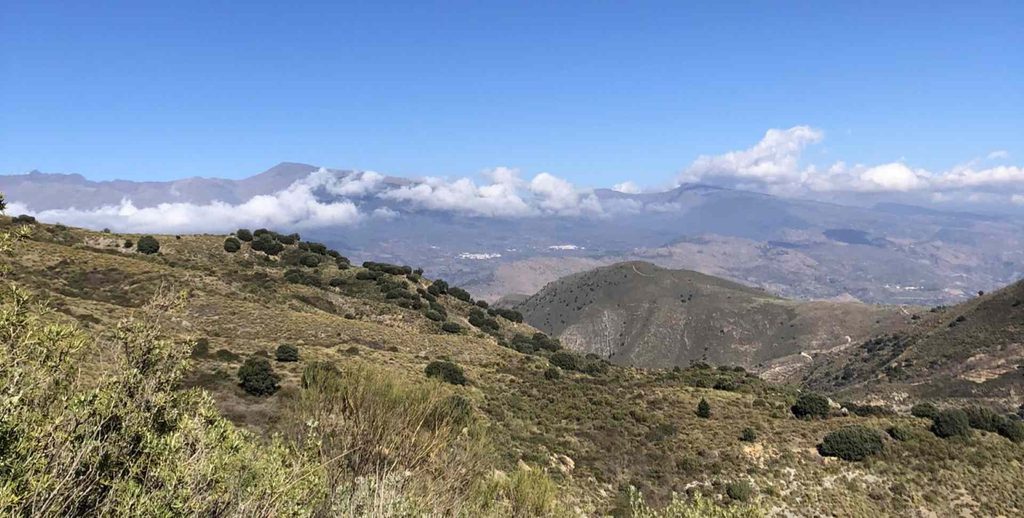
From here, the snow of Sierra Nevada is visible. On the northern side of Sierra de Lújar, the views are still amazing and point toward Sierra Nevada. During the fall, there can already be snow on the highest peaks of this mountain range.
Sierra Nevada is the highest mountain range in mainland Spain. From the northern side of Sierra de Lújar, it is also possible to see many of the places I am going to write about later in this article.
Rain Shadow in Andalusia
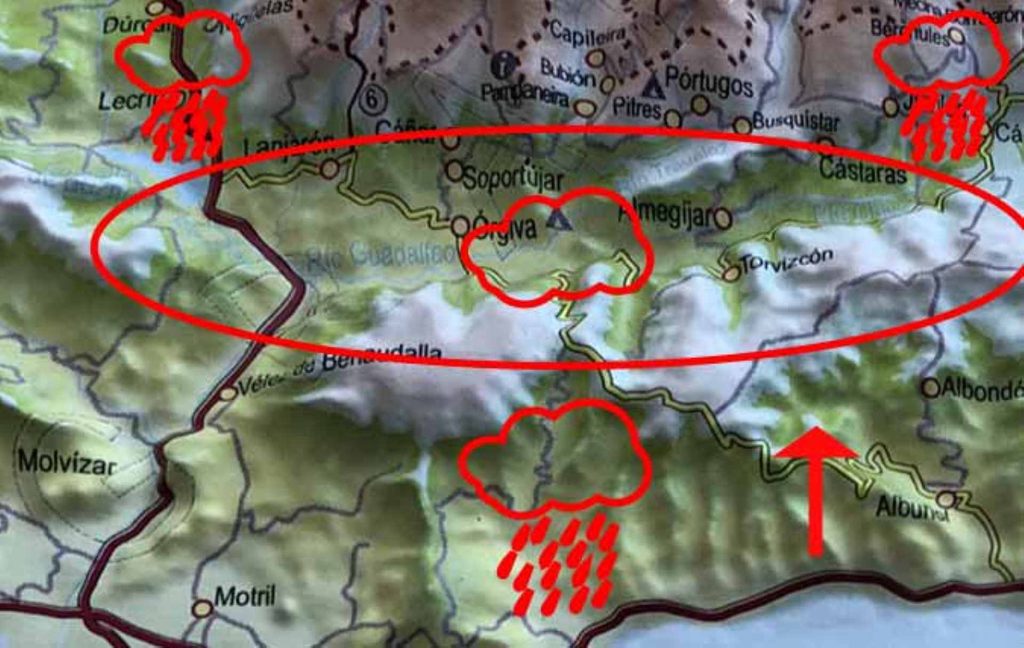
Rain shadow is a natural phenomenon that happens in different parts of Andalusia. Wet clouds coming from the Mediterranean can lose much of their moisture when they reach the mountains. Because of this, some areas on the other side of the mountains receive much less rain. The area around the Órgiva depression is one place where this can be noticed.
I wanted to mention this because it helps explain why the area around Órgiva can be quite dry, even though it is relatively close to the Mediterranean Sea and surrounded by high mountains. A similar situation can be seen near Almería, where there is the only officially recognised desert area in Europe.
Old Mines Hiking
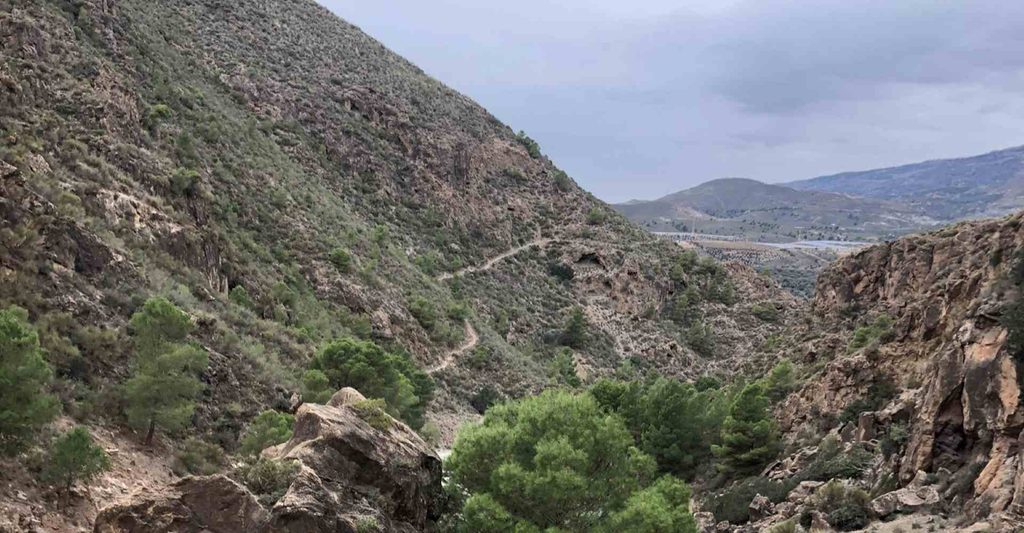
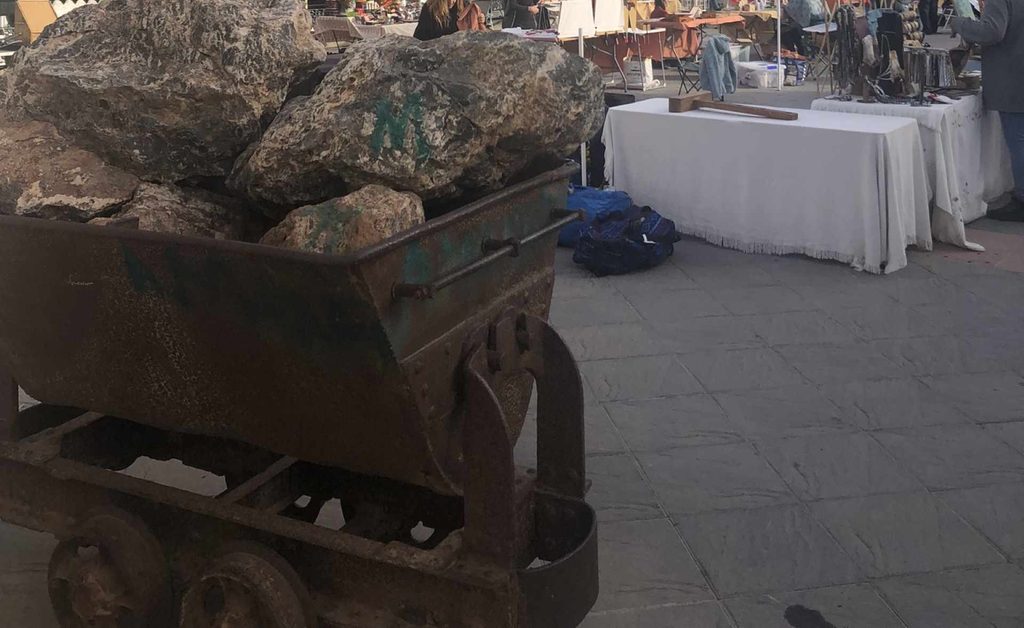
There are still ruins of old mines in this area. Mining was important here because there is a lot of iron in the rocks. There is also a hiking route that follows some of the old mines. Walking through these places made me think about how different the mountains must have looked when mining was much more important. Some of the old structures are now just ruins, but they are still part of the history of the area.
Caves in Andalusia
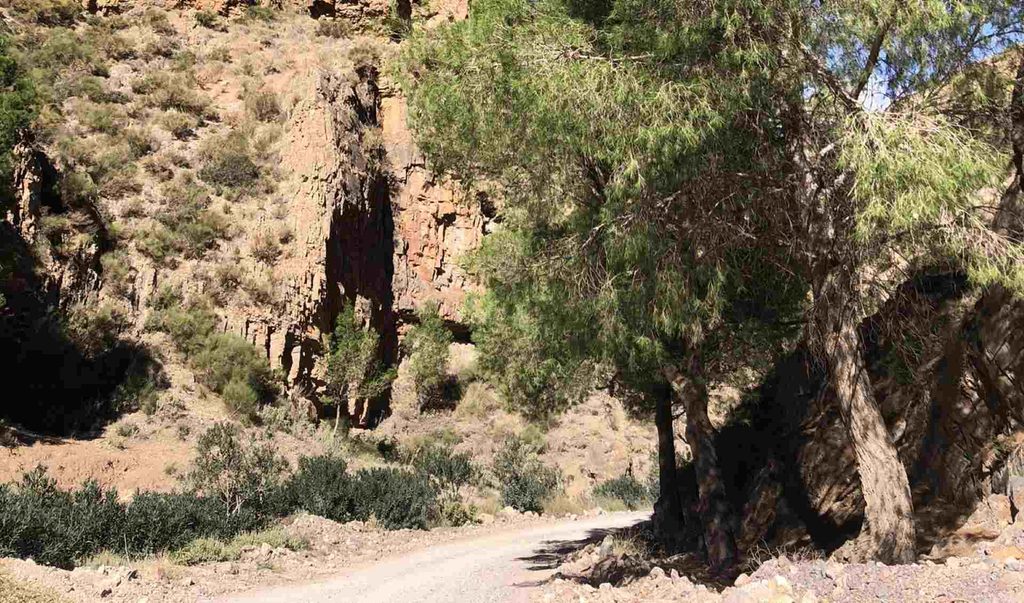
According to some data (https://www.ub.edu/geocrit/sn/sn-146(051).htm), around 15% of the people in Andalusia [check the exact statistic/source here] were connected with cave dwellings. This was surprising information to me. However, after seeing how many caves there are in this area and how comfortable the winters can be, I started to understand why living in caves was possible here.
There are many different caves around Andalusia. Some are natural caves, while others were changed or used by people. I became so interested in them that I almost wanted to spend some time living in one of them myself.
Wildfire or Smoke from Collapsing Mines
One of the most confusing things for me was seeing smoke and not knowing whether it was a wildfire or smoke coming from a collapsing geological structure. This part of Andalusia has serious problems with wildfires. Sometimes, however, smoke can also come from old mines or geological structures that are collapsing or burning.
In any case, if you see smoke and you are not sure where it is coming from, it is better to inform the authorities.
Olive Fields and Almost Empty Villages
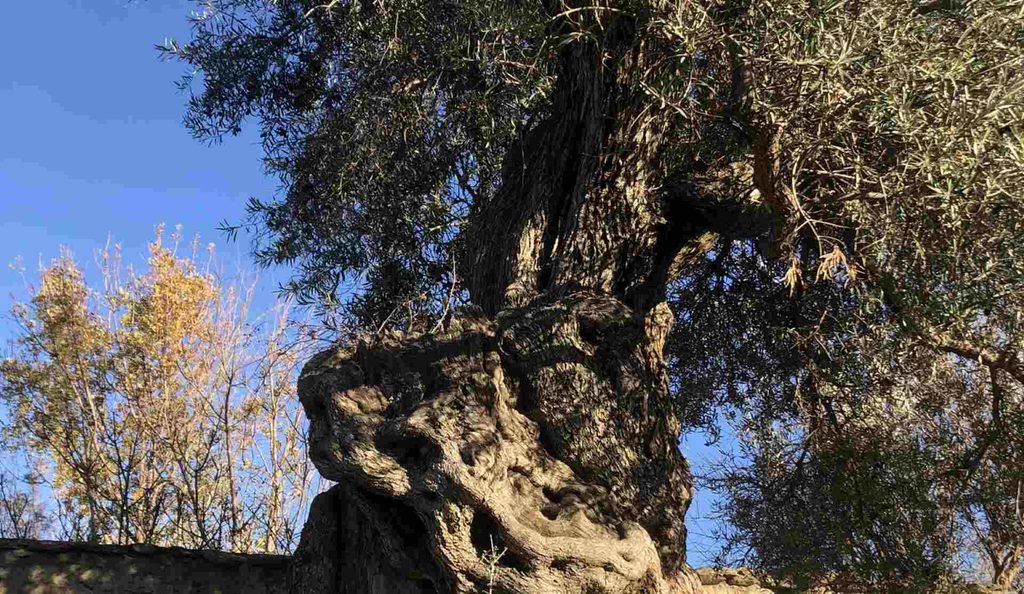
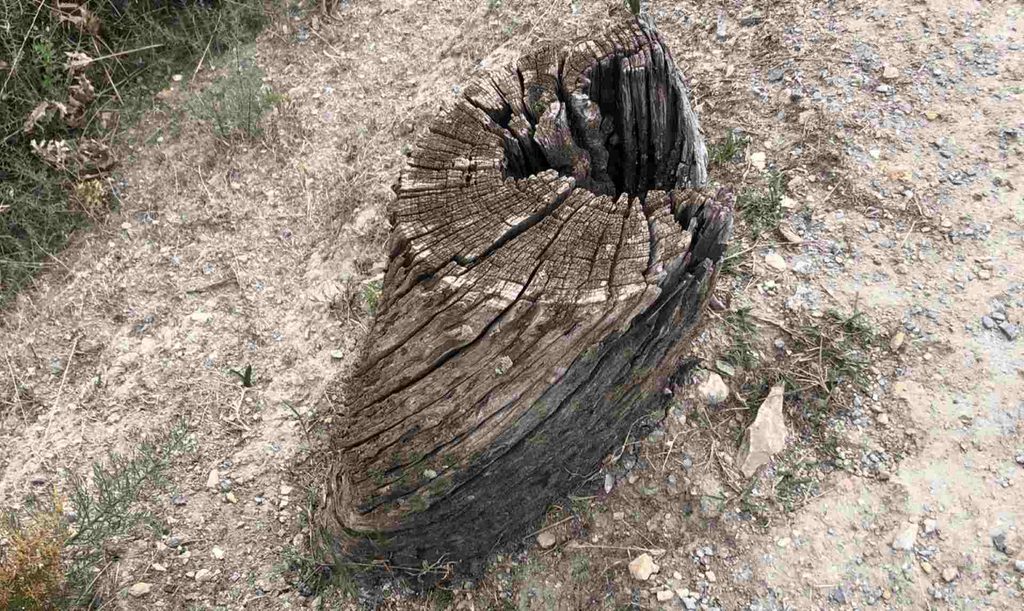
Looking at olive fields that seemed as if nobody was taking care of them, together with old olive stumps, made me think about how life used to be here. This was before Sierra Nevada became a National Park, before modern roads and communication, and before modern industry changed the region. I imagine generations of families working in olive fields in this dry environment, without air conditioning in their houses or cars. Local people told me about large migrations from villages in the area during the previous century.
The situation today is very different, but the old olive stumps seem to tell their own stories. They remind me of Andalusian villages that became almost empty or disappeared, and of how difficult life could be here in the past.
Guadalfeo River
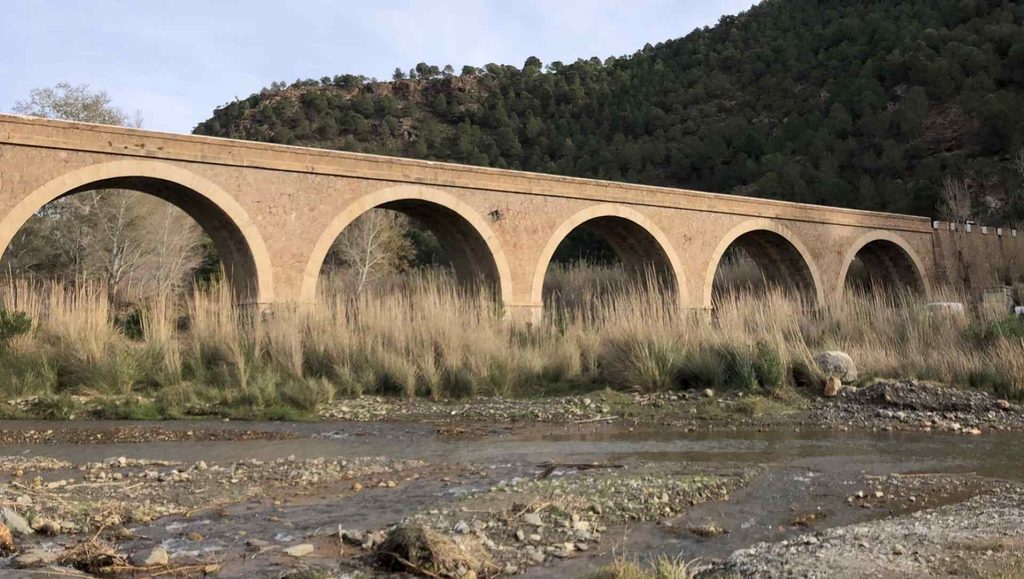
The Río Guadalfeo is formed from many smaller streams and rivers. In some places, the river is suitable for swimming, such as the area below the bridge called Puente de los Siete Ojos, which means “Bridge of Seven Eyes.” The water level can change a lot depending on the season. During spring, the river can become much stronger because of snowmelt and rain. The river is also an important part of the landscape around the villages and mountains.
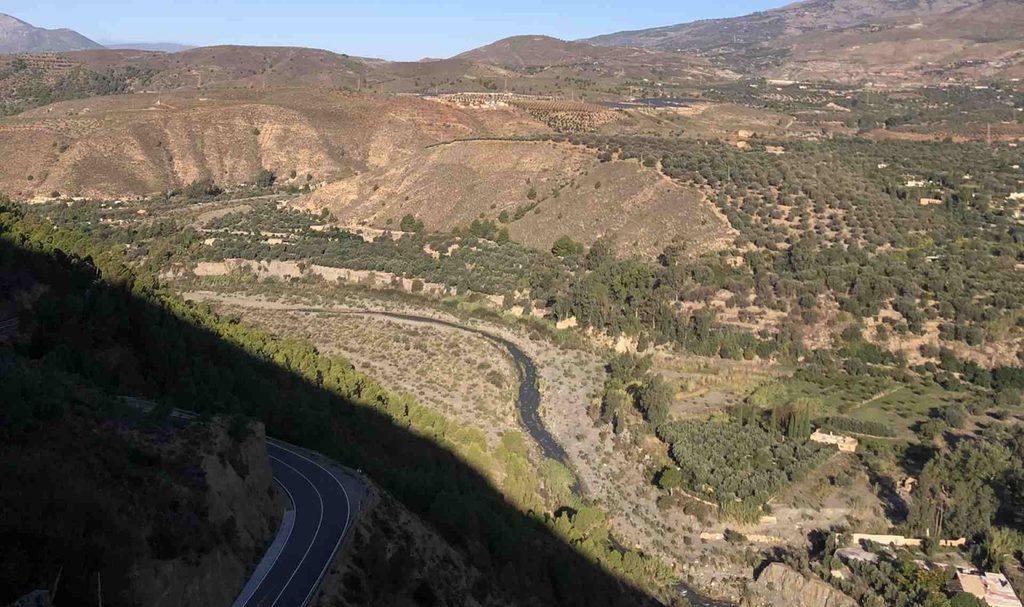
Valey of Rio Chico
Río Chico is a tributary of the Río Guadalfeo. If you follow the valley of Río Chico, you will eventually reach Órgiva. Around the valley there are farms, old olive fields and other agricultural areas. Some of the olive trees seem extremely old. There are also eucalyptus trees in parts of the valley and along the Guadalfeo River. I noticed many of them during my travels. They were planted in the past partly to help stabilise the ground, but today some of these trees have become very large.
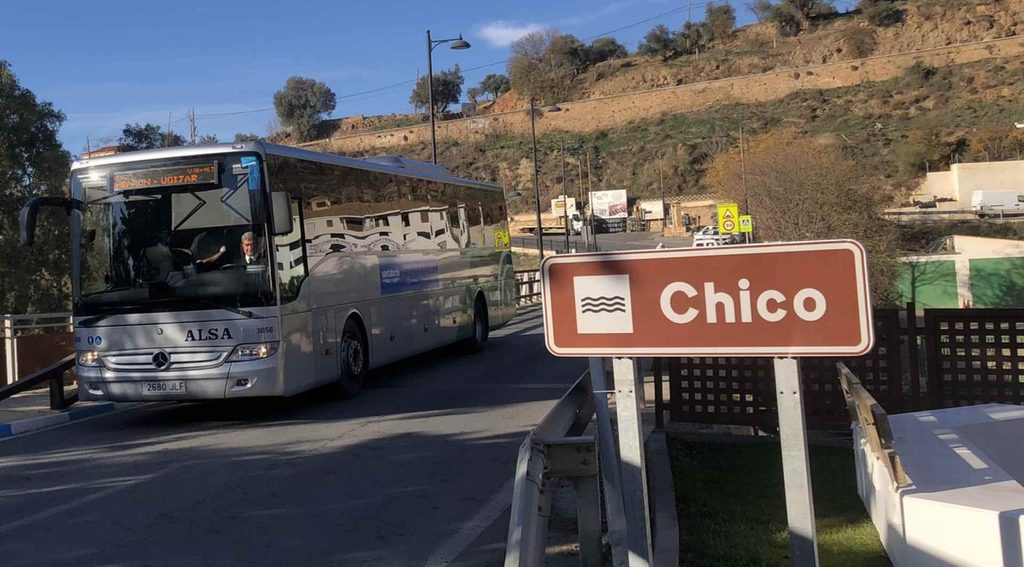
Órgiva – Unofficial Capital of the Region
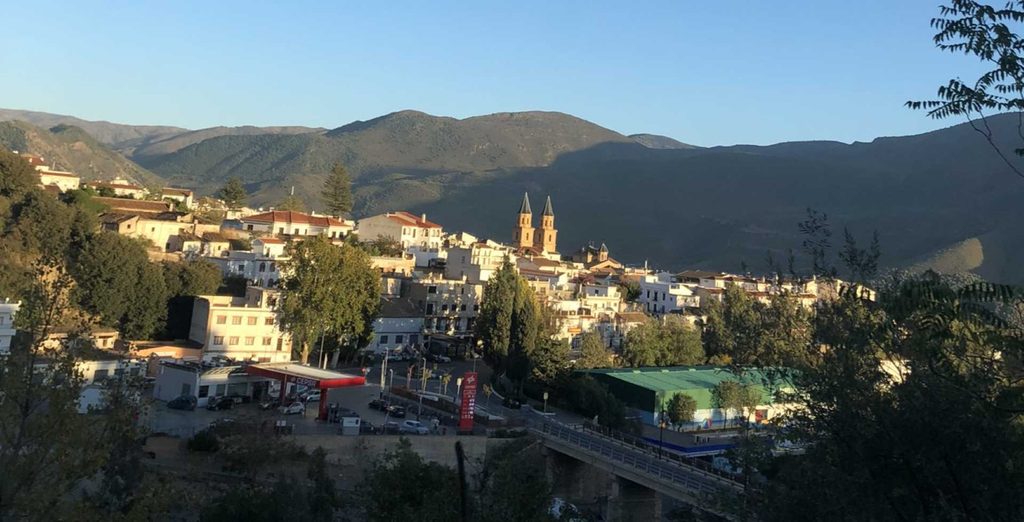
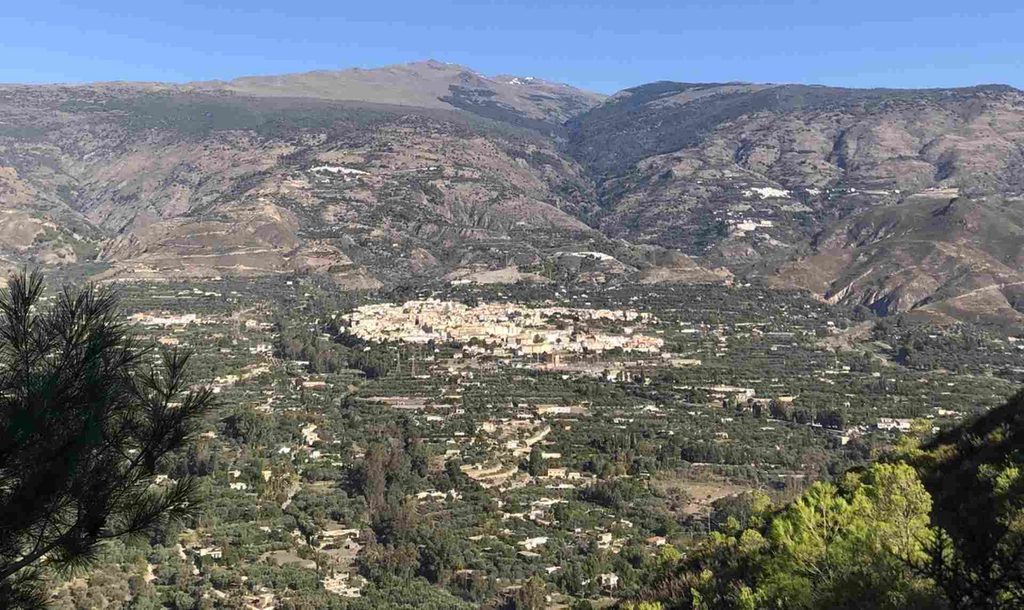
On the banks of Río Chico is Órgiva, the unofficial center of many villages and places in this area. I used to stay here and use it as a base for exploring the surrounding region. Órgiva has banks, a post office, cafés, restaurants, markets and most of the things you need for everyday life. On Thursdays, there is a market where many people from the surrounding area come.
The population of Órgiva is around 5,000–6,000 people, and there is also a noticeable foreign population. For me, Órgiva was a good base because from here I could cycle to many different places in the mountains and valleys.
Oranges
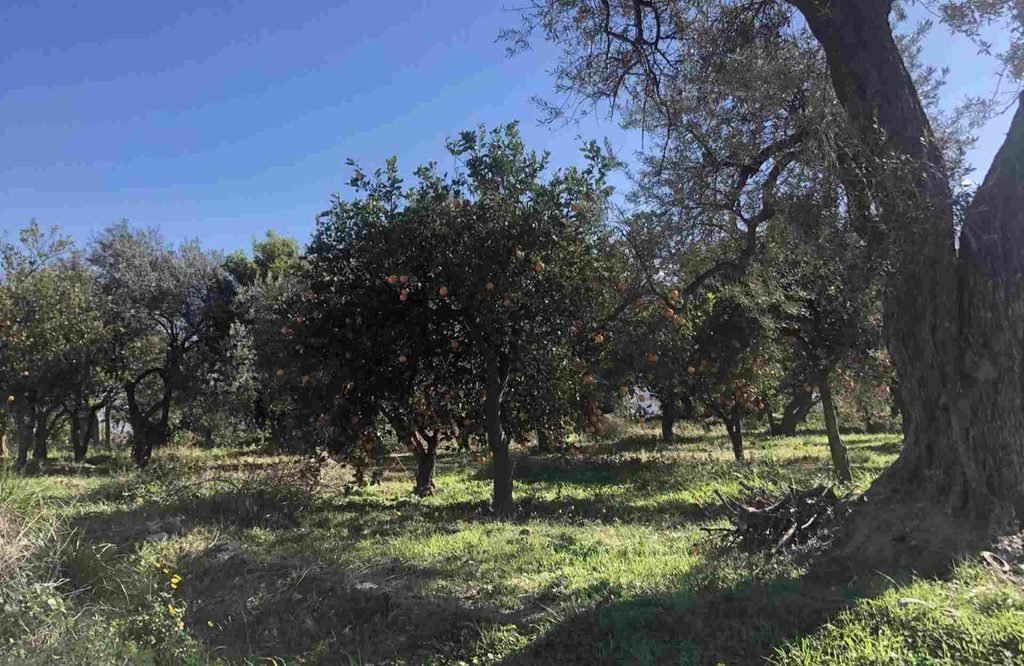
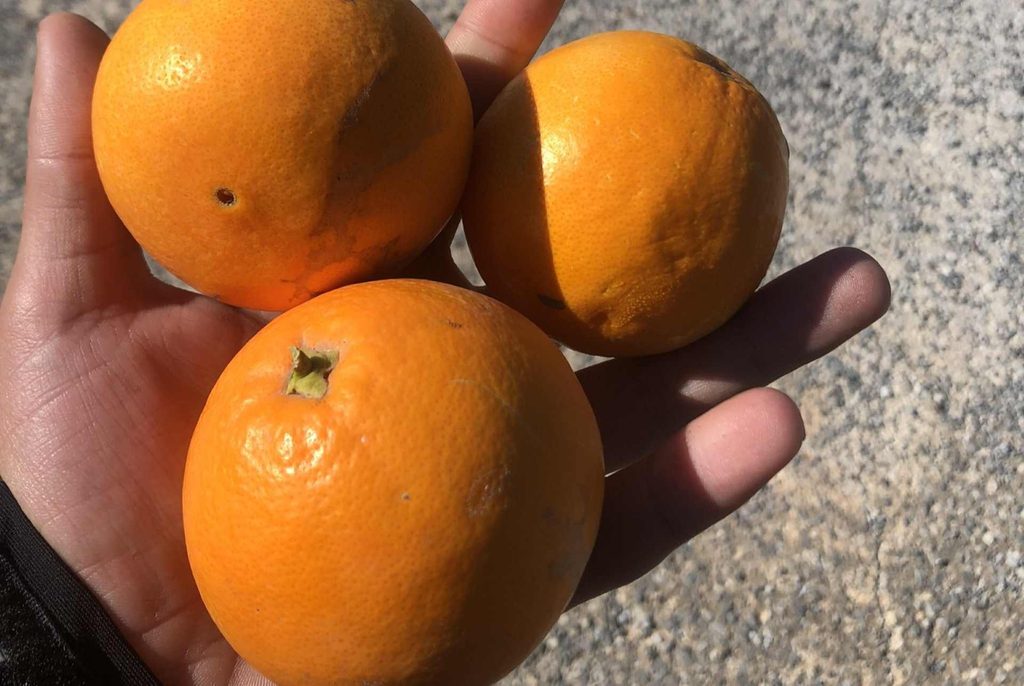
The most delicious oranges I have ever tried, I tried here. One morning, it was cold and fresh, and because I was travelling by bicycle, I passed through a field of orange trees. I took a few oranges. Maybe I was simply very thirsty, or maybe they were so good because they were fresh, but they were incredible.
There is something special about eating fruit directly from the area where it grows, especially when you have been cycling for hours.
Bayacas
Villages in Andalusia can be very special. Bayacas is one of the villages that, according to local people, almost lost its population during the last century. Río Chico passes through the village. I was lucky to join some locals here and help them for some community work and meet some of the people who live there. It was a pleasure to spend some time with them and see a different side of village life. Bayacas is also one of the villages closest to Órgiva.
Pampaneira
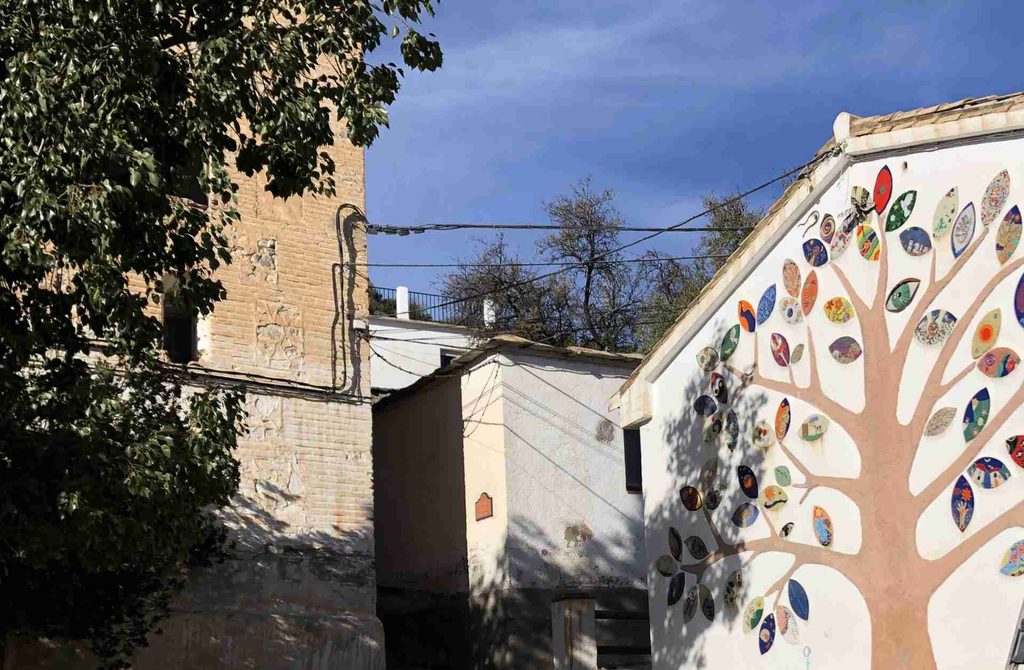
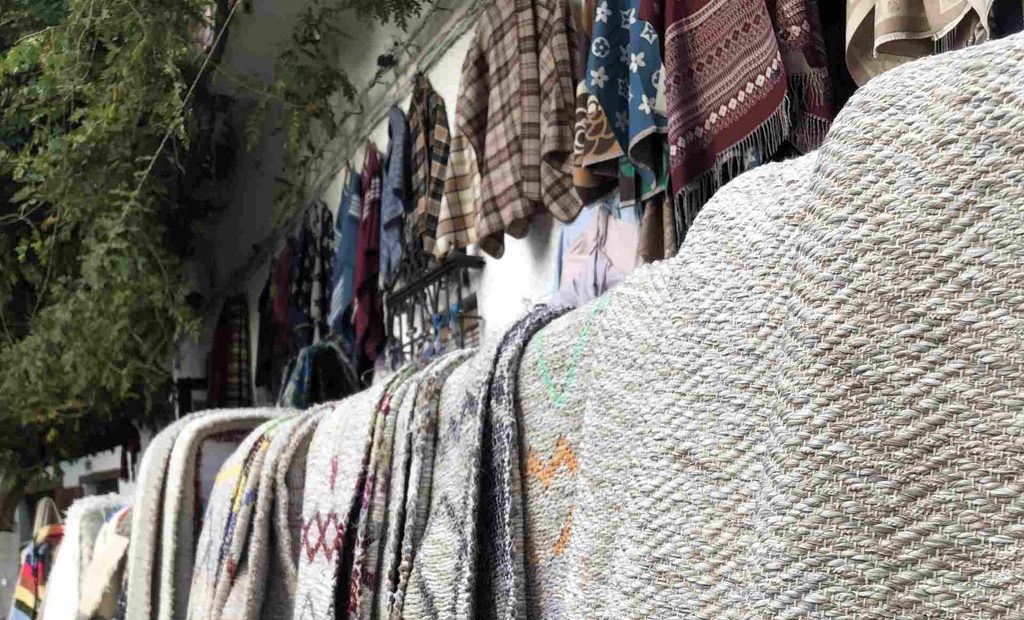
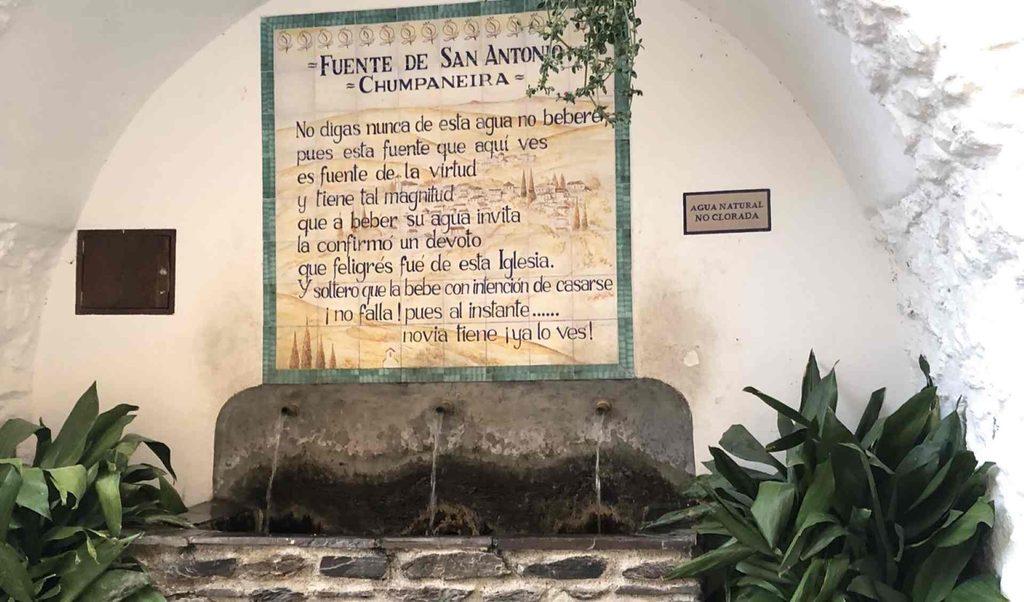
Pampaneira is one of the most popular villages in this area and is a popular tourist destination. It is located about 14 kilometers from Órgiva, and there is even a bus going up to the village. During my visit, I received a free sample of chocolate from a small chocolate factory. There was also a lot of water running through the village, with old channels and canals. Textiles and carpets were also being sold there. Pampaneira is one of those places where you can see the traditional style of the Alpujarra very clearly.
Soportújar
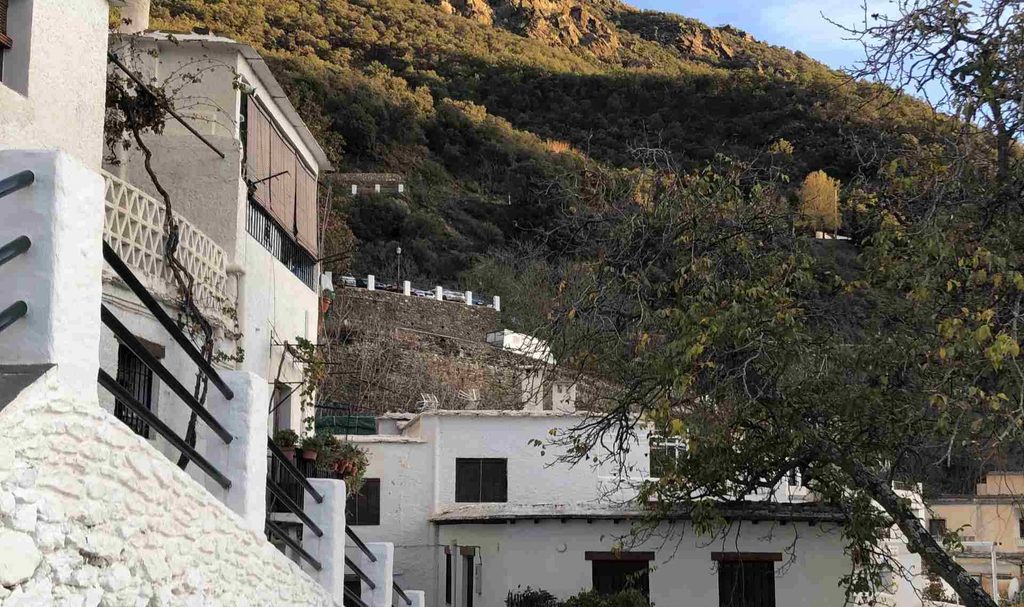
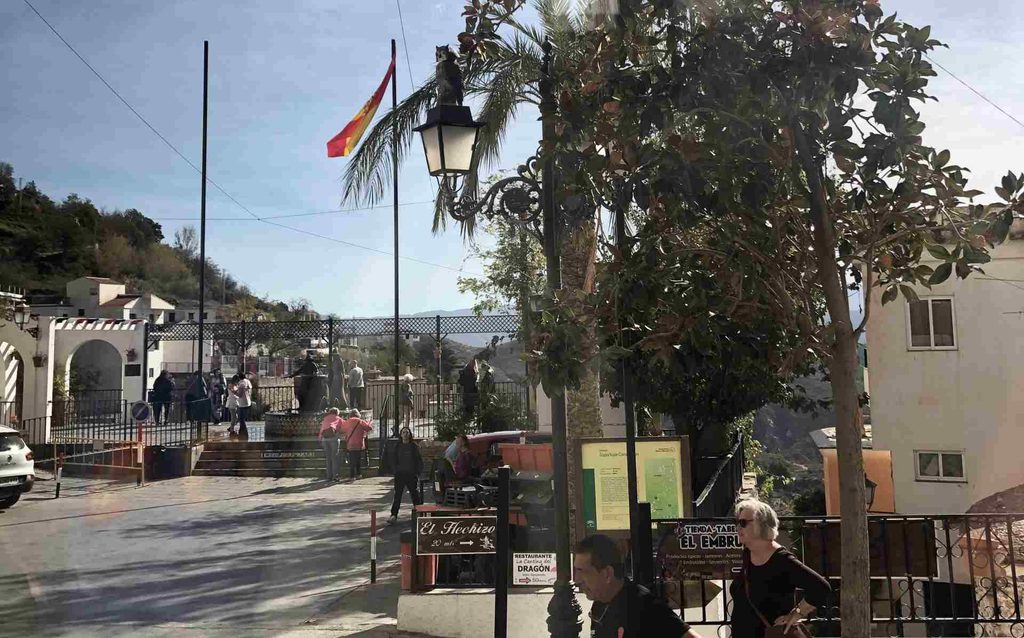
Soportújar is another interesting village that I passed through. I am not sure exactly why, but there were many scary decorations and things related to witches. Maybe it was because my visit was not long after Halloween, but I remember this village because of that. It is worth visiting, especially because it is on the way between other interesting places in the region.
Portichuelo de Cástaras
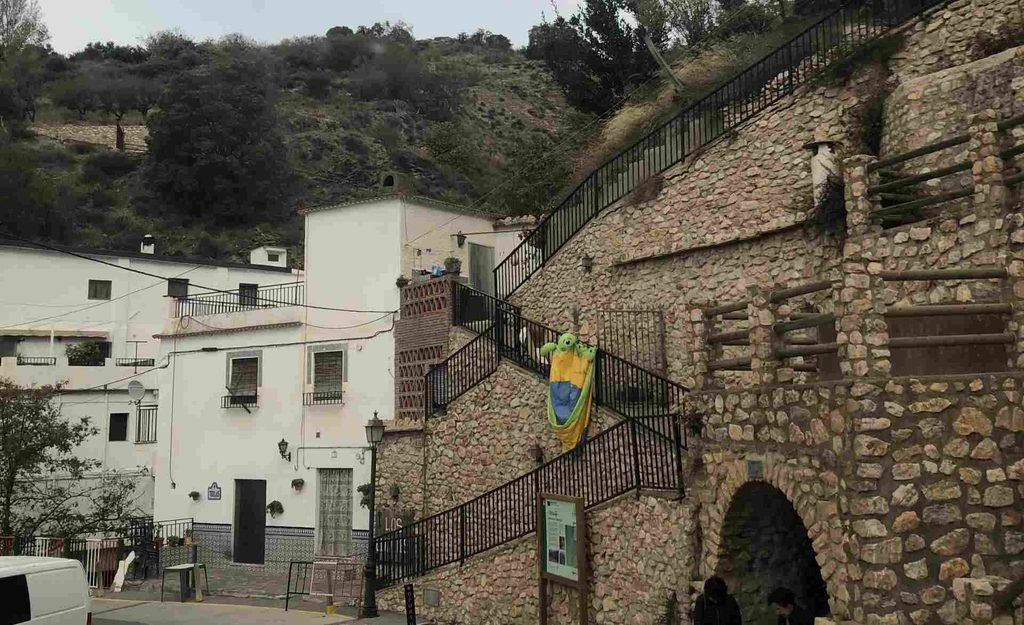
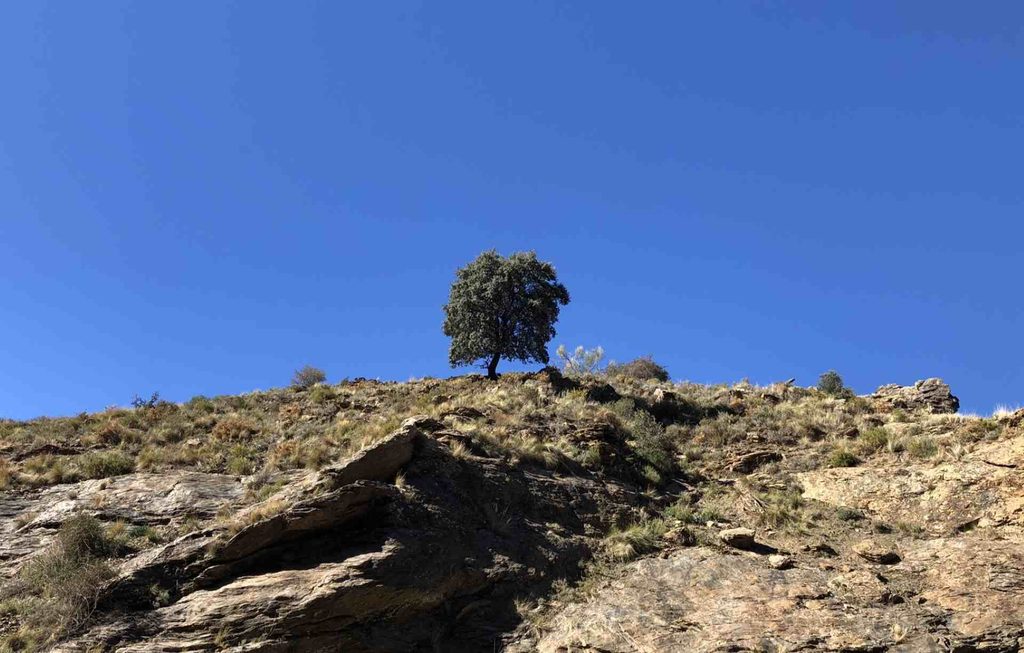
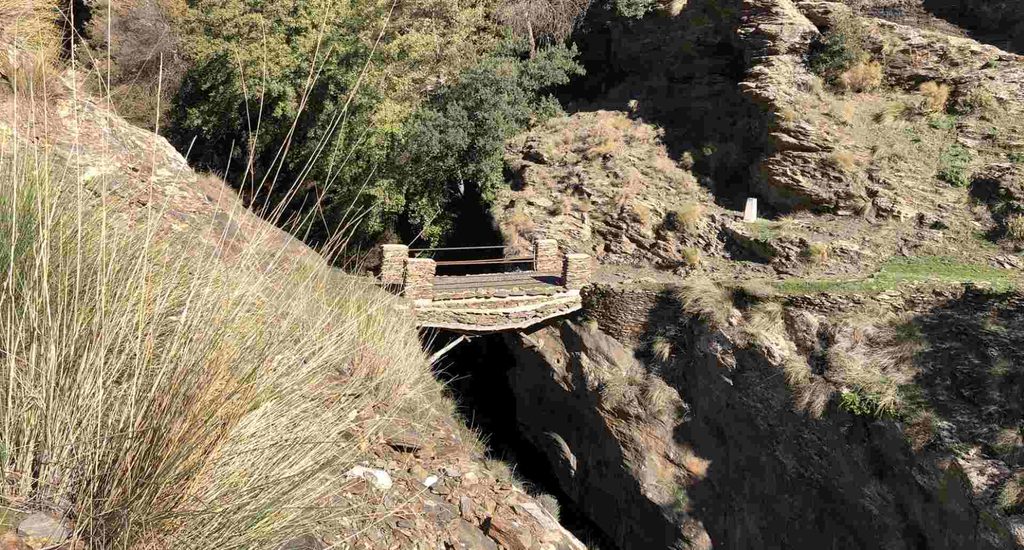
“Escarihuelas” or “carregüelas” are winding and very steep paths. The name comes from an old word related to climbing. These paths are not easy to walk, and some parts have a slope of more than 20%. In places with difficult mountain terrain, similar paths were used for travelling and transporting goods. For many centuries, these paths were very important.
They were used for farming, transporting goods and connecting different areas. In the Alpujarra, they connected villages with each other and with the surrounding mountains. People used them to transport goods and reach fields and other areas. These paths have been used for a very long time. Some of them are mentioned in historical documents from the 15th century. This means that they were probably already being used before the arrival of Christian settlers in the Alpujarra. Some of the best-known Escarihuelas in the Alpujarra are Panjuila in Ferreirola, Las Minas in Busquístar, Campuzano in Órgiva, and this one, Portichuelo de Cástaras. Above Portichuelo de Cástaras, there is a Buddhist temple. I met some very nice people there, and they offered me tea.
Pitres – La Taha
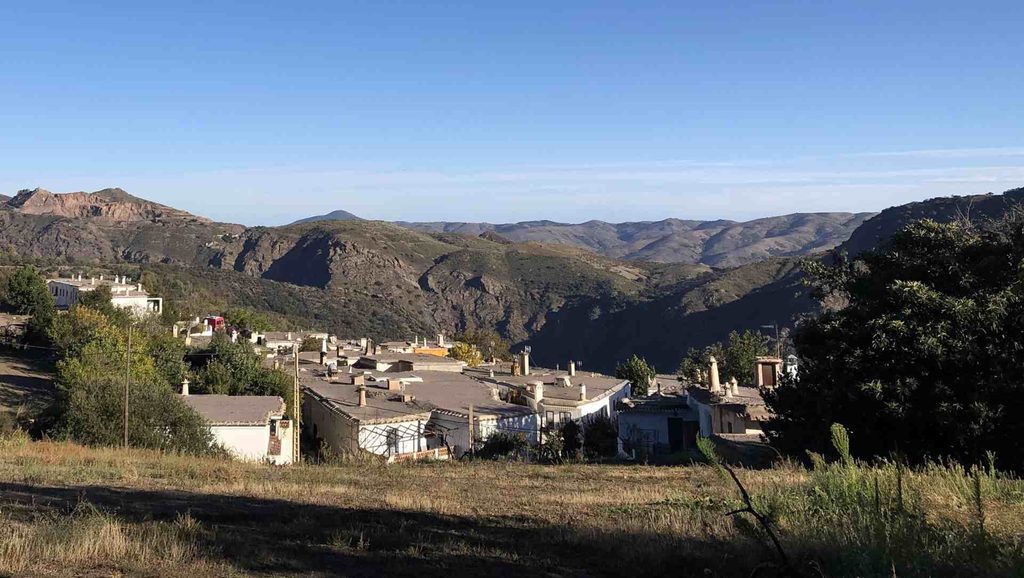
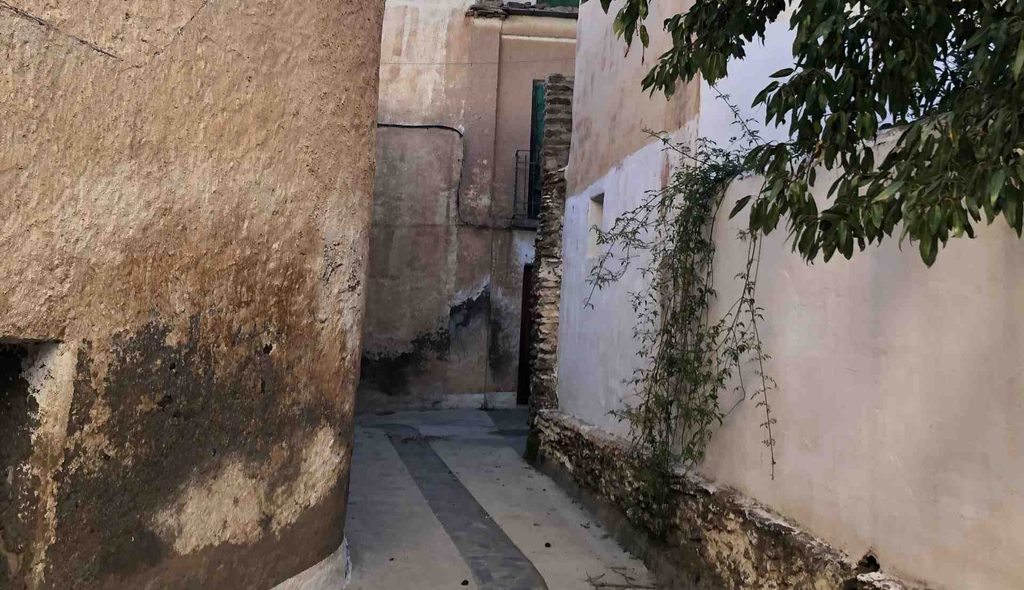
One of the most interesting places on my whole journey was Pitres, the capital of La Taha. It seemed very different from some of the other villages I visited, with more people living there and several bars and shops. I even saw a discotheque.
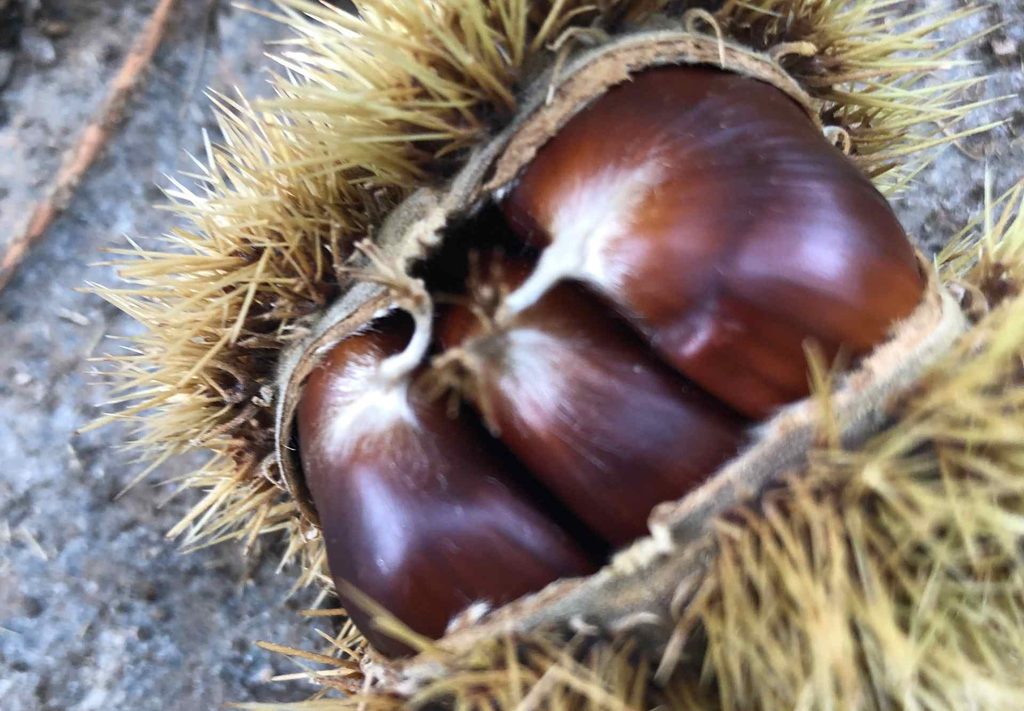
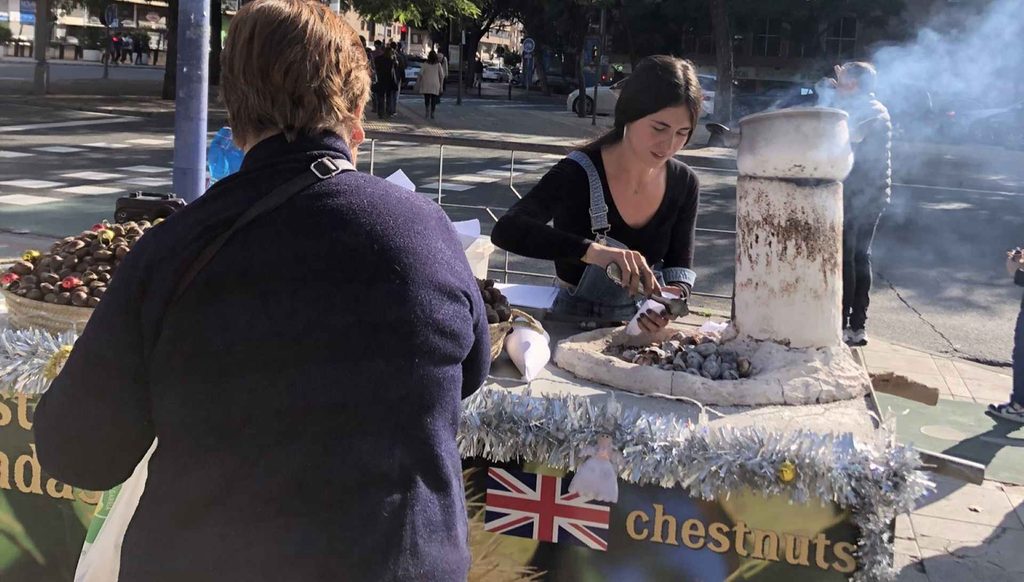
Pitres also seemed much greener compared with some of the other places I had visited. It was the season for harvesting chestnuts, and I met some people while they were doing it. I also met a cool guy from Madrid who had moved here because he wanted to enjoy a quieter life with his horse. It was an interesting story to hear. Local people were harvesting chestnuts and selling them for a few euros per kilogram.
Canals of Andalusia
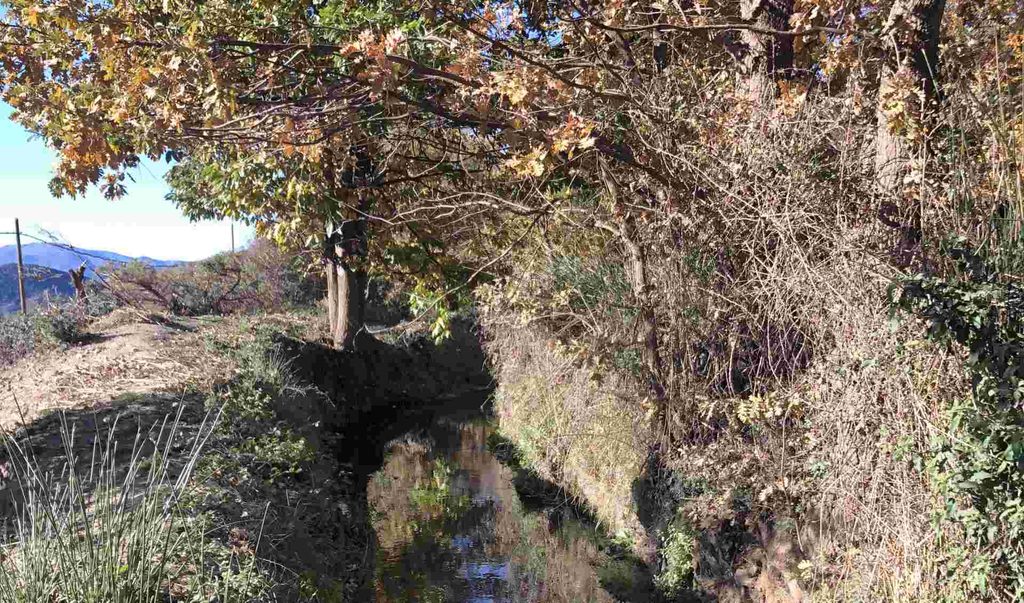
One of the most impressive things about Andalusia for me was the canals. The way people who lived here in the past managed to get water into their villages is a great example of local engineering. They built canals that brought water from the Sierra Nevada mountains toward houses, farms and animals. In a dry environment with hot summers, having access to water was extremely important.
On the picture, you can see what some of these old canals look like.
Amazing World of Healthy Herbs
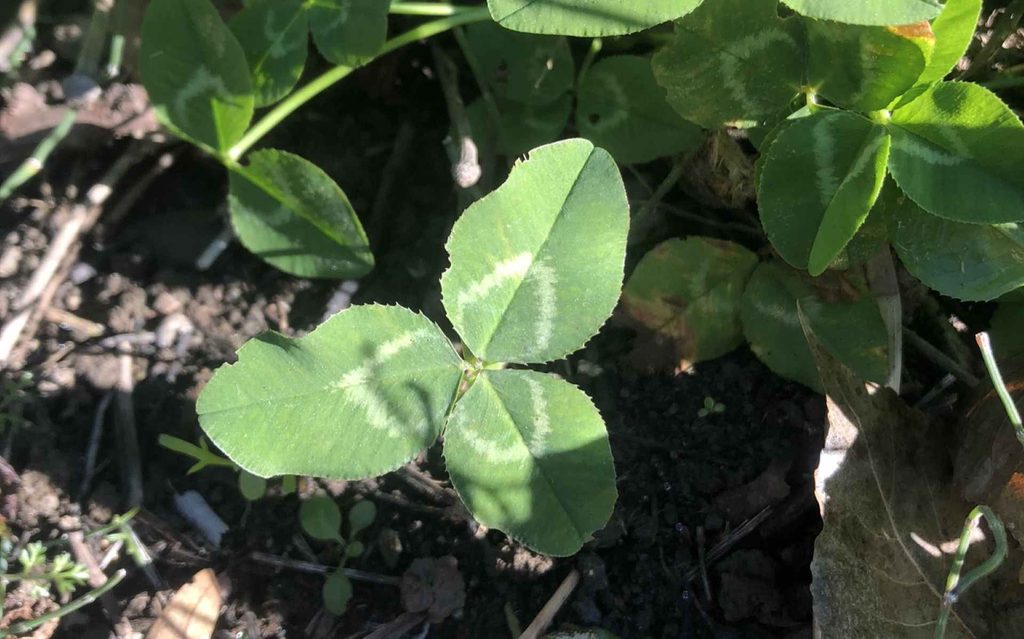
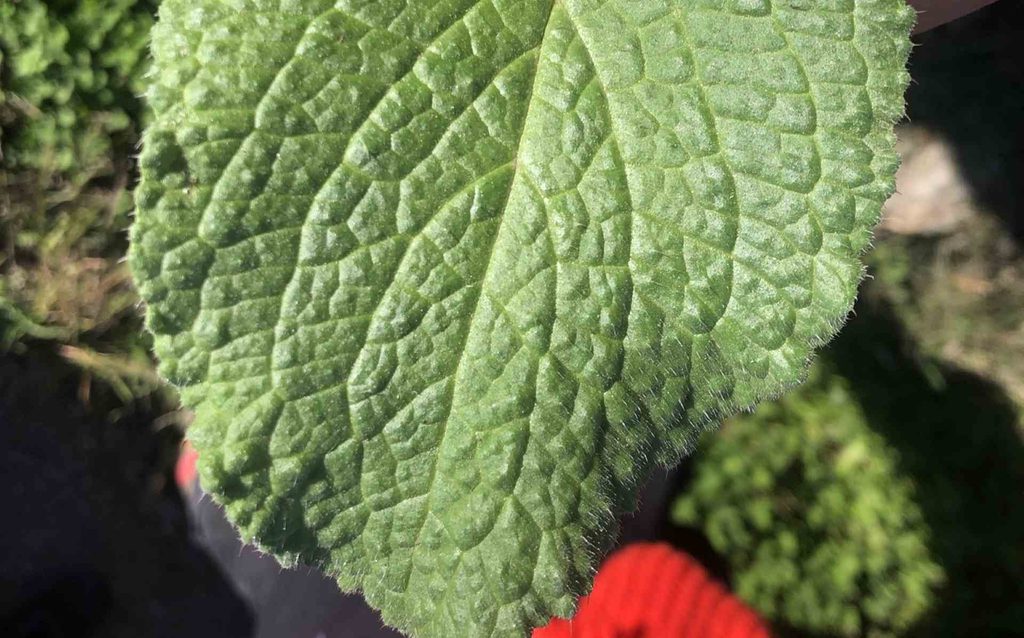
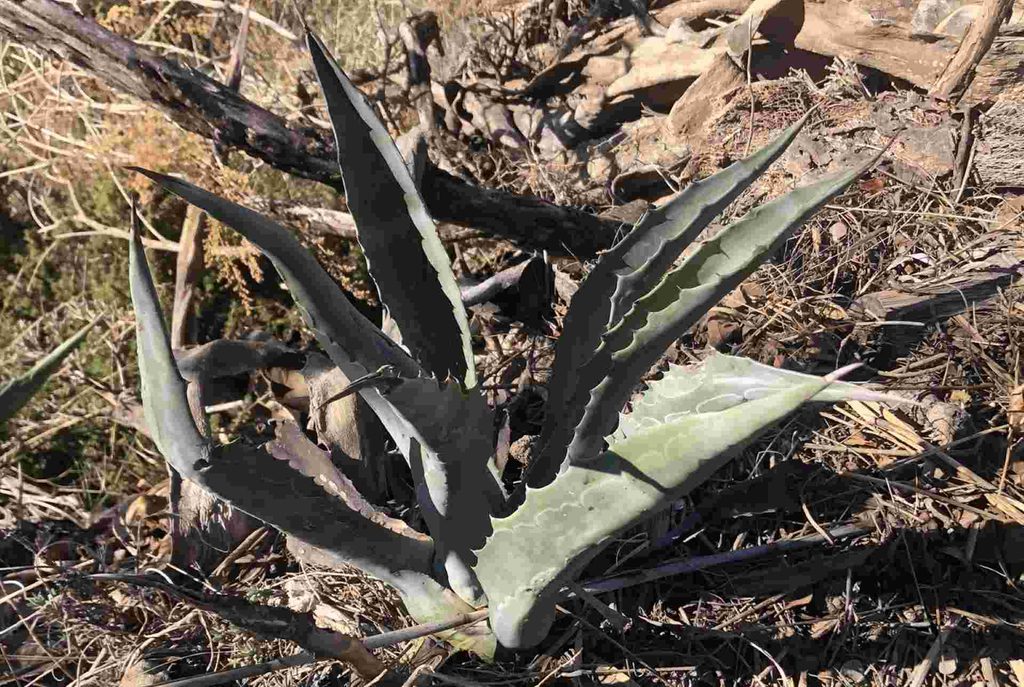
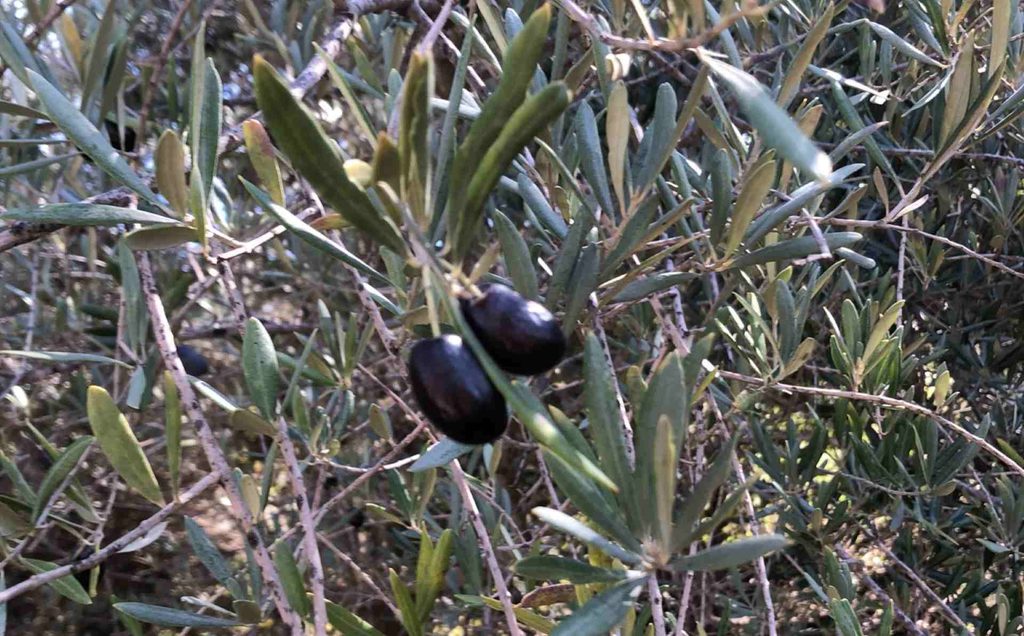
Because of its very specific climate, with long summers and short winters, Andalusia has many different herbs and plants. Some of them have traditionally been used by local people for food, medicine or relaxation. For me, Andalusia sometimes felt like a natural pharmacy.
I am going to show you some pictures of the herbs and plants I found during my travels. If you follow my blog, you probably know that I am interested in nature and plants. You can also check my list below.
Tapa
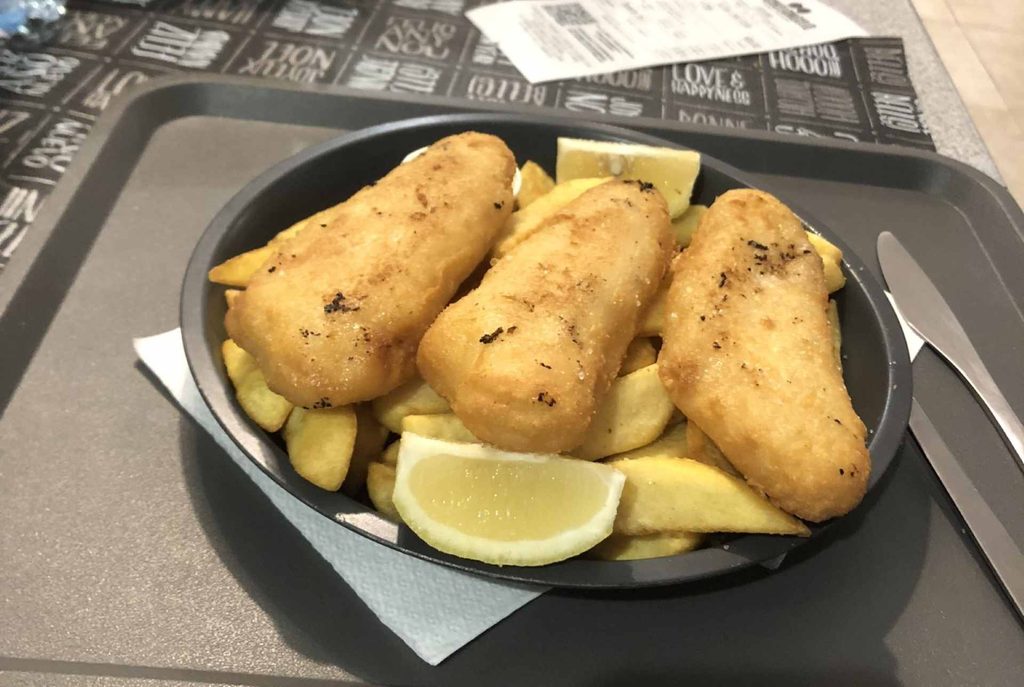
In Europe, it is quite rare to get something for free. There is even a saying, “There is no such thing as a free lunch.” Because of this, the tradition of tapas was very interesting to me. Tapas are small portions of food served together with drinks. In the places I visited, they were normally served with cold drinks.
Locals in Andalusia sometimes joke that when they go out for a drink, they are actually going out for a “tapa.” After a few rounds, they can end up both a little tipsy and full! For someone travelling by bicycle, tapas were also a very nice tradition. You could stop for a drink, get something to eat and continue your journey.
Eucalyptus in the River Banks
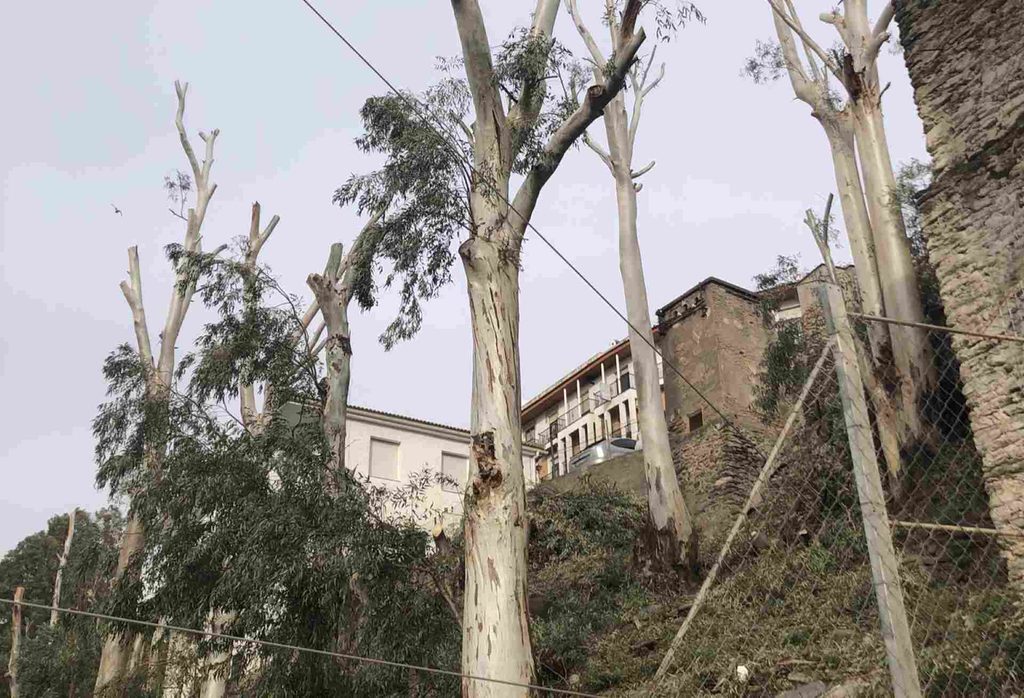
Another thing I found interesting in Andalusia was how many eucalyptus trees there are along the river banks. I understood that many of them were planted in the past to help stabilise the ground. Today, some of these trees have become very large. Eucalyptus trees are not native to Andalusia and were introduced from other parts of the world. Today, there is more discussion about using native trees in forestry and about the possible problems caused by invasive or non-native species.
I am not sure what the future of these eucalyptus trees will be, but I found them interesting because they are now such a visible part of some river landscapes in Andalusia.