One of the most important things when traveling is to stay safe. Depending on the region, country, or city, different dangers can exist. In Bosnia and Herzegovina, one danger that travelers should be aware of is landmines and unexploded ordnance left from the 1992–1995 war. If you have been following my blog and my travels around Bosnia and Herzegovina, you have probably noticed that I spend a lot of time outdoors, visiting lakes, rivers, forests and mountains. I have personally found myself in a suspected mine area, and getting out of that situation made me take this subject much more seriously. I later spent time researching the mine situation, official maps and safety recommendations.
This article is based partly on my own experience and partly on information from official mine-action organizations.
Background
More than 30 years after the war ended, landmines and other explosive remnants of war are still a reality in Bosnia and Herzegovina. According to the International Committee of the Red Cross, around 774 square kilometres of land remain suspected to contain mines, representing roughly 2% of the country’s territory. The danger is particularly important for people who spend time outdoors, including hikers, hunters, fishermen, farmers and forestry workers.
The problem is difficult to solve because many minefields are located in forests, mountains and remote areas. Some suspected areas are also difficult to access, making demining slow and technically demanding. According to the ICRC, since the end of the war there have been 1,862 mine incidents, resulting in 625 deaths, although the number of casualties has decreased significantly over the years because of mine clearance and mine-risk education.
Bosnia and Herzegovina is still working toward completely eliminating the mine threat. The country’s current international deadline for completing its mine-clearance obligations is March 2027, although achieving this goal remains challenging.
Where are the most dangerous areas?
Landmines are not spread evenly throughout Bosnia and Herzegovina. They are particularly associated with former front lines and areas where fighting took place during the war.
The official BHMAC mine-action strategy lists 838.29 km² of suspected mine area in its January 2024 assessment. The largest suspected areas were in the following parts of the country:
There is also suspected mine contamination in Republika Srpska and Brčko District. The figures above describe suspected contaminated areas, not the number of individual mines. A large suspected area does not necessarily mean that every part of it contains mines.
Some well-known mountains, forests and outdoor destinations are located in or near areas affected by the mine problem. This does not mean that tourists cannot visit these regions. It means that visitors should be particularly careful about leaving established and verified routes.
Are minefields marked?
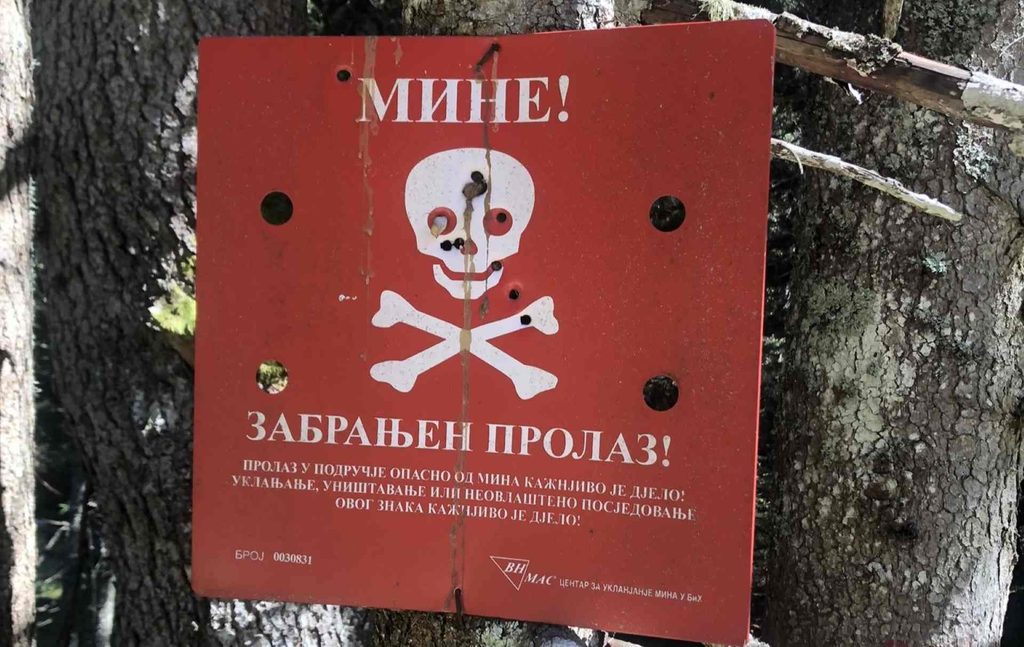
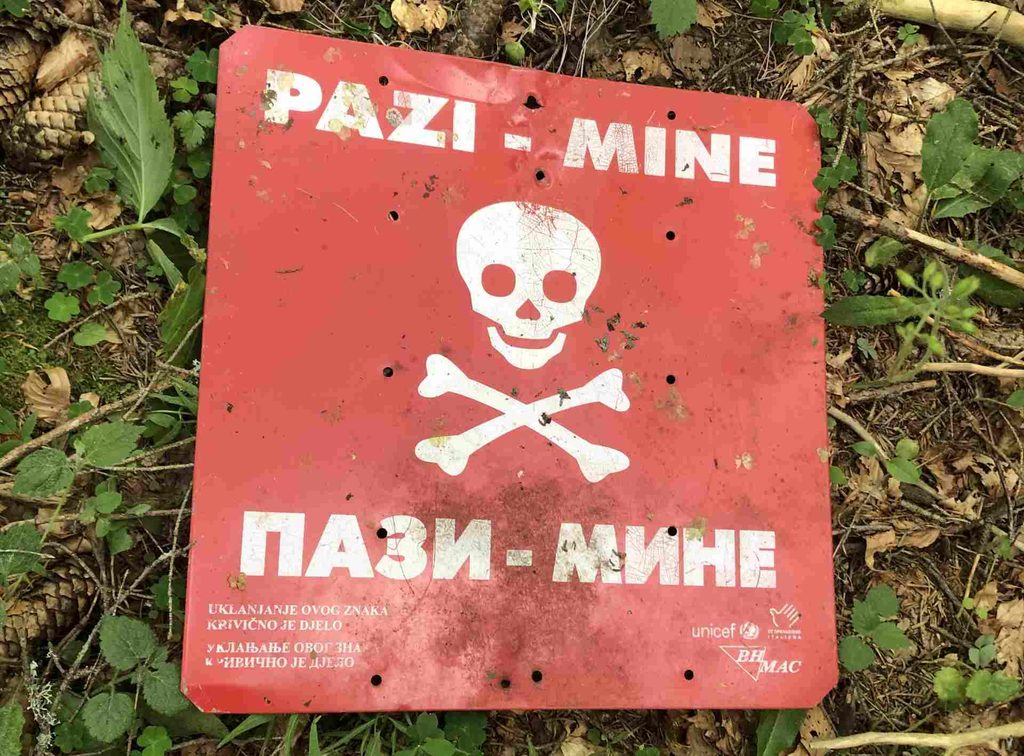
Yes, many known minefields are marked with official warning signs. You may see signs saying “PAZI MINE” (“Beware of Mines”) in both Latin and Cyrillic script. Warning signs normally contain the international skull-and-crossbones symbol. Mine-suspected areas can also be marked with yellow tape or temporary warning signs. However, never assume that an area is safe simply because you do not see a warning sign.
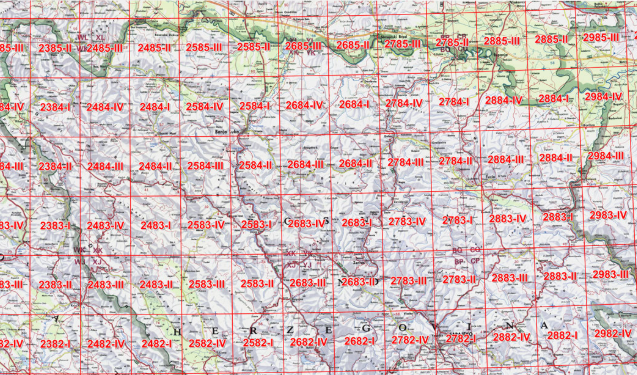
BHMAC itself provides mine-suspected-area information and maps, but mine information can change as new information becomes available and areas are cleared. The absence of a warning sign is not proof that the surrounding terrain is safe.
Where should travelers be especially careful?
If you are staying in cities and traveling on major roads, the risk is generally not something that should prevent you from visiting Bosnia and Herzegovina. The situation is different when you leave developed areas and enter forests, mountains or remote countryside.
Mine contamination is particularly associated with: former wartime front lines, trenches and defensive positions, abandoned military or other wartime structures, forests and remote mountainous terrain, areas around former settlements and battle positions. This is especially important for hikers, campers, hunters, fishermen and people exploring remote areas.
How can you stay safe when hiking in Bosnia?
The most important rule is simple: Stay on verified and established routes and do not enter mine-suspected areas. Before going hiking, check the latest information from BHMAC and its official mine-suspected-area maps or application. Do not rely only on Google Maps, satellite imagery, old hiking tracks or information from this blog.
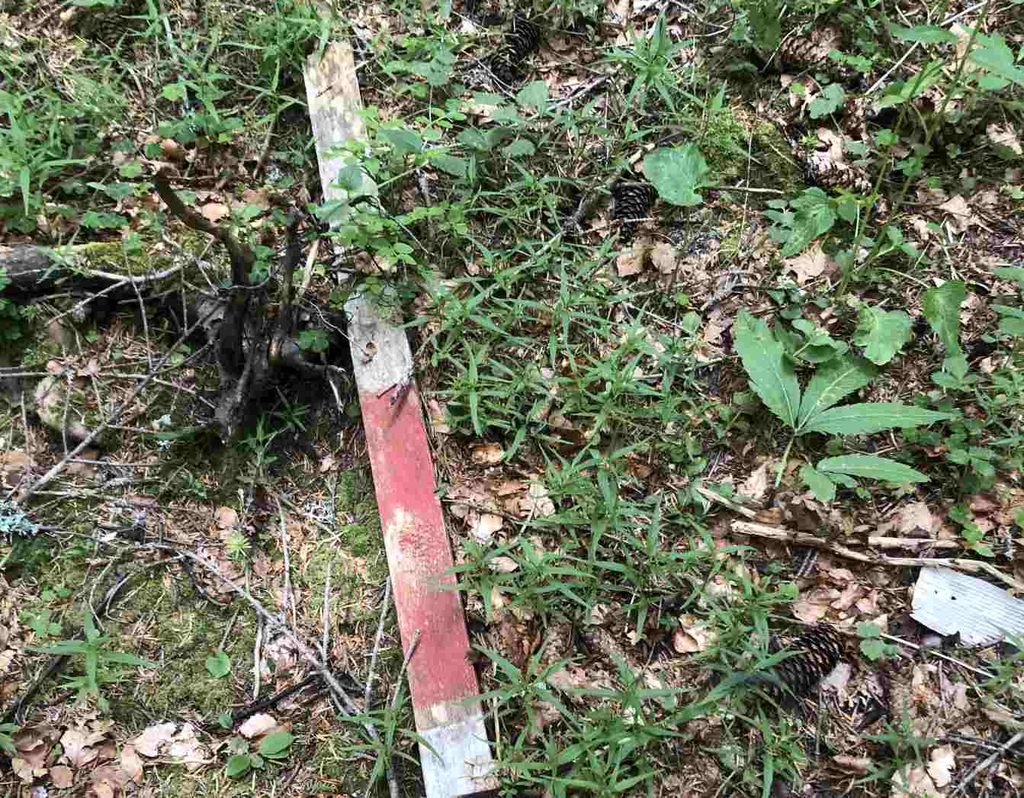
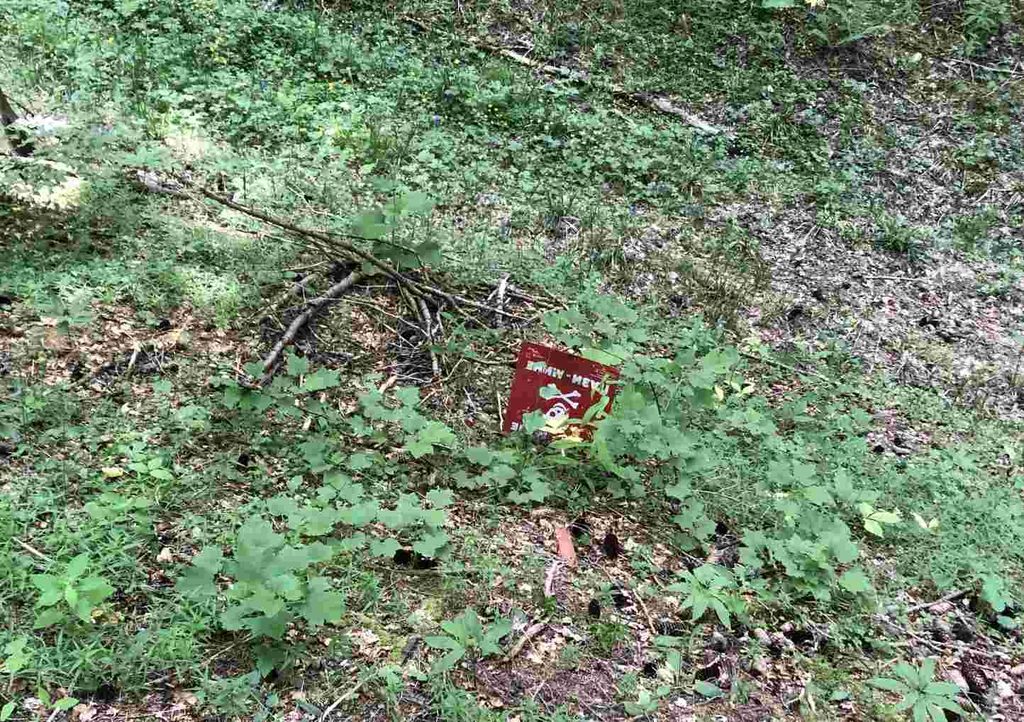
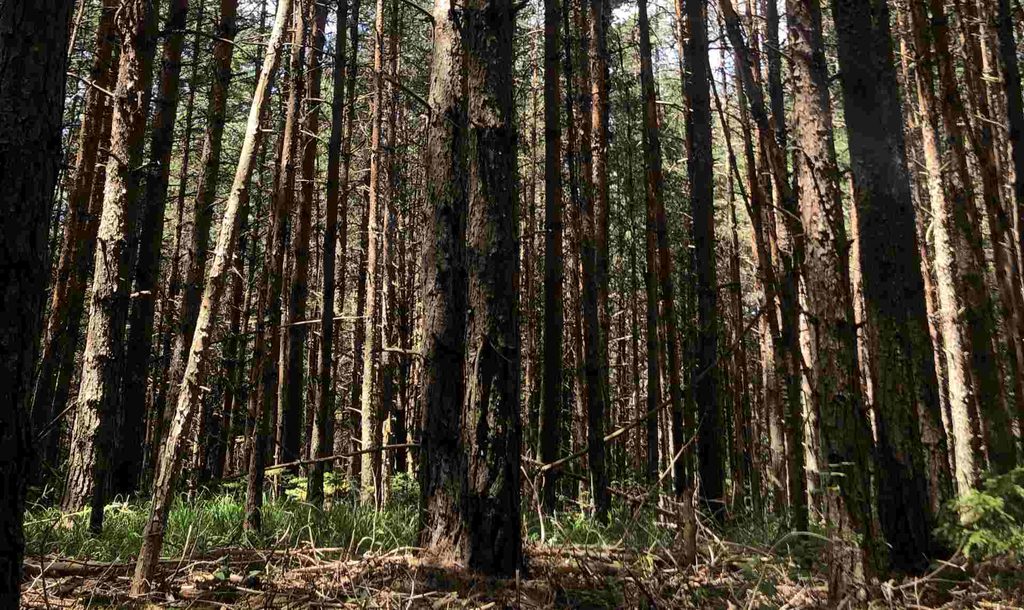
If an official map identifies an area as mine-suspected, avoid entering it. If you see a mine warning sign, do not pass it and do not enter the marked area. Also remember that a path that looks well used is not automatically proof that it is safe. Footprints, animal tracks, tree stumps, logging activity or the absence of warning signs cannot be used to determine whether an area is mine-free. That is one lesson I learned personally.
How should you prepare WELL before going into nature?
If you are planning to hike, camp or explore remote parts of Bosnia and Herzegovina, check the official mine information before your trip. BHMAC provides information about suspected mine areas, while EUFOR also provides minefield maps for Bosnia and Herzegovina. The BHMAC mobile application can also help users identify mine-suspected areas and report locations or suspicious explosive remnants. The application was specifically developed to help people avoid dangerous areas.
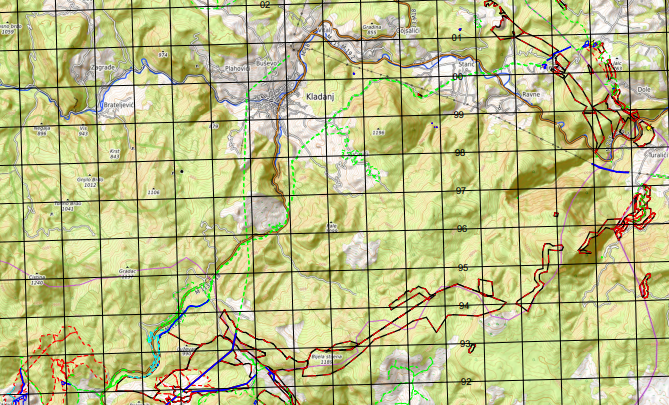
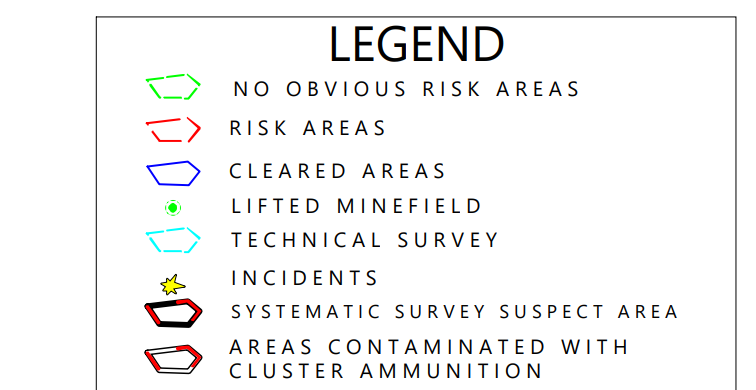
If you use GPS, download the information before going into areas where you may not have a mobile signal. But remember that a GPS track by itself does not guarantee that a route is safe.
What if you realize you have entered a mine-suspected area?
This is the most important part. Do not panic. Do not touch anything. Do not investigate the area. If you see a suspicious object that could be a mine or unexploded ordnance, do not approach it or move it. If you believe you have entered a suspected mine area, stop and avoid making unnecessary movements. Do not attempt to find your own route through an unfamiliar area.
Seek professional assistance and contact the police or relevant local authorities when you can do so safely. If you are reporting a suspicious object or location, provide its coordinates or as precise a description of the location as possible, without approaching the object.
My experience
I am writing this because landmines are probably not something most foreign travelers think about when they plan a trip to Bosnia and Herzegovina. I certainly did not expect this to become part of my own travel experience.
I spend a lot of time around Bosnian lakes, rivers, forests and mountains, and that means I sometimes travel much farther from normal tourist routes than the average visitor. After finding myself in a suspected mine area, I realized how important it is to understand the history of the landscape and to check official information before exploring remote areas.
Bosnia and Herzegovina is a beautiful country for hiking, camping and outdoor travel. I would not tell people to avoid its mountains and forests altogether. Instead, I would strongly recommend learning about the mine situation and planning your routes responsibly. The important thing to remember is that the danger is real, but it is concentrated in specific areas. You do not need to be afraid of traveling around Bosnia and Herzegovina. You do need to respect mine warnings, check official information and never enter suspected areas.
Do not risk your life by entering an area that may contain landmines.