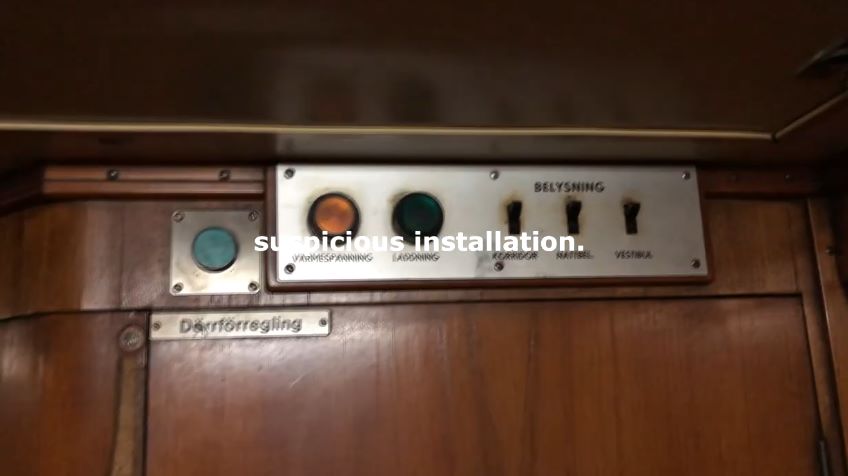
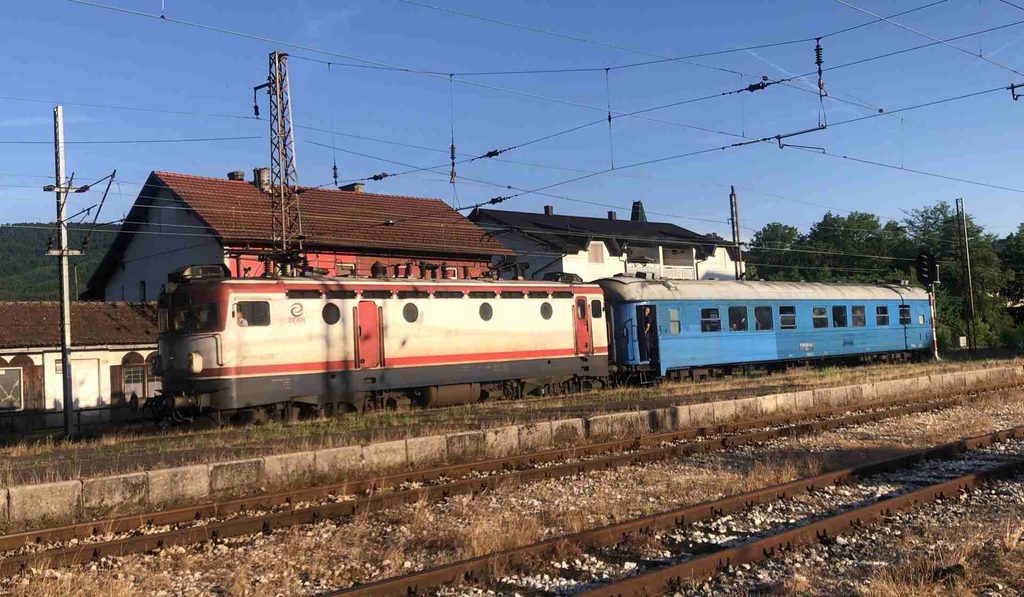
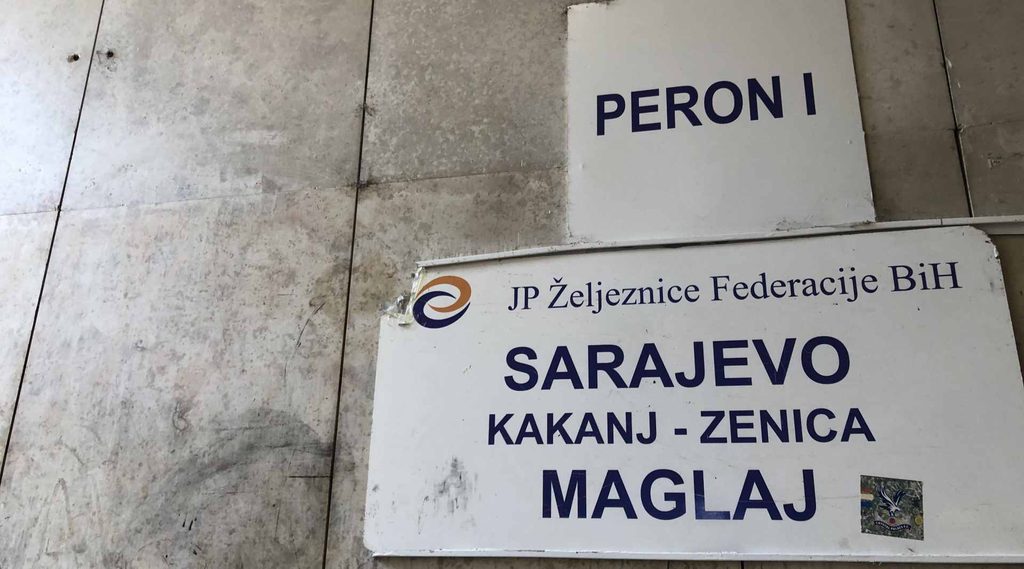
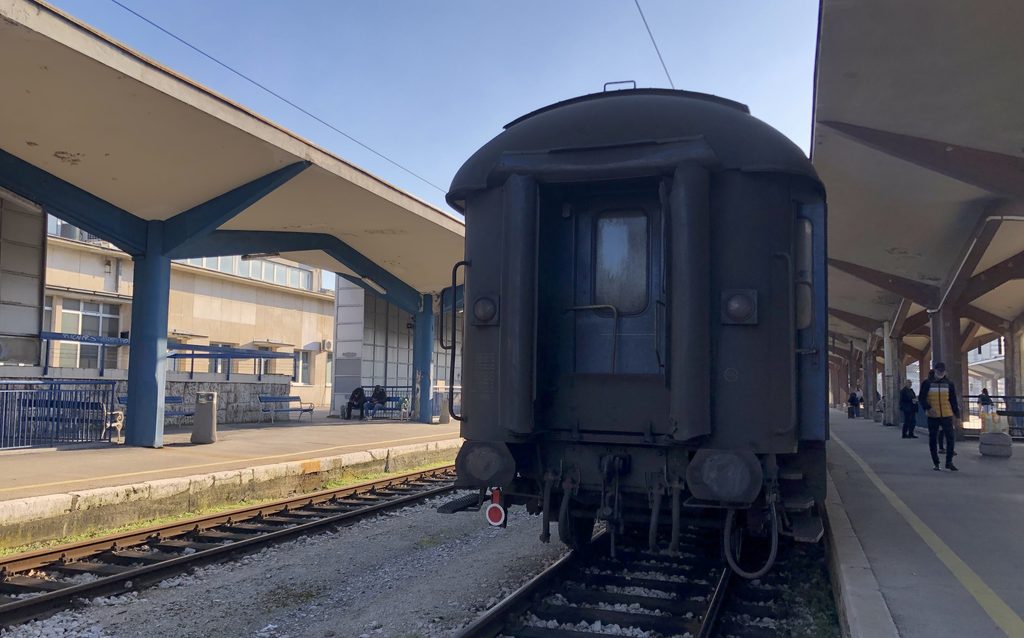
One of reasions I like traveling is that I am exploring always something new, and sometimes something unusual. During my travelling in Bosnia, I found this very old carriage. I havent recognise it immidatly so I started to research and I found out its legendary SJ A2 Swedish Train Carriage. This is how travel went, how was train inside, how comfortable it was, and pictures I took inside. This train line is opreating once a day between Sarajevo and Maglaj and Maglaj to Sarajevo, so its not like museum, its real workiing railway carriage but built in Sweden more than 60 years ago and must be one of oldest trains operating regulary.
The carriage belongs to the SJ A2 series, a Swedish first-class passenger carriage designed in the 1960s. Looking at its worn seats, wooden interior and old-fashioned details, it is easy to forget that this carriage was once considered a modern and very comfortable way to travel. Its story begins in Sweden in year 1963.
Built in Sweden between 1963 and 1968
I found out on interenet that SJ A2 was built for the Swedish State Railways, known as Statens Järnvägar, or SJ. Production began in 1963 and continued until 1968. The manufacturer was AB Svenska Järnvägsverkstäderna (ASJ) in Linköping, one of Sweden’s important railway manufacturers. The A2 was not a mass-produced ordinary railway coach. Only 65 carriages of the A2 type were built.
Originally, the designation was Ao2. The name was changed to A2 in 1970 as part of a reform of Swedish railway carriage classifications. The letter A indicated first class, while the number 2 identified the particular type within the first-class carriage family. The carriages were built as part of a major modernisation of Swedish passenger railways during the 1960s. At the time, they represented comfortable long-distance railway travel. They were designed for use on the main railway lines and were commonly found on Swedish express trains during the 1960s, 1970s and 1980s.
One surviving example, A2 5043, was built by ASJ in Linköping in 1964. The Swedish Railway Museum describes the A2 as a carriage that is still considered by many to have been the most comfortable carriage type ever built for SJ.
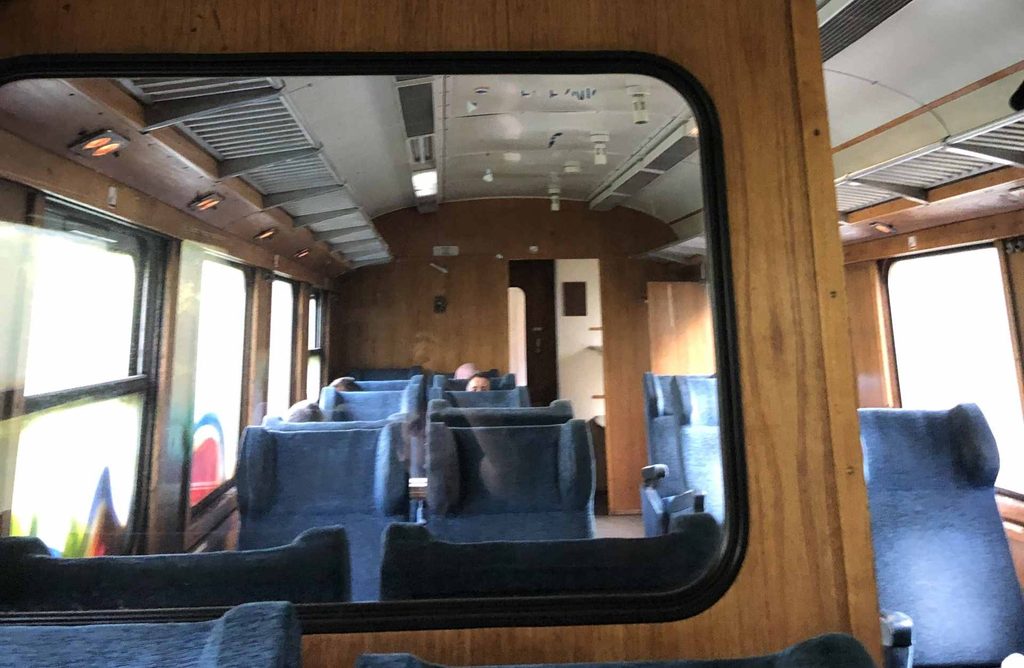
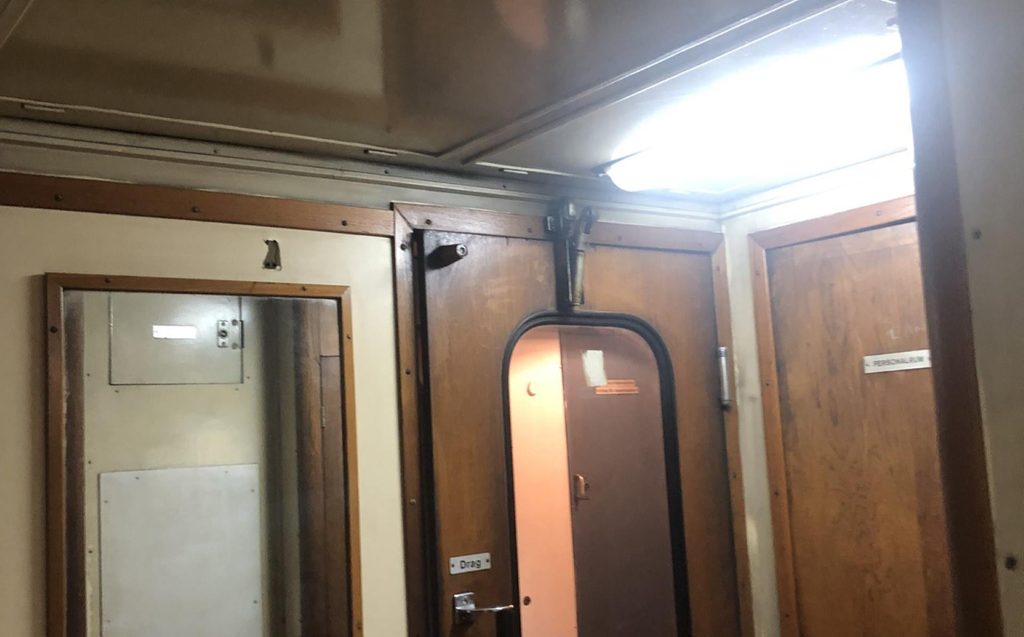
A first-class carriage
The A2 was designed specifically as a first-class sitting carriage. It could accommodate 40 passengers, with the interior divided into two open saloons and two compartments.
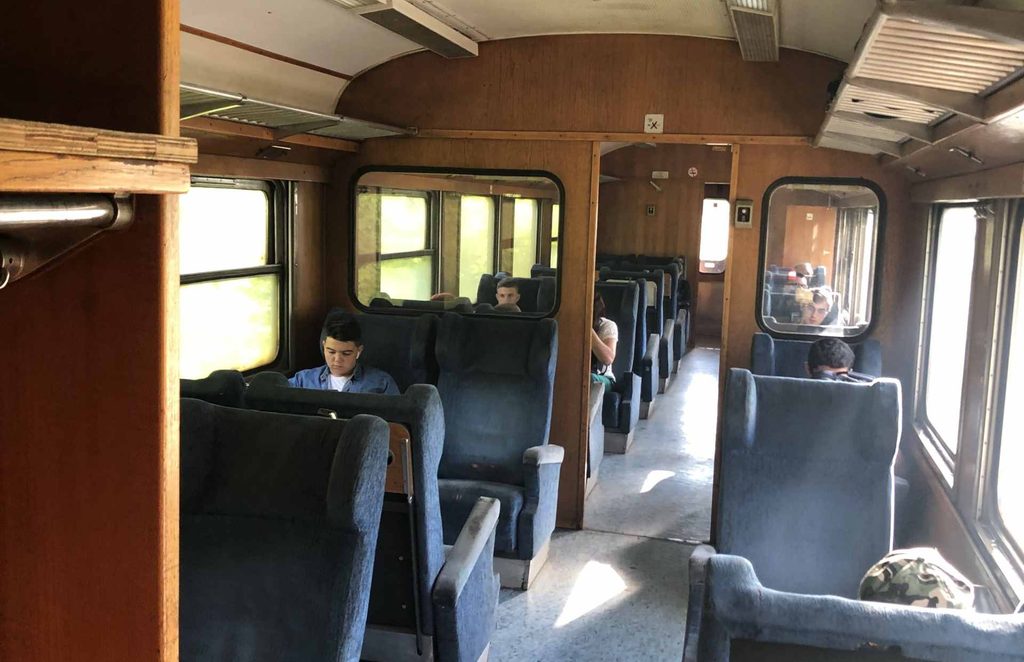
This combination gave passengers a choice between the more open atmosphere of a saloon and the privacy of a traditional railway compartment. The arrangement was quite different from many modern trains. The seats were arranged three across, but they were not simple modern railway seats. They were wide, comfortable armchairs with generous legroom. In the open saloons, the seats could be turned around, allowing passengers to sit facing the direction of travel.
That small detail tells you a lot about what SJ was trying to achieve with these carriages. The A2 was not simply designed to transport as many people as possible. It was designed to make a long railway journey comfortable.
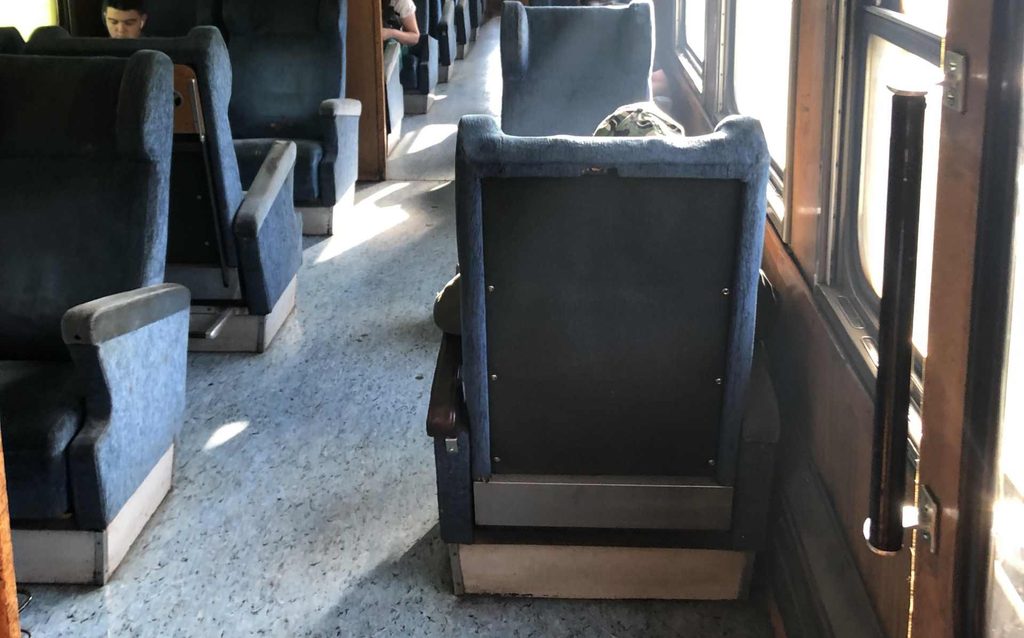
Interior
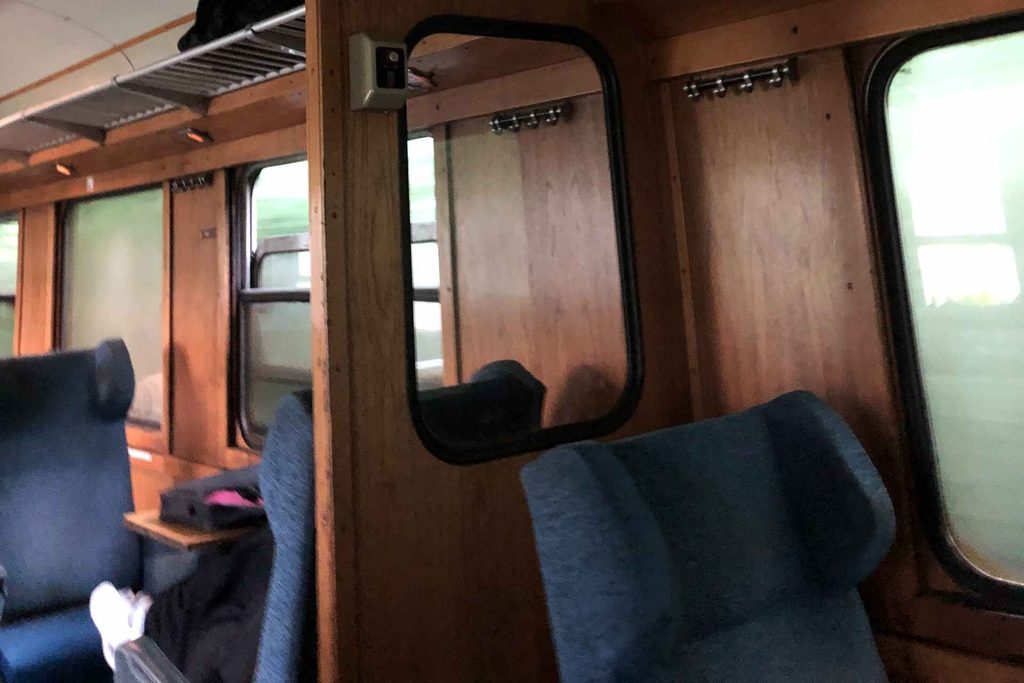
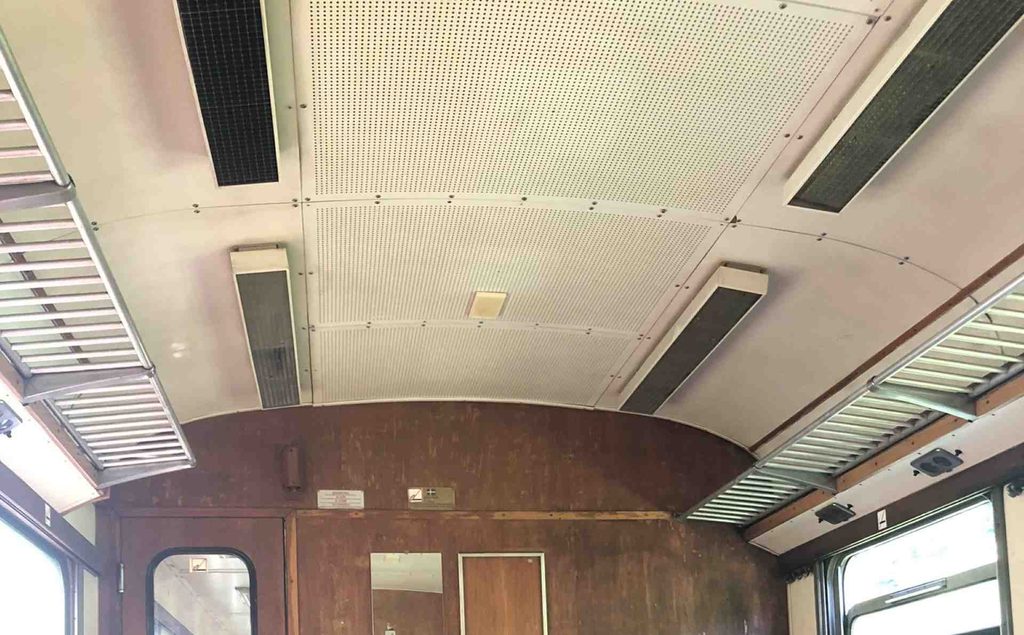
One of the most distinctive things about the A2 is its interior. The carriage contains extensive use of teak wood, combined with metal elements. The teak gives the interior a warm, almost old-fashioned appearance that is completely different from the plastic and composite materials found in most modern trains. The Swedish railway sources describe the combination of teak and metal as giving the carriage a solid and rustic character. When you enter a surviving A2 today, the wood is one of the first things that catches your eye.
24 metres long and built for 160 km/h
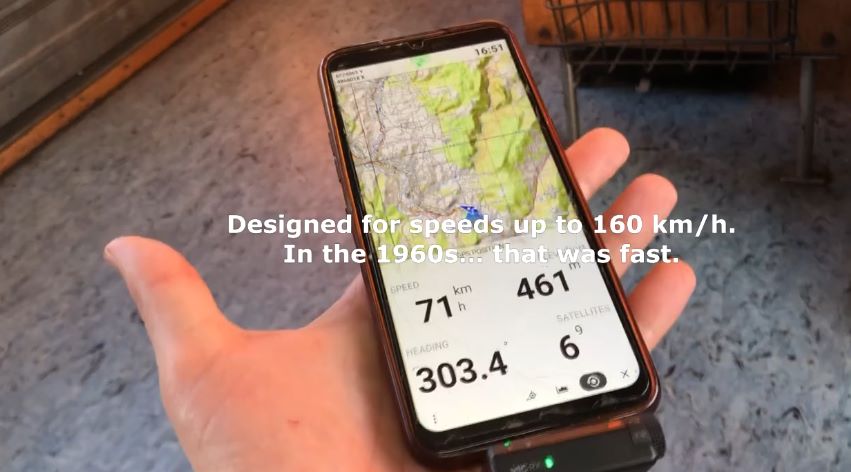
Although the interior can make the carriage feel almost cosy, the A2 is actually a large railway vehicle. It is pproximately 24.1 metres long and weighs around 41-43 tonnes. The carriage has two bogies and runs on standard 1,435 mm gauge track. Depending on the version and equipment, the maximum permitted speed was up to 160 km/h.
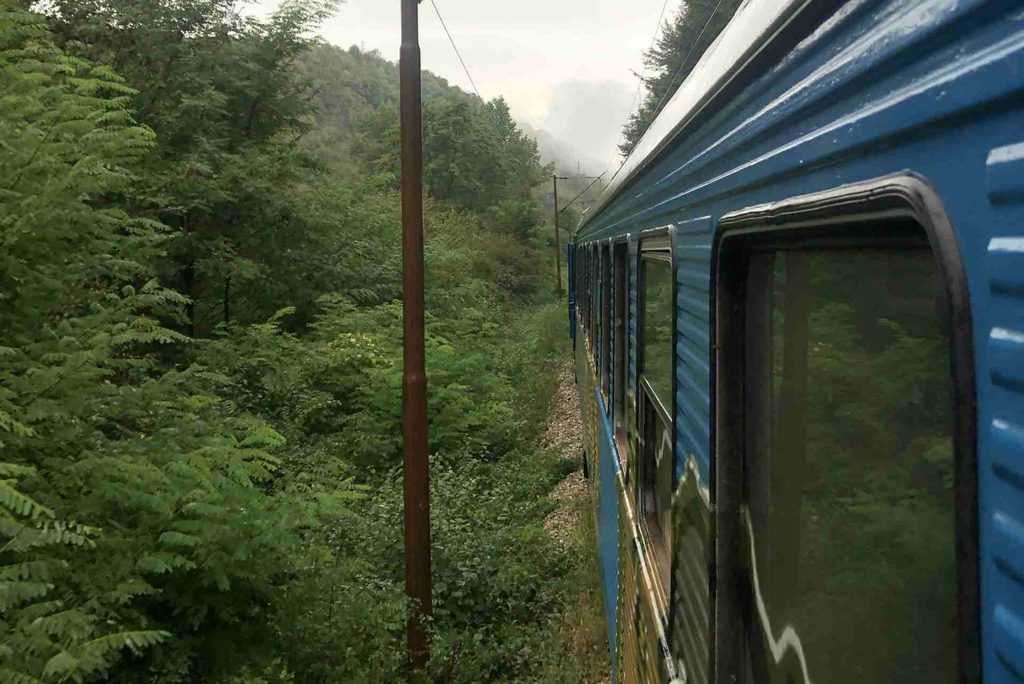
For a passenger carriage designed in the early 1960s, that was impressive. The A2 was therefore not an old-fashioned vehicle when it was built. It was contemporary railway technology. It belonged to a generation of Swedish coaches intended to provide fast and comfortable long-distance travel. In Bosnia today, its going maximum 60-75 km/h.
From Sweden to Bosnia and Herzegovina
This is where the story of the A2 becomes particularly interesting for me, travelling in Bosnia and Herzegovina. Instead of ending their lives in Sweden, some of these old Swedish carriages found new operators and new homes. Several former SJ A2 coaches became associated with railway operations outside Sweden, while others entered museum collections or private railway fleets.
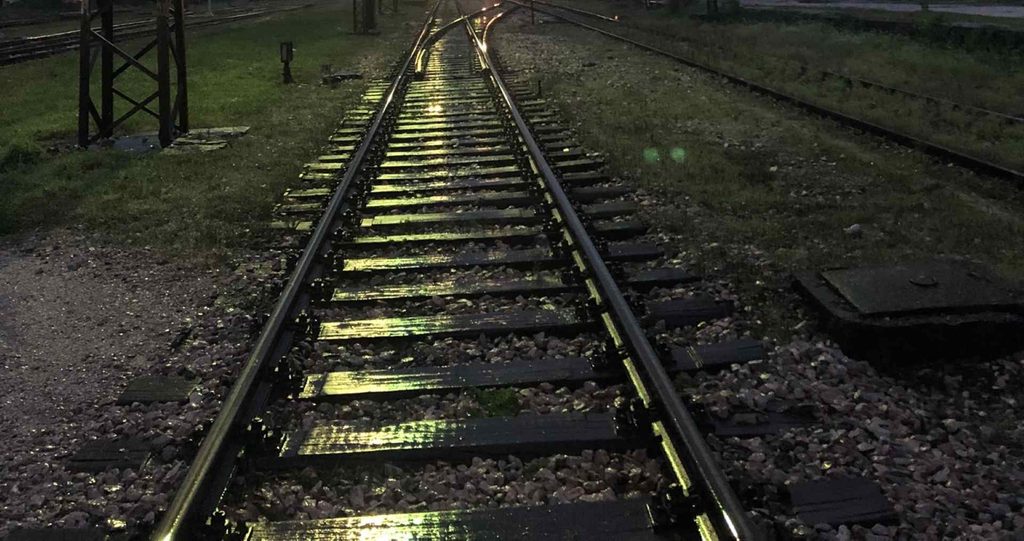
In Bosnia and Herzegovina, former Swedish A2 coaches became part of the passenger railway fleet and were given new identities within the Bosnian railway system. This means that a carriage originally designed for Swedish main-line express trains eventually found itself travelling through the completely different landscape of Bosnia and Herzegovina.
It came to Bosnia as donation from Sweden after the war and untill today its still operating. Staff told me they prefer this train above other trains that are even newer.
My experience
My Experience Taking the Train from Sarajevo to Zenica. I bought my ticket at the ticket office inside the railway station. The ticket to Zenica cost 6.70 KM, and I received a discount because I said that I was a student. The journey to Zenica is around 70 kilometers long, passing through several stations, including Podlugovi, Visoko, Kakanj and Zenica.
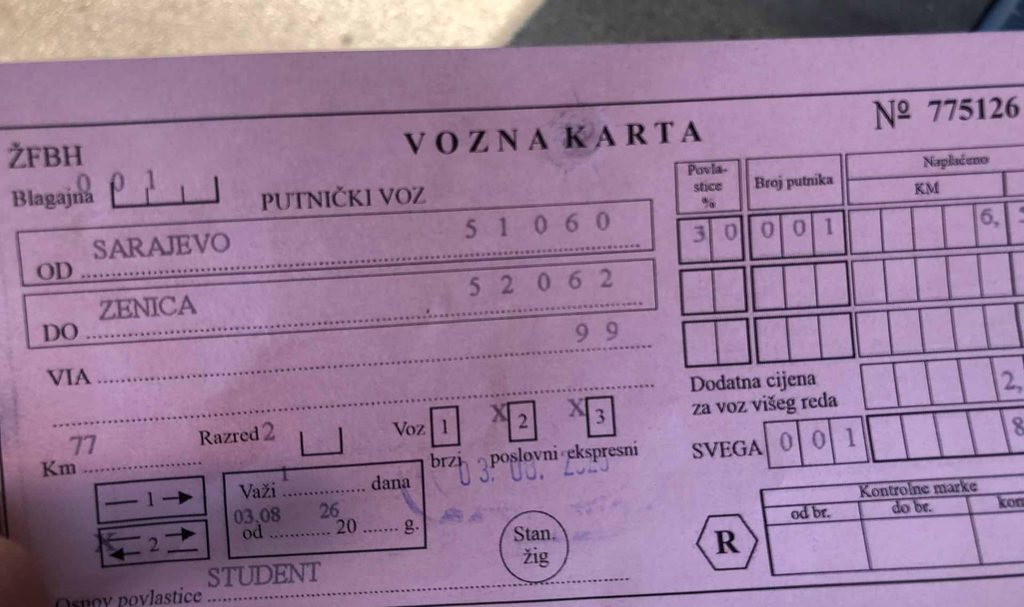
When I arrived at the railway station, the train was already parked at the platform. I simply entered the train and found a seat. Tickets were checked later, when the conductor came through the train.
This train belongs to the category called “brzi voz,” which means “fast train” . There is a difference between fast trains and local trains in Bosnia and Herzegovina. The main difference is that fast trains do not stop at every small village or station. They usually stop only at larger towns and cities, making the journey faster.
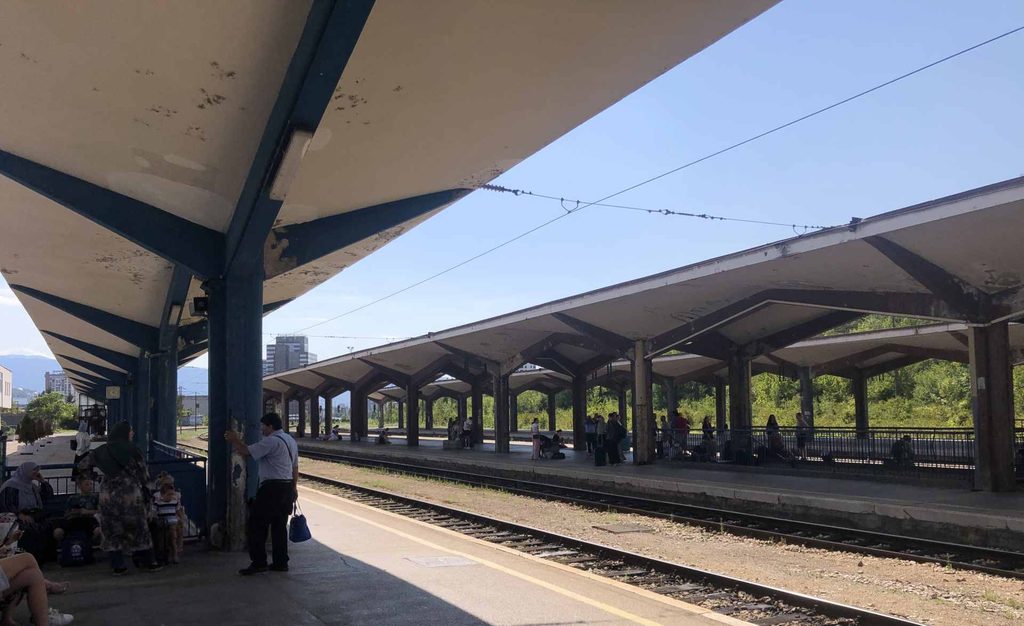
Entering the Train
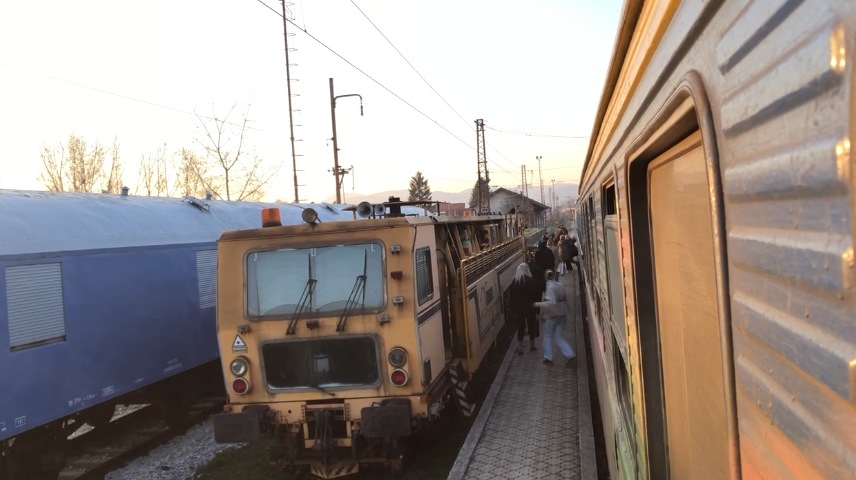
One of the first things I noticed was how difficult it was to enter the train. There are several steps, and the entrance is more than 50 centimeters above the platform level. Since many railway platforms in Bosnia and Herzegovina are relatively low, there is a significant gap between the platform and the train entrance.
For an able-bodied person, it is possible to enter without too much trouble, although it is still quite high. However, I believe that passengers with disabilities, elderly people, or anyone with mobility problems could have serious difficulties getting inside. They would probably need assistance from other passengers or railway staff. Because of this, I would say that accessibility is one of the weakest points of these trains. They were designed many years ago, at a time when accessibility standards were very different from those used on modern trains.
Inside the Train
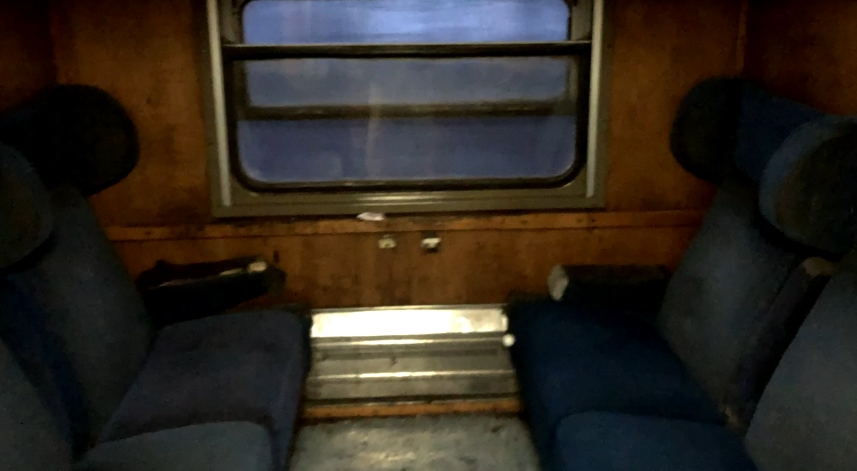
I did not have a reserved seat, so I could choose wherever I wanted to sit. You can see in the pictures above what the interior looks like. At first glance, the seats and interior look quite old. However, I was actually surprised by how comfortable the seats were. They are much better for a long journey than their appearance might suggest.
The interior also has a very distinctive atmosphere. The colors are mostly warm and somewhat old-fashioned, which is something you rarely see on modern trains today. Modern trains usually have a much more minimal and standardized interior, while this train still has a character of its own.
For me, this was actually one of the most interesting things about the journey. The train feels like something from another period, rather than a modern European train.
The Ticket Check
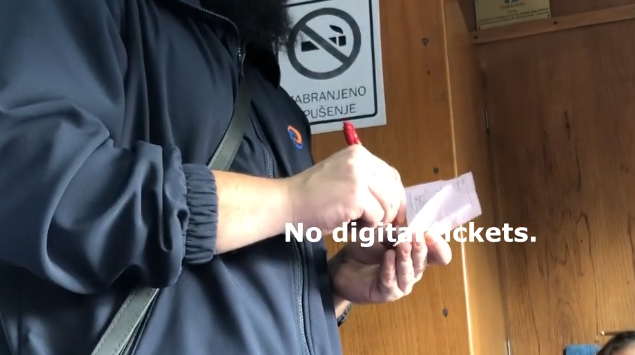
Once the train started moving, the conductor came through the carriage to check the tickets. When he checked mine, he punched a small hole in the ticket. This is a simple detail, but it was interesting to see because paper tickets and manual ticket punches are becoming increasingly uncommon in many European countries. There was no need for a seat reservation, so passengers could sit wherever there was a free seat.
No Air Conditioning, But You Can Open the Windows
The train does not have air conditioning, which is understandable considering its age. However, there is one advantage: the windows can be opened. Almost all of the windows can be opened, although some of them are not particularly easy to move. Still, it is possible to open them, which is important during warmer weather.
Personally, I would rather have a train without air conditioning where I can open the windows than one where the windows are completely sealed. Of course, during very hot summer days, proper air conditioning would be much more comfortable. There is also a small trash bin next to the seats, so passengers have somewhere to put their rubbish during the journey.
Toilets
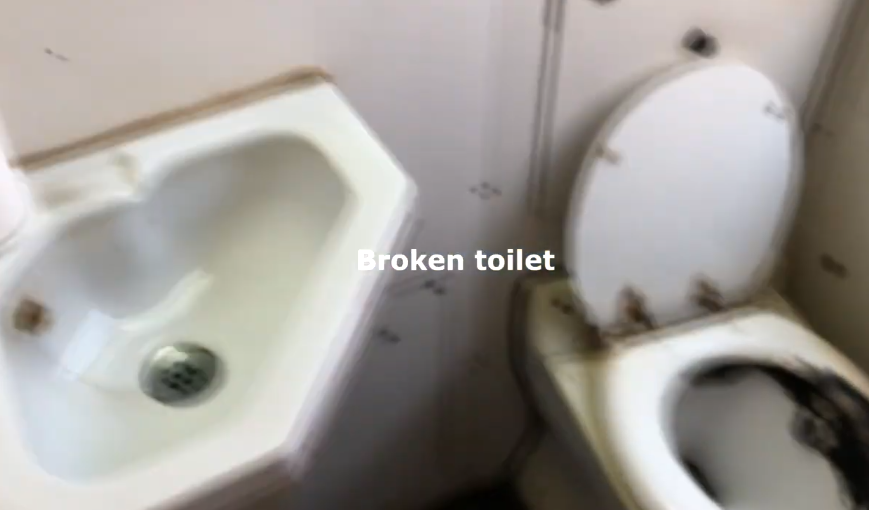
There are two toilets inside the train.
Unfortunately, the condition of the toilets was not very good when I travelled. Some parts were damaged or not functioning properly, and overall they looked quite old. This is another area where the age of the train is very noticeable. The toilets are functional still.
Smoking on the Train
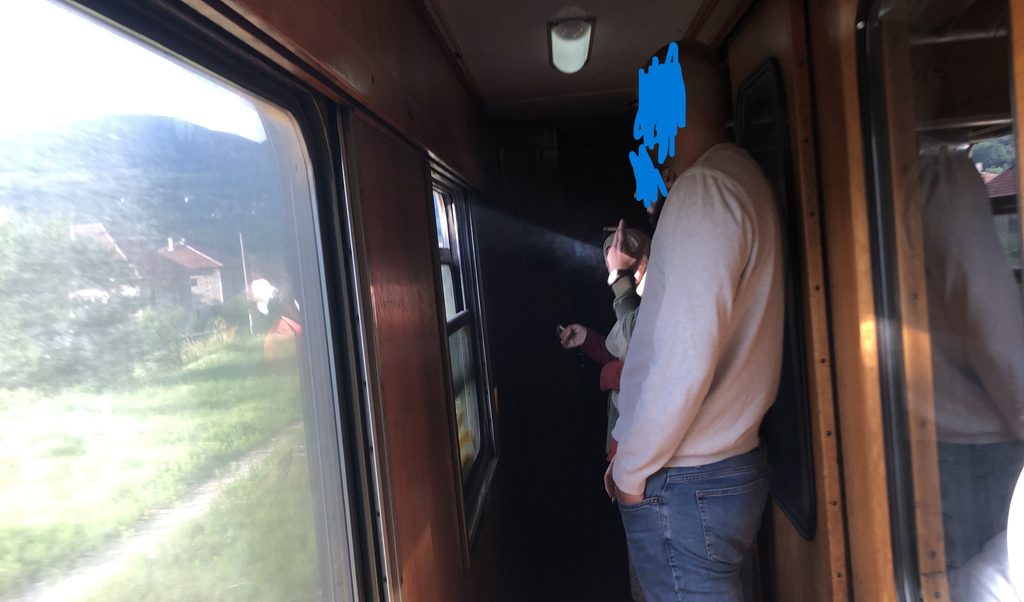
Smoking was another thing I noticed during the journey. Smoking is officially forbidden on the train, but in reality, some passengers were smoking. This is obviously unpleasant for passengers who do not smoke, especially because the smell can spread through the carriage. It is one of those situations where the official rules and what actually happens on the train are not always the same.
When Darkness Arrived
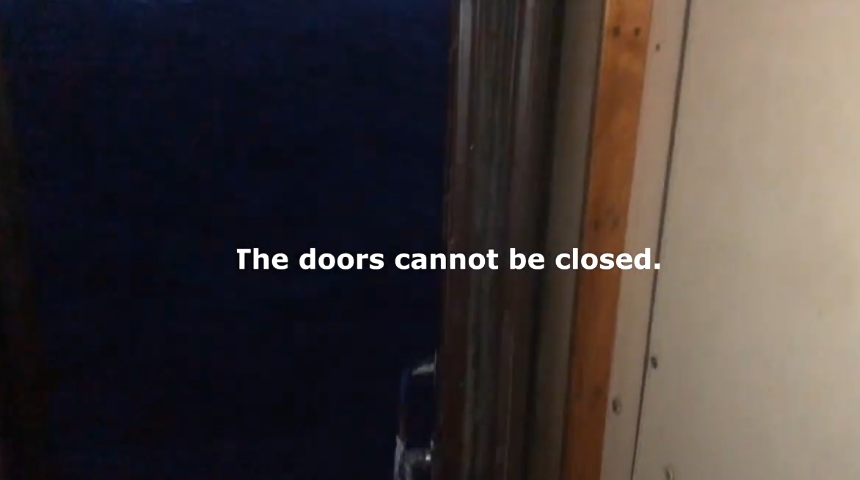
Later during the journey, darkness arrived and I noticed another problem: some of the doors could not be properly closed. This was another reminder that this is an old train that has been in service for many years. While the train was still operating and completing its journey, some of these small problems made it clear that the equipment is far from modern. Overall, the experience was very different from travelling on a new European train. It was not perfect, but that was also part of what made the journey interesting. The old interior, manually checked paper ticket, opening windows, high steps and generally dated equipment all gave the train a very different character.
For someone who is interested in old trains and railway travel, this is actually part of the attraction. You get to experience something that is increasingly disappearing from European railways.