Sarajevo is interesting for many reasons, including its bridges. Because there are so many of them, I think it is fair to call Sarajevo a city of bridges. In this post, I will show the bridges along the Miljacka River, starting from Goat Bridge (Kozja Ćuprija) and finishing at Ars Aevi Bridge. Each of them has its own story, and many of them have played an important role in the history and everyday life of Sarajevo.
When you look at the map of Sarajevo, it is obvious that the city is divided by the Miljacka River. The river runs through the city from east to west, and the bridges connect the two sides. I am going to mention some of the most interesting bridges along the river. Some of them are national monuments and played an important role in the history of Sarajevo and Bosnia and Herzegovina. Others are much newer, while some older bridges were replaced or renovated over time.
I wanted to walk from the oldest bridges towards the newer ones, because this gives an interesting way to see how Sarajevo and its bridges changed through history.
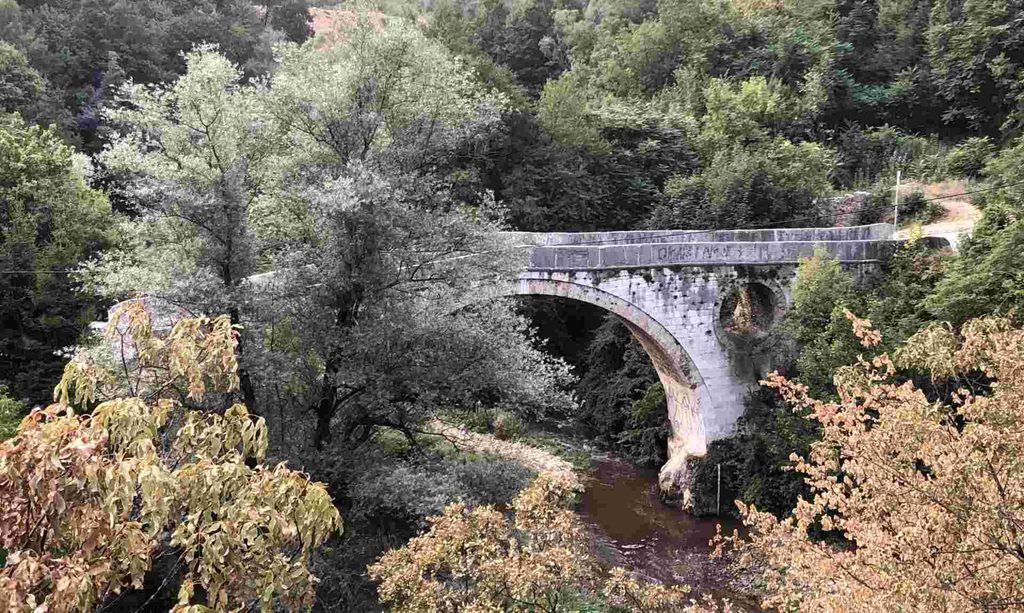
Goat Bridge
Located in the upper part of the Miljacka River, Goat Bridge (Kozja Ćuprija) is a national monument of Bosnia and Herzegovina. It is one of the best-preserved Ottoman bridges in the Sarajevo area and the only surviving Ottoman bridge along this part of the old road that is still intact.
The bridge dates from the Ottoman period and was located on the important road connecting Sarajevo with Istanbul. The area around Goat Bridge is also interesting because from here you can see White Fortress above Sarajevo. The fortress was part of the city’s defensive system and offers a great view over Sarajevo.
For me, Goat Bridge was a good place to start this walk because it represents the history of Sarajevo.
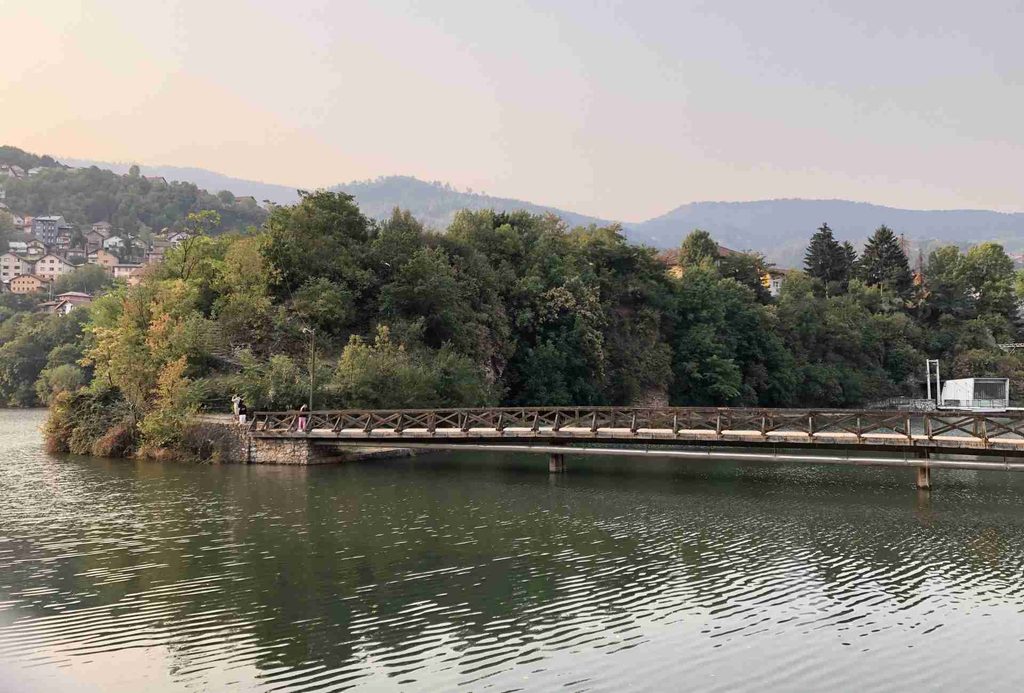
Mevlevi Bridge
The Mevlevi Bridge is a newer bridge, erected in 1990. It is a wooden bridge connecting Sarajevo with the Bentbaša area, which is also an important protected area of the city.
The bridge is close to the historical site of the Isa-beg Tekke, making this part of Sarajevo particularly interesting from a historical point of view. It is also close to the Miljacka River and the beginning of the Dariva area, so you can combine this bridge with a longer walk along the river.
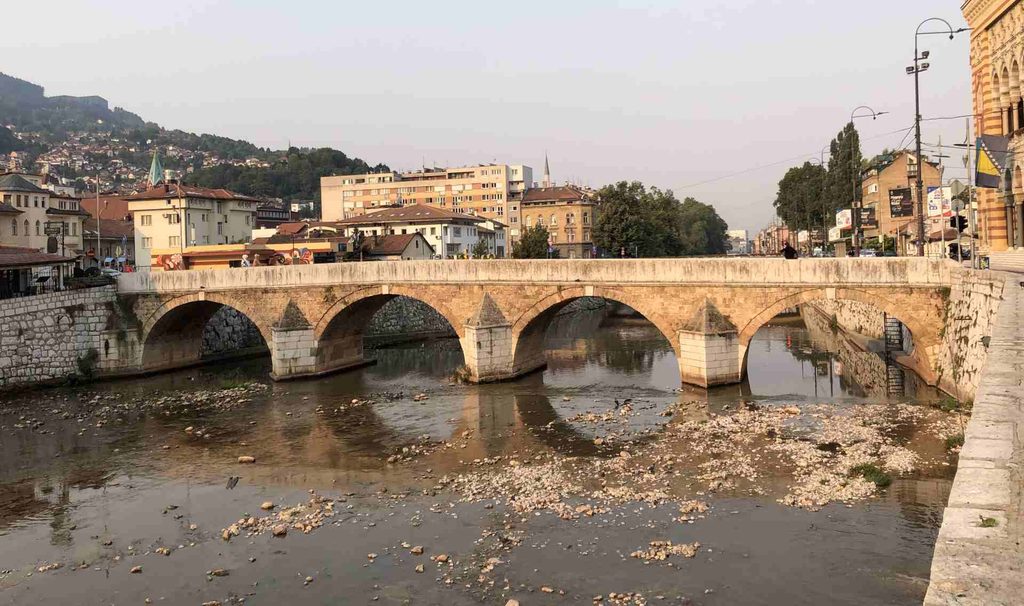
Šeher-Ćehaja’s Bridge
Šeher-Ćehaja’s Bridge is one of the most famous historical bridges in Sarajevo. It was probably built in the middle of the 16th century. There are different stories about who financed its construction, including the names of Alija Hafizadić and Hadži Husein, who was associated with Sarajevo.
The bridge is located close to Vijećnica, and from here you can get a particularly nice view of the famous Sarajevo City Hall. This is one of the places where the old and new parts of Sarajevo seem to meet very closely.
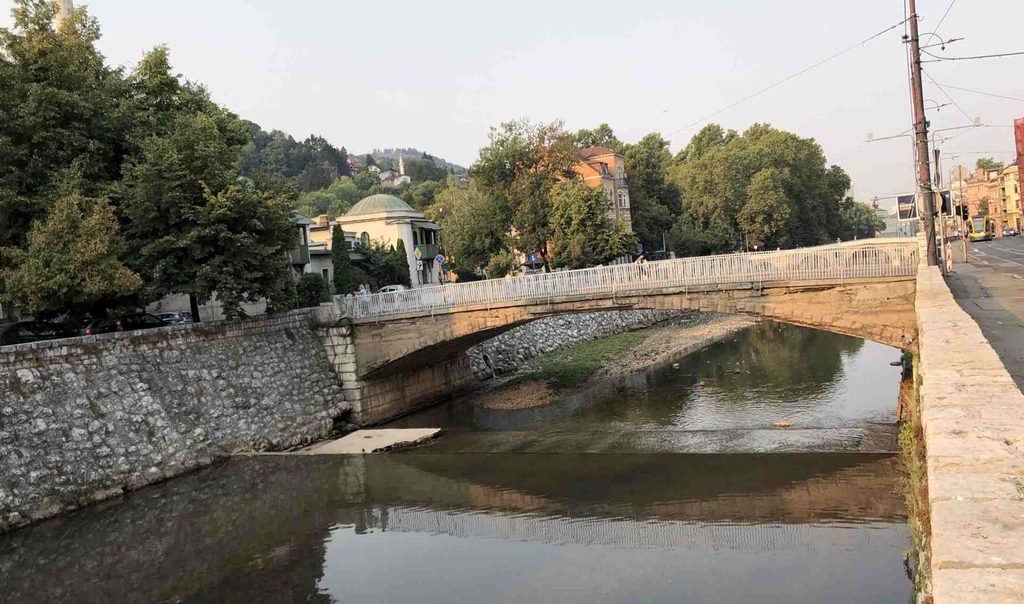
Emperor’s Bridge
The original Emperor’s Bridge was built in the 15th century, a few metres from the location of the present bridge. The current bridge was built in 1897. It connects this part of Sarajevo with the Emperor’s Mosque, one of the oldest and most important mosques in the city. The bridge and the surrounding area are connected with several important periods of Sarajevo’s history, and the site is part of the city’s protected historical heritage.
Latin Bridge
Latin Bridge is probably the most famous bridge in Sarajevo. The bridge was first mentioned in historical sources in 1541, although the present appearance of the bridge is the result of later changes and reconstruction.
It is particularly famous because it is located next to the place where Archduke Franz Ferdinand of Austria and his wife Sophie were assassinated in 1914. This event became one of the most important moments in European history because it helped trigger the chain of events that led to the First World War. The bridge itself is a national monument of Bosnia and Herzegovina.
Because of its location and history, Latin Bridge is probably the bridge that attracts the most tourists in Sarajevo.
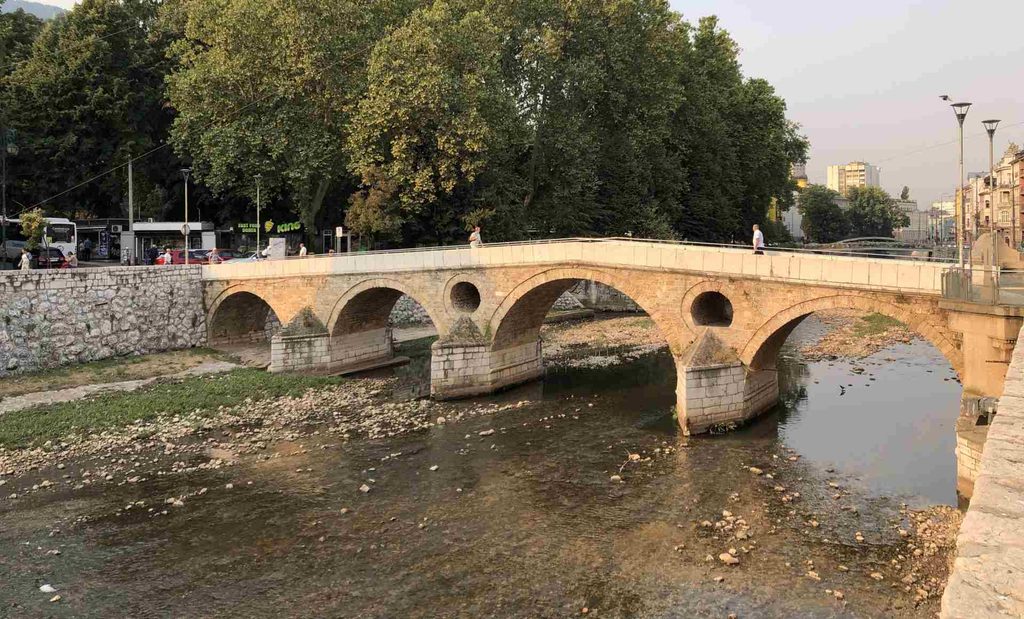
Ćumurija Bridge
The original bridge here was a wooden bridge built during the Ottoman period. Its name is connected with the word ćumur, meaning charcoal or coal, because people used to dump it into the river in this area. The current metal bridge was built in 1886. During different periods of history, the bridge also had other names, including Zrinjskog Bridge. Today it is one of the many bridges that allow people to cross the Miljacka in the central part of Sarajevo.
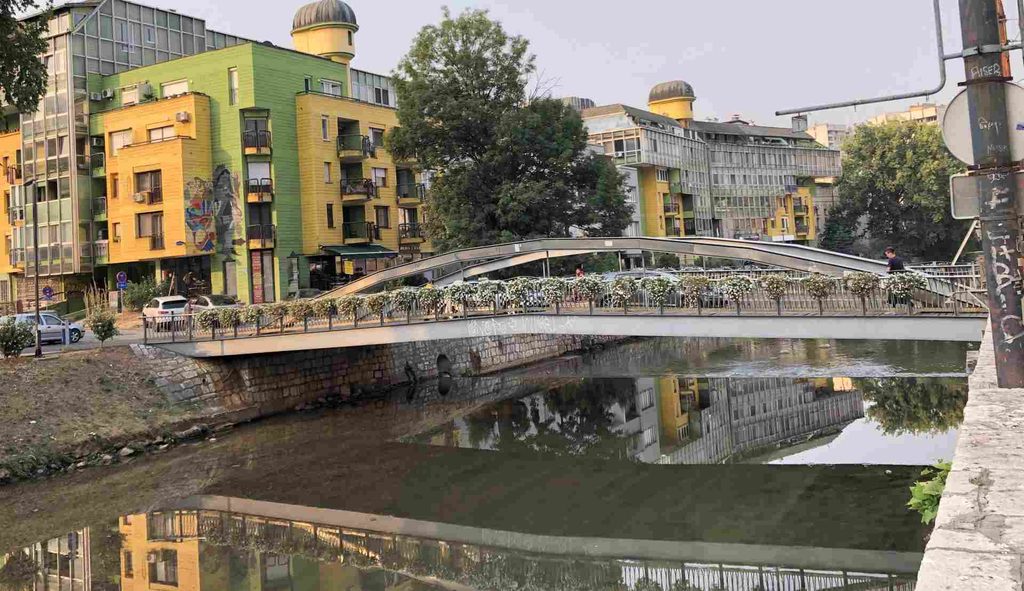
Drvenija Bridge
There used to be many wooden bridges across the Miljacka River in Sarajevo, and the name Drvenija itself comes from the word drveni, meaning wooden. The present bridge was erected in 1988 and was donated by Hidrogradnja, a once-famous Sarajevo construction company. he upper part of the bridge has a wooden appearance, which makes it different from many of the other bridges in the city.
It is also a popular crossing for pedestrians because of its central location.
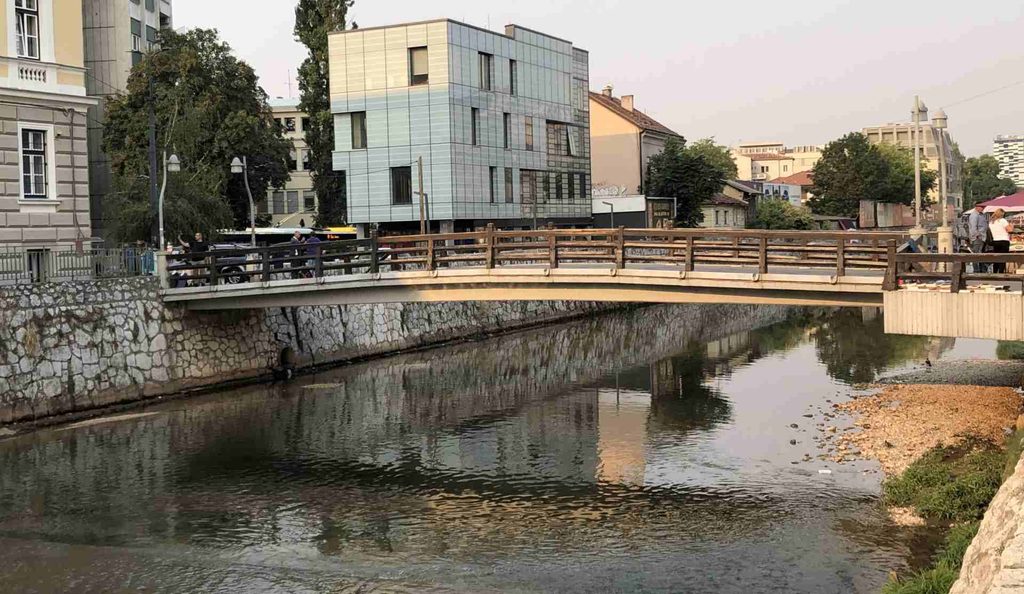
Čobanija Bridge
A wooden bridge was built here in 1557 by Čoban Hasan Vojvoda. The surrounding area and bridge became associated with his name, which is how the name Čobanija developed. A steel bridge designed by engineer Adolf Kunerth was later built here in 1888. During part of its history, from 1921 to 1994, the bridge was known as Masakirov Most. The name Čobanija returned in 1994.
This is another good example of how Sarajevo’s bridges changed both physically and in their names throughout different historical periods.
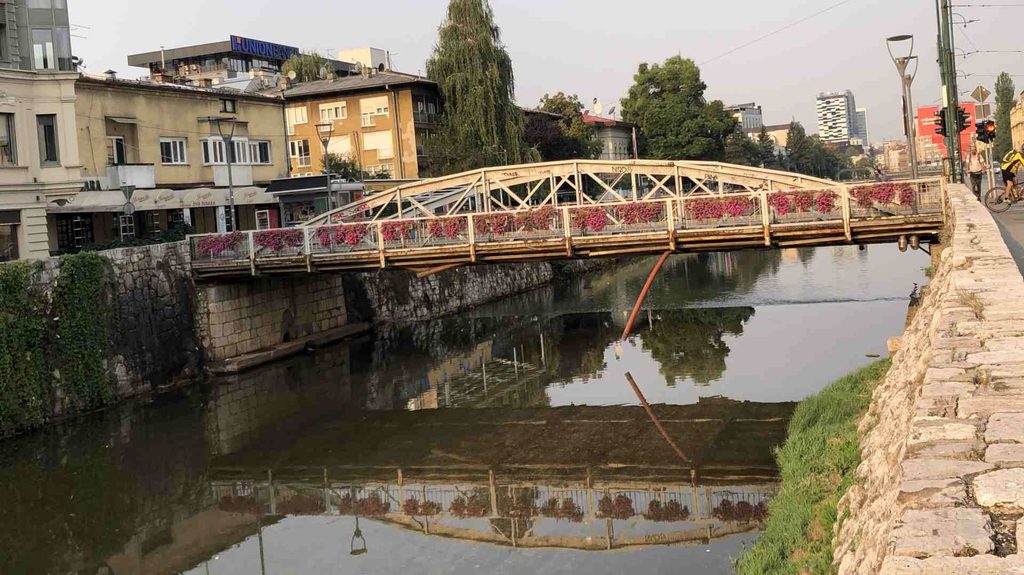
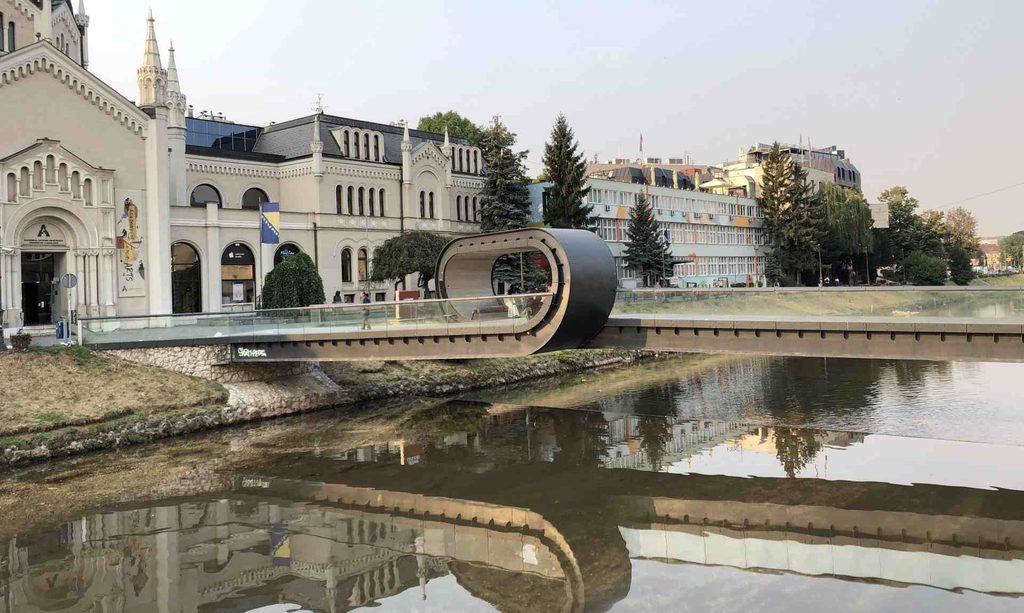
Festina Lente Bridge
Festina Lente is probably one of the most photographed modern bridges in Sarajevo. It is located next to the Academy of Fine Arts and was opened in 2012. he unusual design was created by students of the Academy: Adnan Alagić, Bojan Kanlić and Amila Hrustić.
The name Festina Lente is Latin and means “make haste slowly.” The bridge has a very unusual shape, with a curved structure in the middle, and it has become one of the recognizable modern symbols of Sarajevo.
Skenderija Bridge
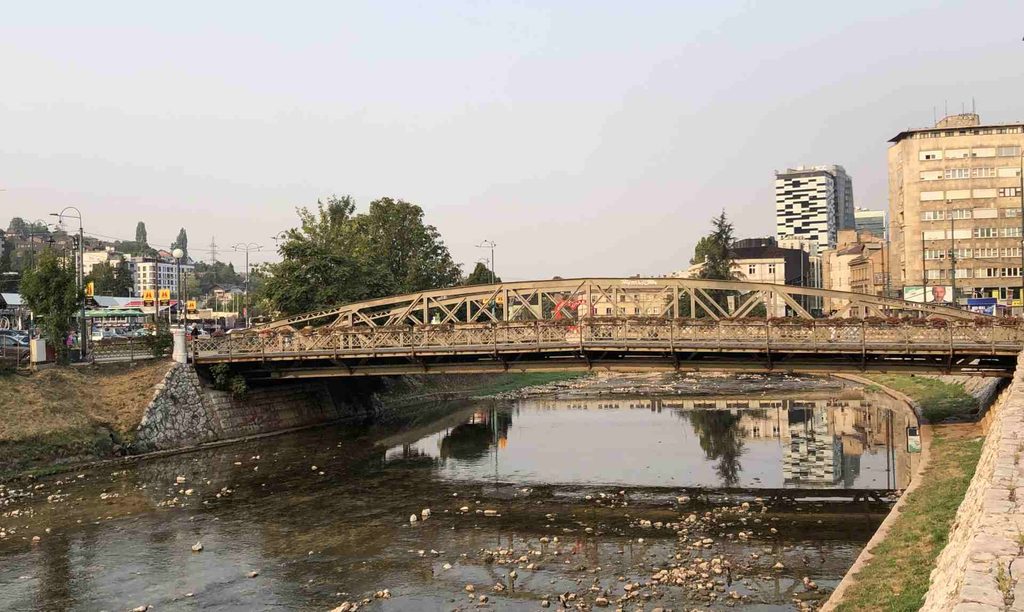
A wooden bridge was built here around the end of the 15th or beginning of the 16th century by Skender Pasha. The whole area received the name Skenderija after him. A steel bridge was later constructed here in 1893.
There is also a popular story connecting the bridge with Alexandre Gustave Eiffel, the famous French engineer who designed the Eiffel Tower in Paris. However, this story is generally treated as a legend rather than a confirmed historical fact, so I would be careful with the claim that Eiffel himself designed the bridge. I also heard an interesting story from some local people. They told me that the bridge was actually made from parts of the Eiffel Tower.
Skenderija Bridge 2
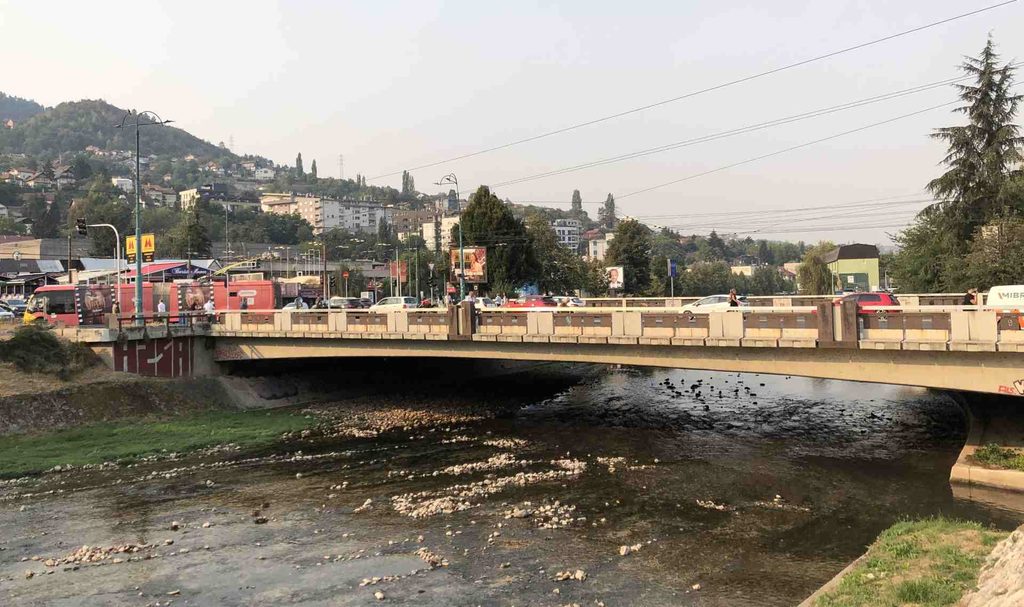
There is another large bridge for cars and other vehicles located next to the pedestrian bridge. This part of Skenderija is also important in the modern history of Sarajevo and Bosnia and Herzegovina. During the Bosnian War, fighting and important events took place in this area, including events connected with the nearby Presidency building. Today, thousands of people cross these bridges every day without necessarily thinking about how much history happened around them.
Suada and Olga Bridge
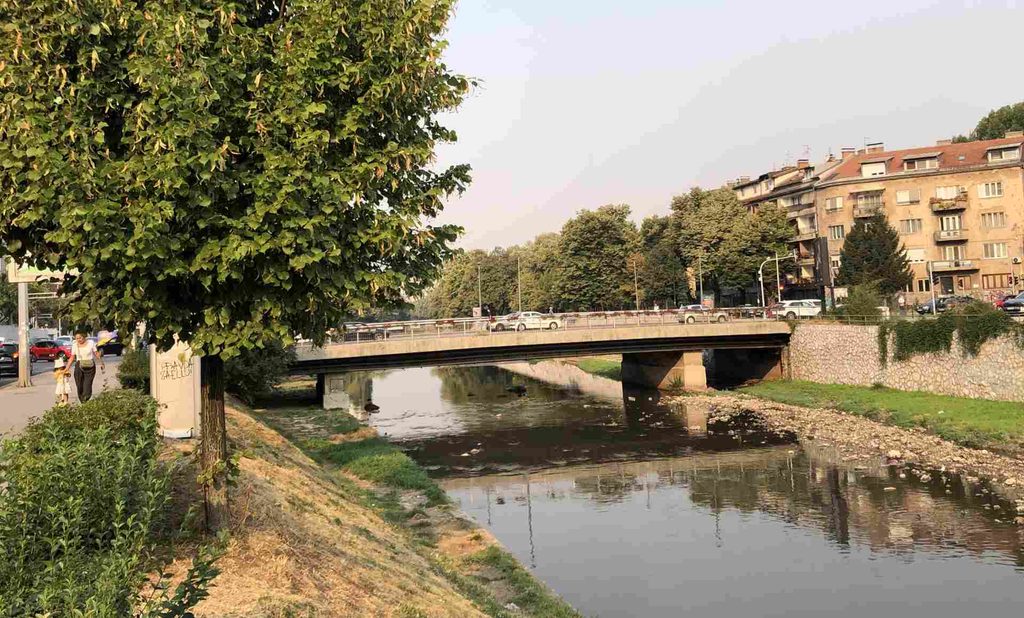
Suada and Olga Bridge has one of the saddest stories among all the bridges of Sarajevo. Suada Dilberović and Olga Sučić were killed on this bridge during a peaceful demonstration in Sarajevo in April 1992, at the beginning of the Bosnian War. The bridge was later named after them as a memorial to the two young women who were among the first victims of the war in Sarajevo. Today, people cross this bridge every day, often without thinking about what happened here.
For me, this is one of the places where walking through Sarajevo makes you think about how quickly the history of a city can change.
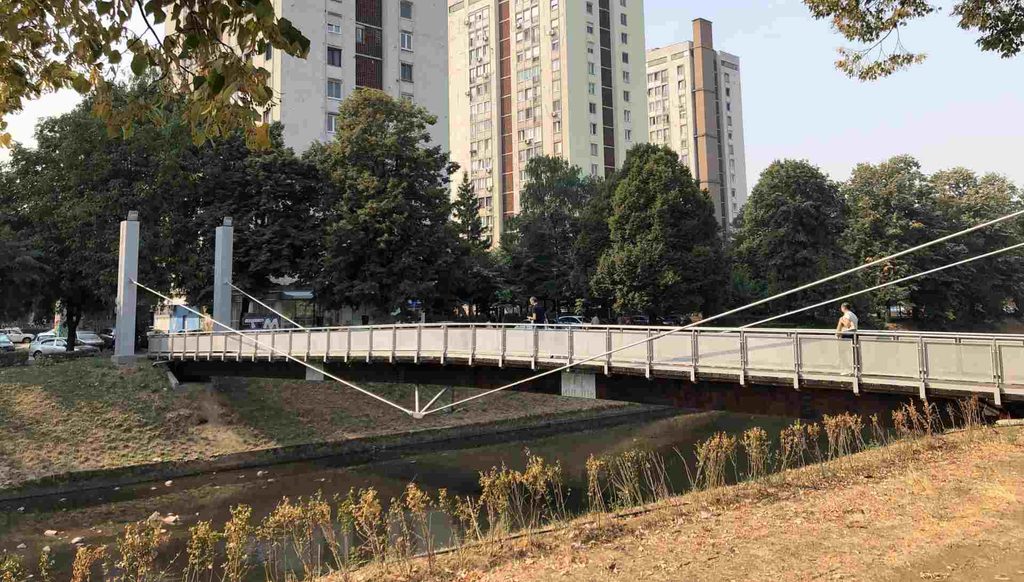
Ars Aevi Bridge
The Ars Aevi Bridge was designed by the renowned Italian architect Renzo Piano. The bridge connects Vilsonovo Šetalište with Grbavica. It is one of the newer and more artistic bridges along the Miljacka and is quite different from the older Ottoman bridges at the beginning of my route. The bridge was renovated in 2026, giving it a new appearance and extending its life as an important pedestrian connection across the river.
I decided to finish my walk here because, after following the Miljacka through Sarajevo and visiting all these different bridges, we have basically travelled through several centuries of Sarajevo’s history.
Conclusion
Walking across all these bridges, it was impossible not to think about the history of the whole city. From the first bridge, Kozja Ćuprija, which is also the oldest bridge on my route, all the way to Ars Aevi, which was renovated this year, the bridges actually tell the story of Sarajevo. As I mentioned, many bridges changed their names depending on who ruled Sarajevo and Bosnia and Herzegovina and which political ideas were important at the time.
We can also see how the materials changed. We start with old stone bridges, then see wooden bridges, later iron and steel bridges, and finally modern artistic and unusual structures. All of this feels incredible when you think about it.
In only a few kilometres, or a little more if you want to visit every bridge, you can walk through hundreds of years of history in one city, along one river. For me, that is what makes walking along the Miljacka so interesting. You are not simply walking from one side of Sarajevo to another. You are walking through the history of the city.